Award-Winning AP Calculus BC Tutors
serving Pittsburgh, PA
AP Calculus BC
Tutors in Pittsburgh
Private 1-on-1 tutoring, weekly live classes for academic support, test prep & enrichment, practice tests and diagnostics, and more to elevate grades and test scores.
Based on 3.4M Learner Ratings
UniversitiesSchools & Universities
DeliveredHours Delivered
ProficiencyGrowth in Proficiency
Who needs tutoring?
No obligation. Takes ~1 minute.
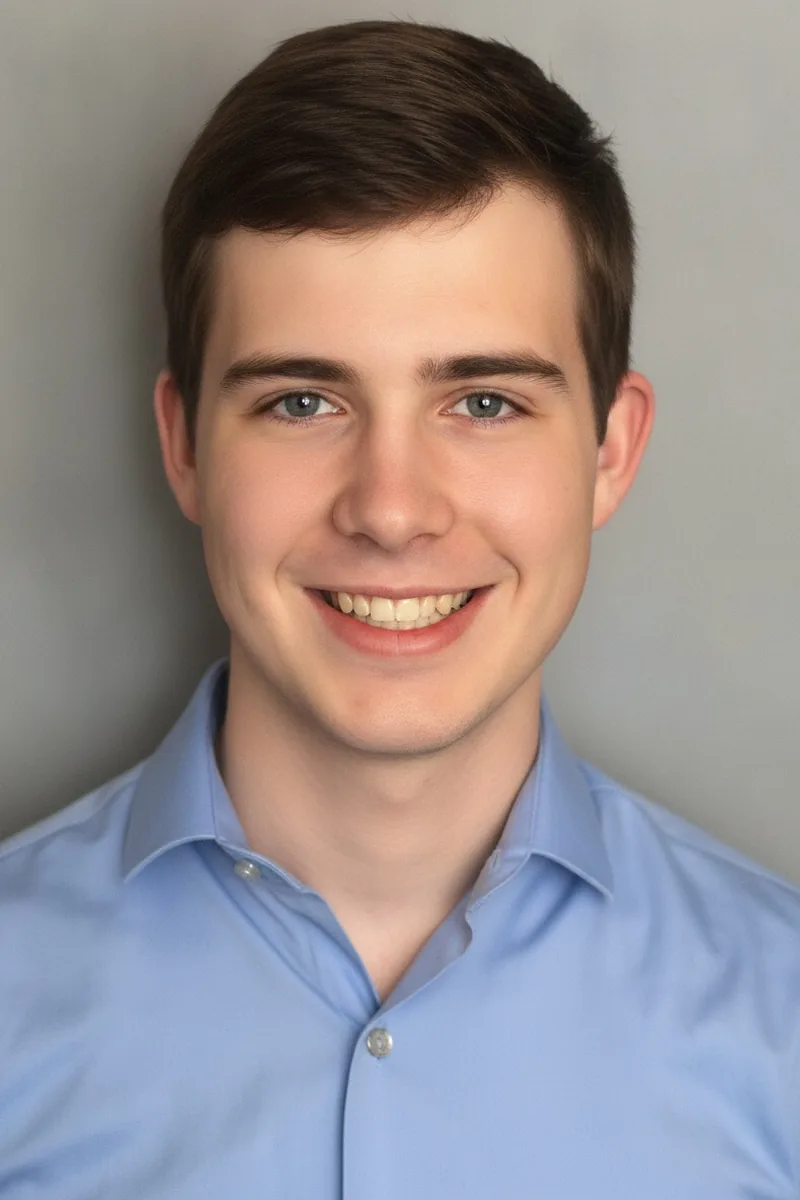
BC Calculus piles on topics like Taylor series, parametric equations, and convergence tests at a pace that leaves little room for falling behind. As a Penn math major who also tutors multivariable calculus and linear algebra, Ben understands these concepts at a depth that lets him explain not just the how but the why behind each technique. That deeper perspective makes integration methods and series analysis click faster.
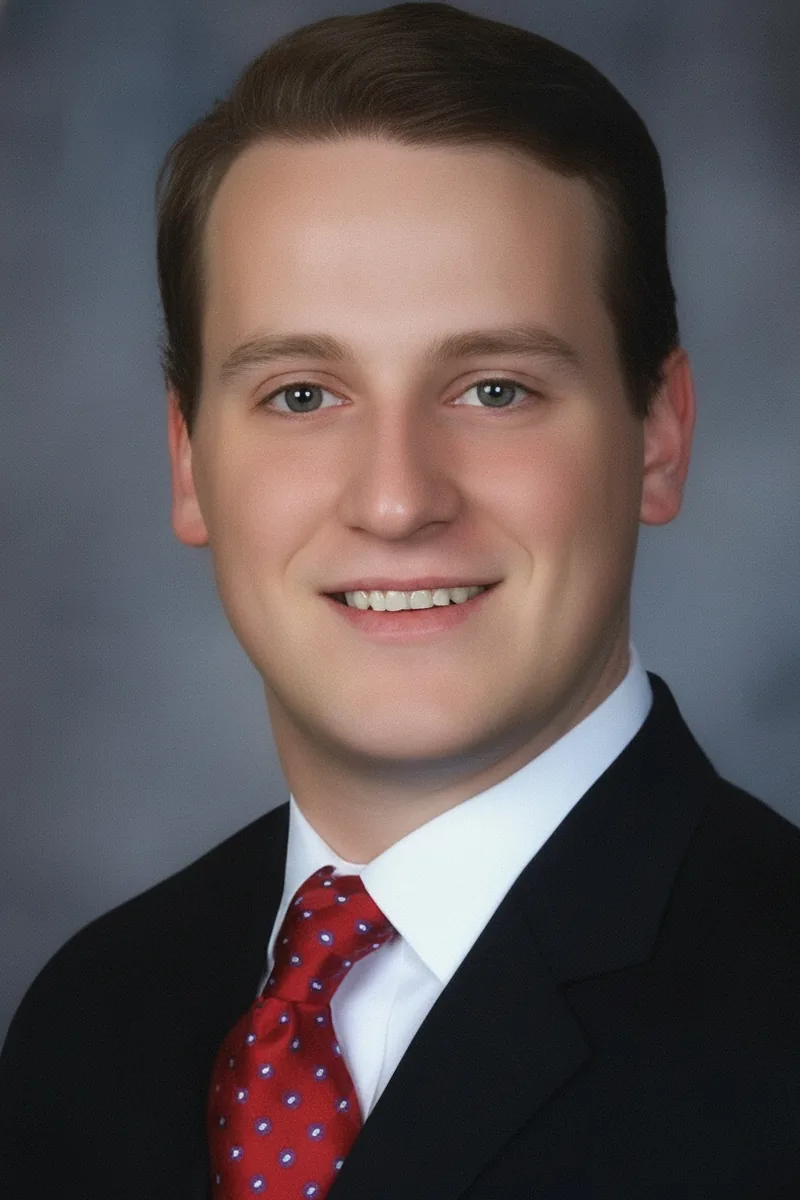
Georgetown's math program gave Peter a rigorous grounding in the theoretical side of calculus — the kind where you prove convergence rather than just test for it — which translates directly into how he teaches BC topics like series, Taylor polynomials, and the Lagrange error bound. He's tutored every level of calculus since high school, and that range means he quickly spots when a BC struggle is actually an AB gap in disguise. Holds a 5.0 rating.
Series convergence is where most BC students start to feel lost — ratio tests, Taylor expansions, error bounds all hit at once. Matthew's Harvard math coursework goes well beyond the AP curriculum, which means he can explain not just how to apply these tools but why they work. He connects BC-specific topics like parametric equations and polar curves back to the core calculus intuitions students already have.
When students hit BC's convergence tests and feel like they're just memorizing a checklist of names — ratio, root, integral, comparison — Samuel reframes each test as a question about how a series behaves, turning rote steps into genuine reasoning. His applied mathematics coursework means he's actively using Taylor series and parametric models in contexts where getting the convergence wrong isn't just a lost point but a broken solution. That perspective, plus a 1590 SAT reflecting sharp quantitative instincts, keeps his teaching grounded in understanding rather than procedure-shuffling.
Mechanical engineering at Northwestern means Zach doesn't just solve BC-level problems — he relies on them. Infinite series approximations, integration by parts, and logistic differential equations are daily tools in his coursework, so he teaches them with the comfort of someone who actually uses them beyond the exam. Rated 5.0 by students.
Rishi's 1590 SAT and mathematics major at Yale mean the theoretical backbone of BC — convergence reasoning, error analysis, parametric and polar frameworks — sits well within his daily coursework, not in some distant memory. He's especially sharp at untangling the logic behind series tests, walking through why each condition matters so students can diagnose convergence independently instead of cycling through formulas hoping one sticks. Rated 5.0 by students.
Mechanical engineering at Carnegie Mellon throws BC-level calculus at you from day one — Vincent uses series approximations in thermodynamics problems and parametric equations in dynamics coursework, so he teaches these topics as someone actively working with them, not recalling them from a past exam. His 5.0 rating and 1490 SAT back up an approach that traces every new BC idea, whether it's a convergence test or an integration technique, to the AB reasoning that makes it click.
Environmental engineering graduate work is essentially applied calculus — Kate's thesis work required series approximations for modeling fluid dynamics and integration techniques for analyzing pollutant transport, so BC topics like Taylor polynomials and improper integrals are tools she's used professionally, not just academically. She's particularly good at showing how convergence tests follow a logical decision tree rather than feeling like a random grab bag of techniques. Rated 4.9 by students.
Biomedical engineering at Cornell throws parametric modeling, series approximations, and heavy integration at Annie every semester — BC Calculus is essentially the prerequisite language for her entire degree. Her year as a teaching assistant for introductory biology sharpened her instinct for spotting exactly where a student's reasoning goes sideways, whether it's a shaky limit concept underneath a convergence test or a misread of how polar area integrals accumulate. Rated 4.9 by students.
Teaching discrete math at Penn while finishing a CS master's means Keenan lives in the world of rigorous mathematical argument — the same mindset that separates students who survive BC from those who actually understand it, especially when series convergence proofs and error bound reasoning demand more than mechanical computation. His philosophy undergraduate training adds an unusual edge: he treats each BC concept like a logical claim that needs justification, which makes topics like the Lagrange remainder or comparison tests feel structured rather than arbitrary. Rated 5.0 by students.
Running a peer-tutoring program in high school meant Ryan spent years diagnosing exactly where classmates got stuck on calculus problems — a skill he's sharpened further through his civil engineering coursework at Cornell, where series expansions and integration techniques show up constantly in structural analysis and fluid mechanics. He breaks down the BC-specific leap into convergence tests and Taylor polynomials by grounding each new idea in the derivative and integral logic students built in AB. His 35 ACT and 4.7 rating speak to the precision he brings to every session.
Biomedical engineering at Yale means Jonathan lives in the calculus that comes after most students stop — modeling biological systems with differential equations, approximating nonlinear tissue behavior with series expansions, running convergence analysis on numerical simulations. That daily exposure makes him especially effective at teaching the logic behind the ratio and integral tests, because he's seen firsthand what happens when you pick the wrong one. Holds a 5.0 rating.
Biomedical engineering eats BC Calculus for breakfast — Spencer's coursework has him building models with differential equations, approximating functions with series, and integrating across complex domains before he even opens his calc textbook. That real-time immersion means he can walk through something like the Lagrange error bound or a tricky polar area setup with the fluency of someone who just used it in a lab report, not someone dusting off old notes. His 1550 SAT and 35 ACT speak to the test-taking precision he pairs with that technical depth.
Full-time tutor, former Chemistry graduate student at University of Pennsylvania, BS Chemistry with Math Minor from Rochester Institute of Technology. My philosophy is that students learn best when they can understand why they're learning the material. I aim to help students effectively utilize and seek out tools for learning concepts while also practicing examples and building knowledge of the concepts themselves. I have a passion for mentoring students in chemistry and mathematics and giving them the knowledge and tools they need to comprehensively understand the foundations and applications of the material they're learning and to succeed in their education.
Series convergence, parametric equations, and polar curves are where BC separates itself from AB, and Joey tackles all three with the rigor of someone who used these tools constantly in aerospace and mechanical engineering coursework at Glasgow and Penn. He's taught and TA'd university-level calculus at both institutions, so he knows exactly where students stumble on topics like Taylor series error bounds and integration by parts.
Steven's biology degree from Drexel included heavy quantitative coursework — the kind where differential equations and series approximations aren't optional but embedded in modeling physiological systems. That background, combined with a 1480 SAT and 34 ACT, means he teaches BC topics like convergence tests and integration techniques by grounding them in the reasoning rather than just drilling procedures. Rated 5.0 by students.
I am a very passionate teacher who has worked in public and private school settings at both the high school and college level. I have an undergraduate mathematics degree, and taught AP Calculus at a North Carolina high school. I also have a PhD in philosophy, and have taught at major research universities in Missouri and Ohio. I am personally invested in my students' success, and take pride in being clear, conscientious, and accessible.
Convergence tests, polar functions, and parametric equations are where most BC students start to feel lost, and Bahaeddine tackles these topics by connecting them back to the AB foundations students already understand. His math and statistics background means he can explain not just how to set up a Taylor series but why the approximation works and when it breaks down.
Graduate-level chemical engineering is where BC Calculus stops being theoretical — Benjamin used series approximations to model reactor behavior, integration techniques to solve mass and energy balances, and differential equations to predict system dynamics throughout both his BS and MS coursework. That repeated, applied exposure means he can trace a student's confusion with something like the Lagrange error bound or a tricky convergence test back to the underlying reasoning rather than just re-demonstrating the steps. Rated 4.9 by students.
I am currently a graduate student in Chemical Engineering at the University of Delaware. I am working on using magnetic and flow fields to create advanced materials by directing the self-assembly process of nanoparticles . I have tutored students in Chemistry, Physics and Math all throughout undergraduate and graduate work. I truly enjoy breaking material down into its core components that allows the students to understand complicated information.
Jacob's astrophysics degree meant spending semesters inside the exact BC toolkit — series expansions to model stellar atmospheres, parametric equations tracing orbital paths, and improper integrals that pop up whenever a gravitational field extends to infinity. That background gives him a concrete answer when students ask why they're learning to construct Taylor polynomials or grind through convergence tests. His 1550 SAT speaks to the precision he brings to both setting up problems and communicating the reasoning behind each step.
Series convergence tests, parametric equations, and polar curves make BC the course where many strong calculus students first feel lost. Andreas breaks these topics into visual, step-by-step reasoning — connecting Taylor series, for instance, back to the polynomial approximations students already understand. His Mathematical Economics background means he's comfortable with the rigor BC demands.
Having studied both math and English at Swarthmore — and then taught 10th grade math in Newark — Aidan developed a tutoring style built around asking the right questions rather than delivering answers, which pays off especially in BC when students need to reason through convergence criteria or construct Taylor series from scratch. His 1540 SAT and dual-discipline background mean he can explain the logic behind something like the Lagrange error bound with unusual clarity, breaking the reasoning into pieces a student can reconstruct independently.
BC Calculus piles on convergence tests, parametric equations, and polar curves right when students think they've mastered AB material. Jake tackles series and sequences by teaching students to build a decision tree for which convergence test applies, turning one of the most overwhelming units into a systematic process.
Engineering physics at Cornell means Daniel is currently neck-deep in the math that BC Calculus builds toward — using series to model oscillating systems, applying integration techniques to energy problems, and solving differential equations that describe real physical behavior. That context gives him a clear picture of which BC skills actually matter and how to teach something like the ratio test or parametric arc length by grounding it in the AB intuition a student already carries. Rated 5.0 by students.
Molecular biology at Yale means Maxwell lives in calculus-heavy territory — modeling gene expression rates, quantifying cell growth curves, analyzing reaction kinetics — so BC topics like differential equations and series approximations aren't abstract exercises for him but tools he actually reaches for in research. He's especially good at walking through the logic of integration techniques and parametric problems by grounding them in the AB concepts students already trust. Holds a 5.0 rating.
Scoring a 36 on the ACT while studying environmental engineering at Cornell means Akanksha lives in the calculus that BC demands — her coursework in fluid dynamics and pollutant modeling leans heavily on integration techniques, series approximations, and differential equations. She breaks down the transition from AB to BC by treating topics like convergence tests and parametric curves as practical extensions of tools students already trust, not as an overwhelming new syllabus. Rated 4.8 by students.
Tackling series convergence tests, parametric equations, and polar curves requires more than memorizing formulas — it demands knowing when and why each technique applies. Talia approaches BC-specific topics by building intuition around each concept before drilling the mechanics, so students can handle the free-response questions that reward deep understanding over rote calculation.
Princeton's electrical engineering program leans hard on series expansions and differential equations from day one — Sabrina uses them to analyze circuits and model signal behavior in her applied physics coursework, which means BC topics like Taylor polynomials and convergence tests aren't abstract exercises for her but tools she reaches for weekly. She's especially clear at breaking down the logic behind each convergence test so students can choose the right one on their own instead of guessing. Rated 5.0 by students.
Biochemistry lab work at Columbia demands comfort with the calculus that models reaction kinetics and molecular behavior — Andrew has spent years using integration techniques and series approximations in that context, which gives his BC teaching a practical edge when students ask "why does this matter?" He's especially effective at breaking down the transition from AB to BC, tracing topics like Taylor polynomial construction and convergence criteria back to the derivative and integral logic students already trust. Rated 4.9 by students.
Having spent countless hours teaching calculus to engineering, computer science, physics, and economics majors, Austin knows exactly where each group tends to stumble — and BC's leap into series convergence and polynomial approximation is where the gaps widen fastest. His applied mathematics degree gives him the formal grounding to trace a shaky understanding of, say, the Lagrange error bound back to the specific limit reasoning that needs reinforcing. He scored a 1430 on the SAT and approaches every BC topic by making the underlying logic explicit rather than drilling formulas.
Most people who breeze through math can't explain it — Daniel learned BC Calculus by grinding through the logic of every convergence test, every parametric derivative, every series expansion until it genuinely made sense, and that's exactly how he teaches it. As an applied mathematics undergrad, he's currently using these tools in upper-level coursework, so he knows which BC concepts tend to feel arbitrary and how to make the reasoning behind them stick.
Princeton's public policy program is surprisingly calculus-heavy — Gianna's coursework in economic modeling and quantitative analysis means she's applied integration techniques and series approximations to real policy questions, not just problem sets. She's especially sharp at walking through the logic of convergence tests and parametric curves, connecting each BC topic back to the AB reasoning that makes it click.
Convergence tests, parametric equations, and Taylor series expansions are where BC separates from AB — and where many students start to feel lost. Rithi breaks these topics into intuitive steps, connecting new concepts back to the foundational calculus reasoning students already have. Her 1550 SAT and deep STEM background reflect the kind of mathematical fluency that makes those connections clear.
Biology majors at WashU don't just memorize — Laura's upper-level coursework in evolutionary modeling and physical chemistry means she's actively using integration techniques, differential equations, and series approximations to solve problems outside a math classroom. That cross-disciplinary fluency is especially useful for BC's trickiest conceptual leap: understanding what a Taylor polynomial actually approximates and why specific convergence tests apply in specific situations. Rated 5.0 by students.
Testimonials
Because the right AP Calculus BC tutor makes all the difference.
Average Session Rating – Based on 3.4M Learner Ratings
Practice AP Calculus BC
Free practice tests, flashcards, and AI tutoring for AP Calculus BC
Other Pittsburgh Tutors
Related Math Tutors in Pittsburgh
Frequently Asked Questions
AP Calculus BC covers limits, derivatives, integrals, differential equations, and sequences/series—essentially all of Calculus AB plus additional advanced topics. For students in Pittsburgh, understanding the full scope is important since the BC exam tests both AB-level material (roughly 60% of the exam) and BC-specific content like parametric equations, polar coordinates, and infinite series. A strong foundation in these areas typically requires 8-12 months of focused preparation.
Score improvement depends on your starting point and consistency, but students typically see gains of 1-2 points on the 1-5 scale with focused, personalized instruction. The most significant improvements come from identifying specific weak areas—like integration techniques or series convergence—and building targeted practice around them. Varsity Tutors connects you with expert tutors who can diagnose gaps and create a study plan tailored to your goals.
Students in Pittsburgh and beyond frequently struggle with infinite series (convergence tests, radius of convergence), parametric and polar calculus, and integration by parts. Many also find the transition from procedural problem-solving to conceptual understanding challenging—the exam rewards deep comprehension, not just memorization. Personalized tutoring helps you move past these stumbling blocks by connecting abstract concepts to concrete problem-solving strategies.
The AP Calculus BC exam has two sections: multiple choice (45 minutes, no calculator; then 45 minutes with calculator) and free response (30 minutes, no calculator; then 60 minutes with calculator). Key strategies include managing time carefully on non-calculator sections, showing all work on free response (partial credit is valuable), and practicing with official AP materials to understand question formats. Expert tutors can help you develop pacing strategies and teach you when to use your calculator strategically versus solving by hand.
A solid study schedule includes full-length practice tests every 2-3 weeks starting 8-10 weeks before the exam, with more frequent tests as exam day approaches. Between full tests, focus on targeted practice with specific topics or question types. This approach—combining spaced repetition with retrieval practice—builds both accuracy and confidence. Tutors can help you review practice test results to identify patterns in your mistakes and adjust your study plan accordingly.
Most students benefit from starting tutoring 3-4 months before the exam, though the ideal timeline depends on your current level and goals. If you're working to master the full curriculum, 8-12 weeks of consistent weekly sessions is typical. For students catching up on specific topics or refining skills, shorter, more intensive preparation can be effective. Varsity Tutors connects you with tutors who can assess your starting point and recommend a personalized study timeline.
Varsity Tutors matches you with expert tutors who specialize in AP Calculus BC and understand the specific demands of the exam. When connecting with a tutor, look for someone with strong calculus credentials and experience helping students improve their scores. Your first session is an opportunity to discuss your goals, assess your current level, and determine the best approach for your preparation.
Test anxiety often stems from feeling unprepared or uncertain about problem-solving strategies. Building confidence through consistent practice, especially with timed practice tests, helps significantly. Expert tutors also teach you to recognize when you're stuck on a problem and when to move forward strategically—skills that reduce anxiety on exam day. Regular tutoring sessions provide a safe space to work through challenging problems and develop the confidence you need.
Let’s find your perfect tutor
Answer a few quick questions. We’ll recommend the right plan and match you with a top 5% tutor.