Award-Winning Executive Functioning Tutors
serving Rochester, NY
Executive Functioning
Tutors in Rochester
Private 1-on-1 tutoring, weekly live classes for academic support, test prep & enrichment, practice tests and diagnostics, and more to elevate grades and test scores.
Based on 3.4M Learner Ratings
UniversitiesSchools & Universities
DeliveredHours Delivered
ProficiencyGrowth in Proficiency
Who needs tutoring?
No obligation. Takes ~1 minute.
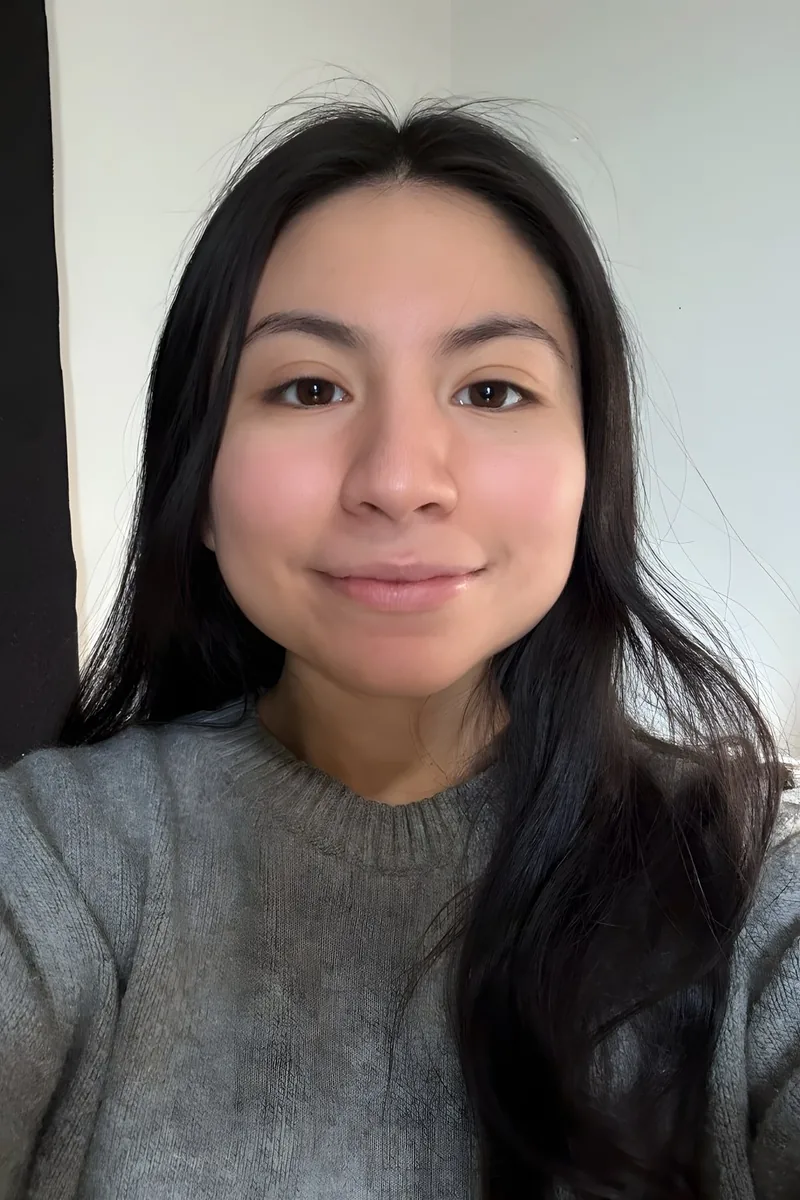
I'm working towards my Bachelors/Masters in Chemical Engineering at the Rochester Institute of Technology, with a special interest in math and physics! I believe that visual demonstrations alongside verbal explanations of material work best for strengthening a students ability to conceptualize material. I have experience tutoring both college and high school students, and I am particularly well-equipped to assist with math, physics, and SAT preparation.

Planning a multi-step assignment, managing time across subjects, breaking a big project into smaller pieces — these are skills that don't come naturally to every student. Heather's clinical psychology training gives her a framework for teaching organizational strategies that actually stick, and she tailors each system to how a student's brain already works rather than forcing a one-size-fits-all planner approach.
Planning a multi-step assignment, managing time across subjects, keeping materials organized — these are skills most schools expect but rarely teach explicitly. Charles's counseling psychology training gives him concrete strategies for building these executive functioning habits, from using visual task breakdowns to teaching students how to self-monitor their own focus and prioritize effectively.
Kenneth's cognitive neuroscience degree means he understands the brain science behind why some students struggle to initiate tasks, regulate attention, or hold a plan in working memory — and that understanding shapes how he teaches these skills rather than just assigning them. He connects executive functioning strategies like sequencing and self-monitoring directly to the academic work students bring in, whether that's structuring a college essay or mapping out a study plan for chemistry.
Candice's Fulbright teaching experience in Taiwan and her years as a classroom aide and afterschool mentor gave her constant practice recognizing when a student's real obstacle isn't the content but the inability to start, sequence, or sustain a task independently. She weaves executive functioning strategies — like breaking a writing assignment into discrete stages or building a nightly homework launch routine — directly into the English and literacy work she already does with students. That integrated approach means kids practice planning and self-monitoring on real schoolwork, not hypothetical scenarios.
Jamie's Master's in Special Education gave her direct training in breaking executive functioning into teachable skills — things like planning multi-step assignments, managing time with visual schedules, and self-monitoring progress without constant prompting. She builds these strategies into real schoolwork so students practice organization and task initiation where it actually matters, not in isolation.
Breaking large assignments into sequenced steps, building weekly planning routines, managing deadlines across multiple classes — Manuel tackles the organizational side of academics that often goes untaught. His structured approach to executive functioning gives students concrete systems they actually use, not just advice to "stay organized." Rated 5.0 by students.
Running a natural sciences department at a bilingual elementary school in Ecuador meant Joy wasn't just teaching content — she was building systems for planning, prioritization, and task completion across two languages and multiple grade levels. She applies that same structured approach to executive functioning skills like time management, organization, and breaking long-term assignments into manageable steps.
Five years working specifically with students with learning differences taught Sydney where the real sticking points are — the student who knows what the assignment says but can't figure out where to start, or the one who chronically underestimates how long a reading response will take. She ties executive functioning strategies like task breakdown and self-monitoring directly to the English and Spanish coursework she also tutors, so students practice these skills on actual assignments rather than in isolation. Rated 4.9 by clients.
The best part of tutoring is promoting students' long-term success through mastery of reading, writing, math, study skills, organization, and critical thinking. In particular, I enjoy helping students build test-taking strategies and core skills for the ACT, SAT, and other admissions tests. I also support pre-K and K-12 students learning math and ELA. Before joining Varsity, I tutored in a Reading and Writing Lab for university students with learning disabilities where I earned a College Reading and Learning Association (CRLA) certification. Since joining Varsity, I have completed continuing education through the Lastinger Center for Learning. I graduated from the University of Arizona in 2021 with a BA in Cultural Anthropology. In addition to tutoring, I have worked as an instructional aide for an art program, an applied anthropology researcher, and a nonprofit program coordinator. Out of all these experiences, I enjoy tutoring the most. I look forward to working with you!
Hello! My name is Sam Bicking. I am an alumni and student at The University of Pennsylvania studying Pre-health sciences before entering medical school. I have been tutoring for several years with students with disabilities (and amazing students without disabilities).
Balancing a double major in psychology and biology while preparing for medical school forced Karim to build real systems for task prioritization, time blocking, and breaking long-term projects into manageable steps. He teaches those same strategies — planning backwards from deadlines, organizing materials, and self-monitoring progress — so students can manage their own workloads independently.
Ten years ago, I started as an elementary substitute while attending Hanover College. As my interests in the education field changed and progressed, my philosophy stayed the same; education is something that can happen anywhere, not just in the traditional classroom. I went on to gain a Master's in School Librarianship & Facilitated Learning from Indiana University-Indianapolis. During this time I had started actually teaching, first with library sciences, elementary technology, elementary science, and tutoring. Over the past six years, I have tutored; homework help, organization, special education, exam reteaching, and mentoring for students from 3rd grade through adults taking professional licensing exams (ie. PRAXIS). While things have changed, my passion is still finding what a student needs for their best learning possible, and adapting content to work with them. My philosophy is simply that I think everyone can learn, sometimes we just have to look at the education differently.
Hello! I am an Arizona State University graduate with a Bachelors of Science in Biological Science. My academic background is grounded in both technical problem-solving and a deep curiosity about how systems, whether digital or human, function. Outside the classroom, I've had the opportunity to work with students across a range of ages and abilities, from mentoring engineering and premed undergraduates at ASU to tutoring high schoolers in SAT/ACT prep, as well as K-12 students through Teach for America. I am comfortable with a range of subjects and am willing to work to meet your needs. Below are some of courses I have successfully tutored for in the past. K12 Subjects Elementary School (K5) Math (Basic Arithmetic, Word Problems) Reading & Phonics Writing & Grammar Science Social Studies Study & Organization Skills Middle School (68) Pre-Algebra Algebra I General Science (Life, Earth, Physical) English Language Arts (Reading, Writing) U.S. History & World History Intro to Coding / Computer Science High School (912) Algebra I & II Geometry Trigonometry Pre-Calculus Calculus AB/BC Biology (General, Honors) Chemistry (General, Honors) Physics (Conceptual, Algebra-Based) English Literature & Composition Essay Writing & Editing U.S. History & World History Psychology Economics & Government Health / Human Development Ethics / Philosophy Study Skills / Test Prep Standardized Test Prep SAT: Math, Reading, Writing & Language, Essay ACT: Math, Science, English, Reading, Essay PSAT MCAT (Content review & strategy) TOEFL / ESL (Certified ESL experience) AP Subjects AP Biology AP Chemistry AP Physics 1 AP Environmental Science AP Calculus AB AP Statistics AP English Language and Composition AP English Literature and Composition AP Psychology AP U.S. History AP World History AP U.S. Government & Politics AP Human Geography AP Macroeconomics / Microeconomics AP Computer Science Principles AP Seminar / Research College-Level Subjects STEM & Premed General Biology I & II Cell Biology Genetics Human Anatomy & Physiology General Chemistry I & II Organic Chemistry I & II Biochemistry Physics I & II (Algebra-Based) Calculus I & II Statistics (Introductory / Biostats) Humanities & Social Sciences Intro to Psychology Intro to Sociology Scientific Writing & Critical Thinking Medical Ethics Bioethics Philosophy of Science / Biology Research Writing & Academic Essays Business & Economics Intro to Macroeconomics Intro to Microeconomics Principles of Finance Financial Literacy / Budgeting Basics
Breaking a semester's worth of assignments into weekly action plans, prioritizing tasks by deadline weight, and building consistent study routines — these are the executive functioning skills Luis teaches through hands-on practice rather than abstract advice. His experience mentoring students across math, science, and business means he adapts organizational strategies to whatever coursework a student is actually juggling.
Medical school demands serious executive functioning — juggling anatomy, biochemistry, and clinical rotations means Kaitlyn has battle-tested systems for time management, task prioritization, and breaking large projects into manageable steps. She teaches students how to build their own planning routines, from using calendars effectively to chunking study sessions so material actually sticks. Rated 4.8 by students and families.
Planning, prioritizing, starting tasks, managing time — executive functioning skills don't come naturally to every student, and they're rarely taught explicitly in school. Hannah's Special Education program at Purdue trained her in scaffolding these skills through structured routines, visual organizers, and self-regulation strategies. She builds systems that students internalize gradually rather than depend on forever.
Managing art projects from concept to finished piece — juggling sketches, revisions, material prep, and critique deadlines — forced Laura to develop the exact planning and sequencing skills that executive functioning coaching targets. She teaches students to build visual workflows and concrete routines for breaking down assignments, initiating tasks, and tracking deadlines across subjects, drawing on the same project-management instincts that drive her studio practice. Rated 4.9 by clients.
Planning a multi-step project or breaking a semester's worth of material into a weekly study schedule requires the same structured thinking Andrew used throughout his engineering and MBA programs. He teaches students concrete systems for prioritizing tasks, managing time, and organizing materials so that deadlines stop feeling like emergencies. Rated 4.8 by students and families.
Testimonials
Because the right Executive Functioning tutor makes all the difference.
Average Session Rating – Based on 3.4M Learner Ratings
Nearby Executive Functioning Tutors
Other Rochester Tutors
Related Learning Differences Tutors in Rochester
Frequently Asked Questions
Executive functioning refers to the mental processes that help us plan, organize, manage time, and complete tasks—skills essential for academic success. Students with strong executive functioning can break down assignments into steps, stay focused, and manage deadlines effectively. In Rochester's diverse school environment across 25 school districts, students often face varying levels of support for these critical skills, making personalized instruction particularly valuable for closing gaps.
Many students struggle with time management, organization, task initiation, and working memory—difficulty getting started on assignments, losing track of materials, or underestimating how long tasks take. Others battle distractions, perfectionism, or difficulty breaking large projects into manageable steps. Personalized tutoring addresses these specific challenges through targeted strategies rather than one-size-fits-all classroom approaches.
Classroom teachers typically focus on content delivery with limited time for individual skill-building, while personalized 1-on-1 instruction allows tutors to diagnose exactly where a student struggles and create customized strategies. A tutor can teach specific tools like time-blocking, priority matrices, or task-breakdown techniques tailored to how your student learns best, then practice these skills repeatedly until they become automatic habits.
Executive functioning skills develop throughout childhood and into early adulthood, so students at any level can benefit—from elementary students learning basic organization to high schoolers managing complex project deadlines and college prep. The transition years (middle school to high school, high school to college) often reveal gaps most clearly, as demands for independent planning increase significantly.
During an initial session, a tutor will typically assess your student's current challenges through conversation and observation—asking about homework routines, how they approach projects, what distracts them, and where breakdowns happen. They'll also learn about your student's goals and strengths, then begin introducing practical strategies and tools. This foundation allows the tutor to create a personalized plan for building sustainable habits.
Look for concrete improvements: assignments completed on time, fewer lost materials, better organization of binders or digital files, and reduced stress around deadlines. Many students also show academic gains as their executive functioning improves—better grades simply because they're managing workload more effectively. You might also notice your student initiating tasks independently rather than needing reminders.
Look for tutors with training in learning strategies, ADHD support, or educational coaching—backgrounds that demonstrate expertise in building organizational and time-management skills. Many have experience working with students who have executive functioning challenges and can speak to specific, evidence-based strategies they use. When you connect with Varsity Tutors, we match you with tutors whose expertise aligns with your student's needs.
Absolutely. Executive functioning skills directly impact performance in every subject—a student might understand math concepts but struggle to organize multi-step problems, or have strong writing ideas but difficulty planning essays. Tutors can teach subject-specific organizational strategies, like breaking math word problems into stages or outlining before writing, making academic content more manageable and improving both skills and grades.
Let’s find your perfect tutor
Answer a few quick questions. We’ll recommend the right plan and match you with a top 5% tutor.