Award-Winning Algebra Tutors
serving Bronx, NY
Algebra
Tutors in Bronx
Private 1-on-1 tutoring, weekly live classes for academic support, test prep & enrichment, practice tests and diagnostics, and more to elevate grades and test scores.
Based on 3.4M Learner Ratings
UniversitiesSchools & Universities
DeliveredHours Delivered
ProficiencyGrowth in Proficiency
Who needs tutoring?
No obligation. Takes ~1 minute.

A lot of algebra clicks once students see it as a tool for solving actual problems instead of an abstract set of rules. Michael connects topics like systems of equations and linear modeling to the kinds of quantitative questions he encountered throughout his biology degree and medical training. His approach is structured and patient, shaped by years of one-on-one tutoring at Kaplan and in university settings.
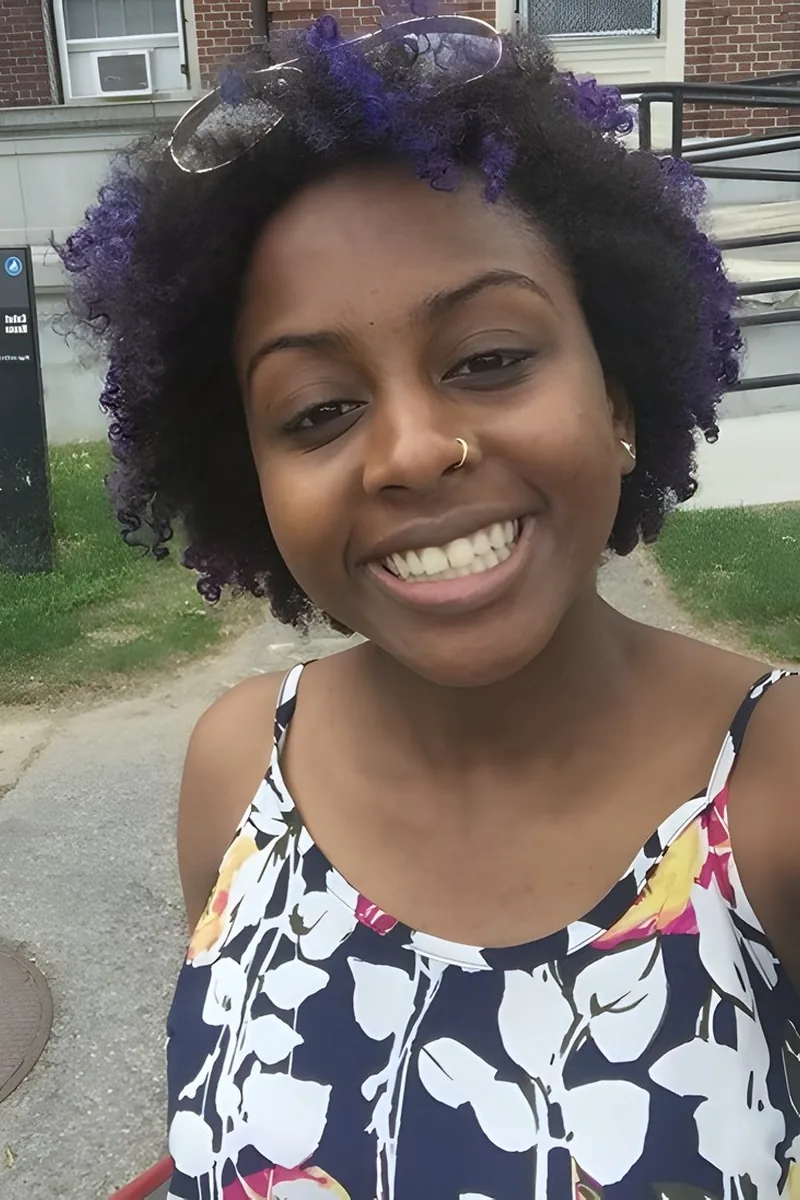
The moment algebra clicks is usually when a student stops seeing equations as puzzles to decode and starts reading them as statements that say something. Gabriela teaches factoring, quadratic equations, and linear systems by emphasizing that translation — turning word problems into expressions and expressions back into meaning. She holds a 5.0 rating across her students.
A lot of algebra frustration comes from not knowing *why* a technique works — why you flip the inequality sign, why completing the square transforms a quadratic, why a system of equations can have no solution. Nicholas tackles each of these conceptual gaps directly, building intuition alongside the mechanics so students stop second-guessing their steps.
A solid grasp of algebra comes down to understanding what variables actually represent, not just shuffling symbols around. Victoria's science-heavy curriculum at Cornell meant she was constantly translating real-world problems into algebraic expressions — from balancing equations to modeling nutritional data — and she brings that same translational approach to teaching linear equations, inequalities, and systems.
Ten years of teaching across general and special education classrooms gave Ivan a deep toolkit for making abstract math accessible — particularly when students hit the wall of variables and symbolic reasoning in algebra. He's skilled at connecting concepts like solving systems of equations or factoring polynomials back to concrete, step-by-step logic that sticks.
Before pivoting to comparative literature, Dan studied mathematics — so when he teaches algebra, he's drawing on genuine fluency with abstraction and symbolic reasoning, not just a textbook refresher. He's especially good at unpacking how to translate word problems into algebraic expressions, treating each one like a close reading exercise where precision with language determines whether the math comes out right. Rated 5.0 by students.
Breaking algebraic problems into logical steps comes naturally to Abigail, who spent years in policy research translating complex data into clear arguments. She zeroes in on the reasoning behind operations like factoring and solving systems of equations, so students internalize the logic instead of just following procedures.
When a student says they're "bad at algebra," it usually means one specific skill — distributing, factoring, or translating word problems into equations — is blocking everything downstream. Devon diagnoses that sticking point quickly and drills it until the mechanics become automatic. From linear equations through quadratics and systems, he builds each topic on the one before it so nothing feels like it came out of nowhere.
The jump from arithmetic thinking to algebraic thinking — where letters replace numbers and equations become tools for modeling — trips up more students than any single topic. Chimdi tackles that transition head-on, walking through variable manipulation, factoring strategies, and how to translate word problems into solvable expressions.
A lot of algebra frustration comes from skipping the "why" behind symbol manipulation — why you flip an inequality when multiplying by a negative, or what a system of equations actually looks like on a graph. Taylor has been breaking down these concepts for students since she was a high schooler herself, and her 5.0 rating speaks to how well that clarity translates.
Most algebra frustration comes from one place: students learn procedures without understanding what the symbols actually mean. Samantha tackles that head-on — when she teaches solving linear equations, she makes sure a student can explain why you perform the same operation on both sides, not just follow the steps mechanically. Her year working in a math classroom sharpened her ability to spot exactly where comprehension breaks down.
The jump from arithmetic to algebra is really a jump in how students have to think — suddenly letters represent unknowns, and solving means manipulating equations rather than computing answers. Laura walks through factoring, systems of equations, and inequalities step by step, making sure each move has a reason behind it. Her 1530 SAT score reflects deep comfort with exactly this kind of algebraic reasoning.
A Bronx High School of Science graduate, Zarrin learned algebra in one of the most competitive math environments in the country. She applies that depth to teaching everything from factoring polynomials to systems of equations, emphasizing the logical steps that make each problem type predictable. Her 4.9 rating speaks to an approach that builds real algebraic fluency, not just test-day shortcuts.
June got her start tutoring middle schoolers one-on-one in algebra, which means she's spent real time figuring out where students get stuck on things like solving systems of equations or simplifying expressions with variables. She builds each session around the specific type of problem a student finds confusing, working through it from multiple angles until the logic clicks.
Most Algebra frustration comes from one place: students learn procedures without understanding why they work, so every new problem feels unfamiliar. Stanley teaches the reasoning behind techniques like factoring quadratics, solving systems, and manipulating inequalities so that students can adapt when problems look different from the textbook. His years tutoring across New York City have given him a sharp eye for where each student's understanding actually breaks down.
Most algebra frustration comes from one place: students learn procedures without understanding what the equation is actually saying. Charles tackles that head-on, teaching students to read expressions as relationships so that solving, factoring, and graphing all feel like variations of the same skill. He's particularly effective at translating word problems into equations — the step where most students freeze.
Joshua approaches algebra as a language problem: if a student can parse what a word problem is actually asking, the equation practically writes itself. His background as a teaching assistant through Blue Engine gave him daily practice walking students through linear equations, inequalities, and systems — building fluency one step at a time.
When a student gets stuck on systems of equations or quadratic factoring, the issue is almost always a shaky grasp of what the symbols actually represent. Miguel walks through each step with an emphasis on translating between word problems and algebraic expressions, so students build real fluency instead of just pattern-matching their way through a worksheet.
Pattern recognition is the hidden engine of algebra, whether a student is factoring trinomials or manipulating rational expressions. Nathaniel treats each problem type as a puzzle with internal logic rather than a procedure to memorize, walking students through the reasoning that makes techniques like completing the square or solving systems actually make sense. He scored a 1530 on the SAT, and that mathematical fluency carries directly into his algebra tutoring.
The moment algebra shifts from solving for x to interpreting systems of equations or manipulating quadratic expressions, many students lose the thread of *why* each step works. Ava's philosophy background makes her unusually good at walking through the logic behind algebraic manipulation — showing that each move follows a rule, not a trick. That clarity tends to stick longer than memorized procedures.
A Fordham graduate with deep roots in economics, Gregory teaches algebra by emphasizing what equations actually represent — modeling real situations with variables, not just shuffling symbols around. He digs into the areas where students most often stall, like systems of equations and quadratic factoring, and connects each technique to a concrete problem worth solving. That approach tends to make the abstract rules stick.
Most Algebra struggles come down to one thing: students learn procedures without understanding what the symbols mean. Jonathan tackles that head-on by connecting every equation to a concrete situation — if you can explain what x represents, you can figure out how to solve for it. His teaching covers everything from basic linear equations through systems and quadratics, always anchored in making the logic visible.
Most algebra struggles come down to one thing: students learn procedures without understanding what the symbols mean. Cole teaches algebra by connecting each manipulation — distributing, factoring, solving systems — back to what's actually happening on a number line or coordinate plane. His finance background at Fordham means he's constantly modeling with equations, so algebraic thinking is second nature.
One concept that trips up nearly every algebra student is the shift from thinking about numbers to thinking about relationships between unknowns. Jonathan tackles this head-on, using real scenarios to make variables and equations feel purposeful rather than arbitrary. His teaching spans everything from first-exposure equation solving through systems and quadratics, and he holds a 5.0 client rating.
The jump from arithmetic to algebra is one of the biggest conceptual shifts in all of math — suddenly letters replace numbers and equations need solving, not just computing. Muhammed unpacks core skills like distributing, combining like terms, and solving linear equations by emphasizing the logic behind each step. His teaching across every math level from elementary through differential equations means he knows exactly which algebra habits pay off later.
Most Algebra frustration comes from one place: students learn steps without understanding what they're doing to both sides of an equation or why factoring reveals solutions. Vicquaja addresses that head-on by teaching the reasoning behind each operation — from distributing and combining like terms through quadratic equations. Her 4.7 client rating speaks to how well she communicates those underlying ideas.
I'm a graduate of Fordham University where I earned degrees in both Mathematics and Music. I have years of experience tutoring students from middle to high school in all subjects, especially English, Math, and French. In my free time, I love playing and listening to music, spending time with friends, and watching Netflix :)
When a student stares at a system of equations and sees only letters, Mimi reframes the problem visually — graphing lines, sketching relationships, making the algebra represent something real. Her Dartmouth and Harvard training in learner-centered education means she adapts her explanations to match how each student processes abstract reasoning.
Before anyone can tackle statistics or calculus, the algebraic machinery has to be solid — manipulating expressions, solving systems, reasoning about functions. Nina regularly diagnoses algebra gaps in her older students and knows exactly which skills (factoring, rational expressions, exponent rules) cause the most downstream trouble. Her 5.0 rating speaks to how effectively she rebuilds that confidence.
One thing Reid noticed early in his tutoring career: students who struggle with algebra usually aren't bad at math — they just never got a clear explanation of what a variable actually represents. He tackles equations, inequalities, and systems by grounding every step in logical reasoning, so students can set up and solve problems independently instead of relying on memorized shortcuts.
Eight years of tutoring across age groups means Solange has seen exactly where algebra trips students up — whether it's distributing negatives, setting up equations from word problems, or graphing linear inequalities for the first time. She breaks each problem type into a repeatable process so students build genuine confidence rather than just pattern-matching from examples.
Most algebra frustration comes not from the new material itself but from shaky pre-algebra skills underneath it — and Liz, having taught middle schoolers for years, can spot those gaps fast. She zeroes in on the specific operation or concept causing the breakdown, whether it's distributing negatives, solving multi-step equations, or graphing linear functions, and rebuilds from there.
A PhD in Computational Mathematics from the University of Chicago means Justin doesn't just teach algebra — he built an entire research career on top of it, from image processing algorithms to climate models that start with the same variable manipulation and equation-solving students encounter in class. He's especially good at unpacking why a technique like completing the square or distributing across parentheses works mechanically, drawing on the physicist's habit of never accepting a step without understanding the logic underneath. Rated 5.0 by students.
When a student stares at a system of equations and doesn't know where to start, the issue is usually not the procedure — it's not seeing what the equation represents. Daniel teaches algebra by making each manipulation visual and logical, whether that's graphing lines to understand slope-intercept form or unpacking what factoring actually does to a quadratic.
A lot of algebra frustration comes from word problems: translating a real-world scenario into an equation feels like learning a second language. James approaches these translations systematically, teaching students to identify variables and relationships before writing a single symbol. His chemistry background at Harvard means he's constantly converting real situations into mathematical models, and he brings that same structured thinking to algebra.
The moment algebra stops being about "solve for x" and starts involving systems, inequalities, or function notation, many students lose their footing. Sabira approaches each of these transitions by connecting new notation back to arithmetic reasoning students already trust — a habit she developed through her Applied Math studies at Johns Hopkins. She holds a 5.0 client rating.
Factoring, quadratic equations, and systems of linear equations all have an internal logic that most textbooks bury under procedure. Sung digs into that logic so students see why completing the square works or what a solution to a system actually represents on a graph. His 1500 SAT score reflects the kind of mathematical fluency he brings to every session.
The jump from arithmetic to algebra trips students up when variables start feeling like random letters instead of meaningful unknowns. Sherry tackles this by connecting equation-solving and graphing to real scenarios, building the kind of algebraic reasoning that carries through to higher math. Her background in linguistics gives her a knack for translating word problems into clear mathematical expressions.
Jennifer approaches algebra the way she approaches writing: by teaching students to see the underlying structure before worrying about the mechanics. Whether it's solving systems of equations or simplifying rational expressions, she emphasizes understanding why each step works so the process sticks beyond the next test.
A student who can explain why they're distributing or factoring — not just follow the steps — rarely gets stuck on harder problems later. Julie zeroes in on that kind of conceptual clarity when teaching topics like systems of equations, quadratic functions, and inequalities. Her volunteer tutoring experience and 4.9 rating show she can adapt her explanations until the logic genuinely lands.
Testimonials
Because the right Algebra tutor makes all the difference.
Average Session Rating – Based on 3.4M Learner Ratings
Practice Algebra
Free practice tests, flashcards, and AI tutoring for Algebra
Other Bronx Tutors
Related Math Tutors in Bronx
Frequently Asked Questions
Many students struggle with the shift from arithmetic to abstract thinking—understanding why we use variables and how to manipulate equations rather than just following steps. Word problems are particularly challenging because they require translating real-world situations into mathematical language. Multi-step equations, graphing linear functions, and working with negative numbers are other frequent pain points. Personalized tutoring helps students build conceptual understanding alongside procedural skills, making these transitions smoother.
During an initial session, a tutor will assess your current understanding of algebra concepts, identify specific areas where you're struggling, and discuss your goals—whether that's improving grades, preparing for a test, or building confidence. They'll work through a few problems with you to understand your problem-solving approach and see where misconceptions might exist. This helps create a personalized plan focused on your needs rather than generic review.
Showing work reveals your thinking process and helps identify exactly where errors occur—whether it's a computational mistake, a misunderstanding of a rule, or a logical gap. This is especially important in algebra because the steps you take matter as much as the final answer. Tutors use your work to pinpoint misconceptions and guide you toward correct strategies, rather than just correcting answers. This approach builds stronger problem-solving skills that transfer to more advanced math.
Many students understand equations symbolically but struggle to visualize what they represent on a coordinate plane. Tutors can connect algebraic equations to their graphs, showing how slope, intercepts, and transformations work visually. This dual representation—seeing both the equation and the picture—helps students recognize patterns and understand why certain algebraic moves (like multiplying by a negative) have specific geometric effects. Practice with multiple examples builds the intuition needed for success in graphing and beyond.
Math anxiety often stems from past struggles, pressure, or feeling lost in a classroom setting. Working 1-on-1 with a tutor creates a low-pressure environment where you can ask questions freely, work at your own pace, and build confidence through small wins. Tutors can also help you develop problem-solving strategies and self-talk techniques that reduce anxiety during tests. Over time, as you understand concepts more deeply and see improvement, confidence naturally grows.
Different schools and districts in Bronx may use different textbooks or teaching approaches—some emphasize graphing early, others focus on symbolic manipulation first. Experienced tutors are familiar with major curricula and can align their instruction with what you're learning in class. They can explain concepts using your textbook's examples, match your teacher's notation and methods, and help bridge gaps if you're struggling with a particular approach. This alignment ensures tutoring reinforces rather than conflicts with classroom instruction.
Successful word problem solving starts with reading carefully and identifying what you know and what you're solving for. The next step is translating words into mathematical expressions—defining variables clearly and setting up equations that match the situation. Many students skip these steps and jump to solving, which leads to errors. Tutors teach a structured approach: read, define variables, write equations, solve, and check your answer against the original problem. With practice, this process becomes automatic.
Look for tutors with strong algebra knowledge and experience teaching students at your level—whether that's introductory algebra, Algebra 1, or Algebra 2. It's equally important that they can explain concepts clearly and adapt to how you learn best. Varsity Tutors connects you with tutors who have been vetted for both subject expertise and teaching ability, so you can focus on learning rather than searching. Many tutors also have experience with test prep or specific curricula used in Bronx schools.
Let’s find your perfect tutor
Answer a few quick questions. We’ll recommend the right plan and match you with a top 5% tutor.