Award-Winning AP Calculus BC Tutors
serving Lansing, MI
AP Calculus BC
Tutors in Lansing
Private 1-on-1 tutoring, weekly live classes for academic support, test prep & enrichment, practice tests and diagnostics, and more to elevate grades and test scores.
Based on 3.4M Learner Ratings
UniversitiesSchools & Universities
DeliveredHours Delivered
ProficiencyGrowth in Proficiency
Who needs tutoring?
No obligation. Takes ~1 minute.
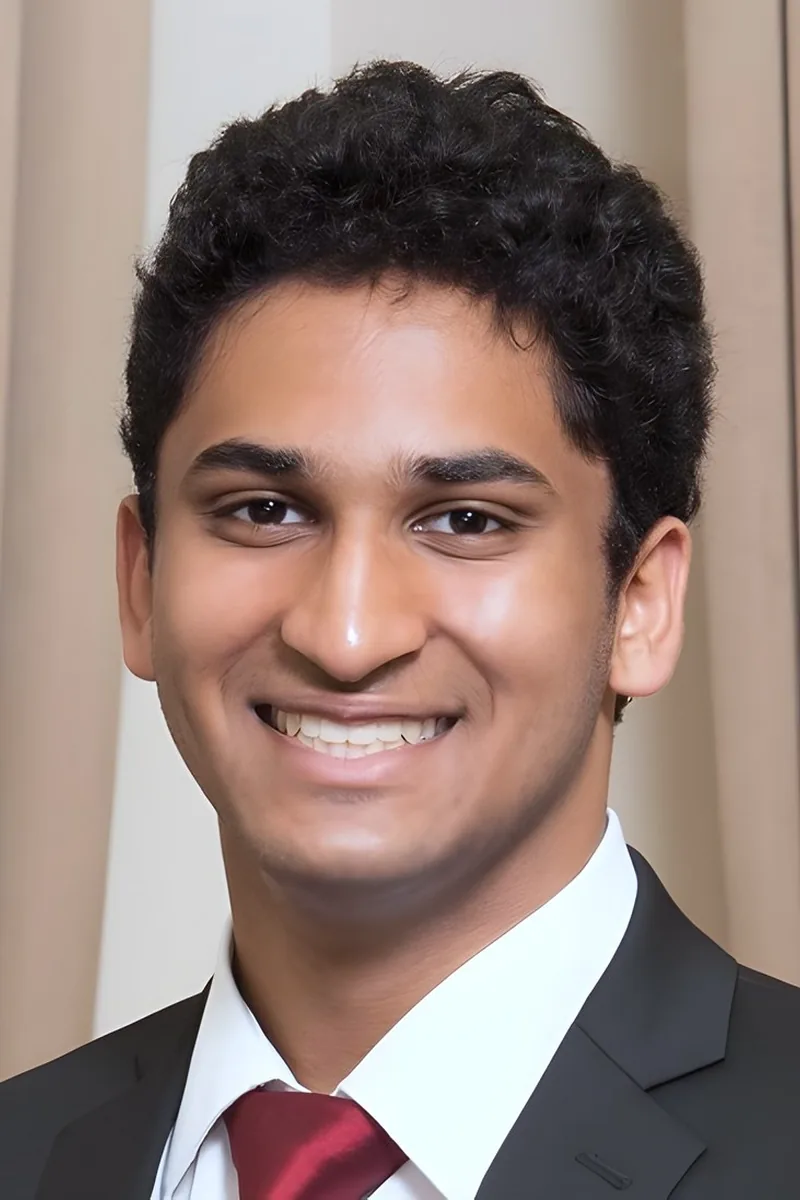
BC Calculus layers convergence tests, parametric equations, and polar curves on top of an already demanding AB foundation, and each topic requires its own strategic approach. Pratik breaks down series convergence by teaching students to recognize which test applies and why, building the kind of intuition that turns free-response questions into reliable points.

Aerospace engineering at the University of Michigan means Rohan uses series expansions, parametric equations, and differential equations daily — the exact topics that separate BC from AB and trip up most students. He breaks down convergence tests and integration techniques by connecting them to the physics and engineering problems they were invented to solve. Rated 5.0 by students.
BC Calculus piles on convergence tests, parametric equations, and polar curves right when students think they've mastered AB material. Krisha scored a 36 ACT and carries a 4.0 GPA in her biology program at Michigan, where calculus-heavy coursework keeps these concepts sharp. She breaks down series convergence strategies and integration techniques into decision frameworks students can actually apply on the AP exam.
Most BC students can memorize the list of convergence tests but freeze when deciding which one to actually apply — Krishanu breaks that decision process into a diagnostic sequence, teaching students to read the structure of a series before reaching for a tool. His computer science background at the undergraduate level trained him to think algorithmically, which translates directly into how he approaches multi-step problems like constructing Taylor polynomials or setting up integration by parts chains.
Studying both mathematics and computer science at Rice, William is taking the courses that treat BC topics like series convergence and parametric integration as foundational tools rather than standalone exam material. His 1540 SAT reflects the kind of precise, structured reasoning he brings to breaking down the jump from AB to BC — especially when Taylor polynomial construction or convergence tests start feeling like they came out of nowhere.
Teaching discrete math at Penn while finishing a CS master's means Keenan lives in the world of rigorous mathematical argument — the same mindset that separates students who survive BC from those who actually understand it, especially when series convergence proofs and error bound reasoning demand more than mechanical computation. His philosophy undergraduate training adds an unusual edge: he treats each BC concept like a logical claim that needs justification, which makes topics like the Lagrange remainder or comparison tests feel structured rather than arbitrary. Rated 5.0 by students.
Biochemistry lab work at Columbia demands comfort with the calculus that models reaction kinetics and molecular behavior — Andrew has spent years using integration techniques and series approximations in that context, which gives his BC teaching a practical edge when students ask "why does this matter?" He's especially effective at breaking down the transition from AB to BC, tracing topics like Taylor polynomial construction and convergence criteria back to the derivative and integral logic students already trust. Rated 4.9 by students.
Justin's PhD work in Computational and Applied Mathematics at the University of Chicago means he doesn't just teach Taylor series and convergence — he builds on them daily in research involving image processing and climate modeling, where approximation methods have to actually hold up under real conditions. That perspective sharpens how he explains error bounds and series manipulation, grounding each technique in why it matters rather than just how to execute it on an exam. Rated 5.0 by students.
Winning Duke's DT Stallings Award for sustained tutoring of local school students means Taariq has logged serious hours watching where calculus understanding actually breaks down — and BC's leap into series, parametric curves, and advanced integration is where breakdowns happen fastest. His math degree from Duke gives him the theoretical grounding to trace a student's confusion with, say, a ratio test or a polar area integral back to the specific AB concept that isn't solid yet. Rated 4.9 by students.
Kenan's mathematical economics training means he's comfortable with the kinds of series, parametric equations, and integration techniques that make BC a step up from AB. He walks through convergence tests and Taylor polynomials by connecting each tool to the problem it was invented to solve, which keeps the logic clear even when the notation gets dense.
Engineering physics at Cornell means Daniel is currently neck-deep in the math that BC Calculus builds toward — using series to model oscillating systems, applying integration techniques to energy problems, and solving differential equations that describe real physical behavior. That context gives him a clear picture of which BC skills actually matter and how to teach something like the ratio test or parametric arc length by grounding it in the AB intuition a student already carries. Rated 5.0 by students.
Tackling series convergence tests, parametric equations, and polar curves requires more than memorizing formulas — it demands knowing when and why each technique applies. Talia approaches BC-specific topics by building intuition around each concept before drilling the mechanics, so students can handle the free-response questions that reward deep understanding over rote calculation.
Biology majors at WashU don't just memorize — Laura's upper-level coursework in evolutionary modeling and physical chemistry means she's actively using integration techniques, differential equations, and series approximations to solve problems outside a math classroom. That cross-disciplinary fluency is especially useful for BC's trickiest conceptual leap: understanding what a Taylor polynomial actually approximates and why specific convergence tests apply in specific situations. Rated 5.0 by students.
A year as a course assistant in Harvard's math department teaching introductory calculus gave Richard a close-up view of exactly where students' AB foundations crack under the weight of BC material — particularly when series convergence and parametric functions demand a more flexible kind of reasoning. He breaks down topics like interval of convergence arguments and integration techniques by rebuilding the underlying logic rather than layering on new formulas. His perfect 1600 SAT and 36 ACT suggest the kind of precision he brings to each explanation.
Most people who breeze through math can't explain it — Daniel learned BC Calculus by grinding through the logic of every convergence test, every parametric derivative, every series expansion until it genuinely made sense, and that's exactly how he teaches it. As an applied mathematics undergrad, he's currently using these tools in upper-level coursework, so he knows which BC concepts tend to feel arbitrary and how to make the reasoning behind them stick.
Coming out of Thomas Jefferson High School for Science and Technology — one of the most rigorous STEM pipelines in the country — Rhamy had BC Calculus concepts like series convergence and parametric integration locked down before most students even encounter them. His computer engineering program at Vanderbilt keeps those tools sharp daily, since signal analysis and circuit design lean heavily on the same Taylor expansions and differential equations that define the BC curriculum. Rated 5.0 by students.
Testimonials
Because the right AP Calculus BC tutor makes all the difference.
Average Session Rating – Based on 3.4M Learner Ratings
Practice AP Calculus BC
Free practice tests, flashcards, and AI tutoring for AP Calculus BC
Other Lansing Tutors
Related Math Tutors in Lansing
Frequently Asked Questions
Varsity Tutors matches Lansing students with expert AP Calculus BC tutors for 1-on-1 instruction. We pair each student with a tutor based on their specific needs, learning style, and goals.
Whether you need homework help, exam prep, or want to get ahead, our AP Calculus BC tutors are ready to help.
Common challenges include gaps from earlier material, difficulty with specific concepts, and trouble applying learning to new problems. These issues can snowball quickly in AP Calculus BC.
A tutor identifies where you're stuck, fills in gaps, and provides targeted practice. The 1-on-1 format means you get help exactly where you need it.
Tutors work with your student's actual coursework—homework assignments, class notes, and upcoming tests. This keeps tutoring directly relevant to what's happening in the classroom.
When you share information about your student's school and curriculum, we can match you with a tutor who has relevant experience.
All tutors complete background checks, credential verification, and teaching evaluation. Many of our AP Calculus BC tutors hold advanced degrees or have years of teaching experience.
You can review tutor profiles to find someone with the right background for your student's level and needs.
Many students see improved grades within a few weeks, along with better understanding of AP Calculus BC concepts and more confidence tackling challenging material.
Tutors track progress and adjust their approach to ensure continued improvement.
Most students benefit from 1-2 sessions per week. More frequent sessions help if your student is significantly behind or has an important exam coming up.
Your tutor can recommend a schedule based on your student's specific situation and goals.
Tutoring is purchased in packages of hours, with rates varying by tutor experience. Varsity Tutors offers several options to fit different budgets and needs.
You can discuss pricing during your consultation to find what works best.
Your tutor will assess where your student is, discuss goals, and start working on priority areas. Most students bring current homework or upcoming test material to focus on.
By the end, you'll have a clear sense of how the tutor can help and a plan for moving forward.
Let’s find your perfect tutor
Answer a few quick questions. We’ll recommend the right plan and match you with a top 5% tutor.