Award-Winning AP Physics C: Mechanics Tutors
serving Savannah, GA
AP Physics C: Mechanics
Tutors in Savannah
Private 1-on-1 tutoring, weekly live classes for academic support, test prep & enrichment, practice tests and diagnostics, and more to elevate grades and test scores.
Based on 3.4M Learner Ratings
UniversitiesSchools & Universities
DeliveredHours Delivered
ProficiencyGrowth in Proficiency
Who needs tutoring?
No obligation. Takes ~1 minute.
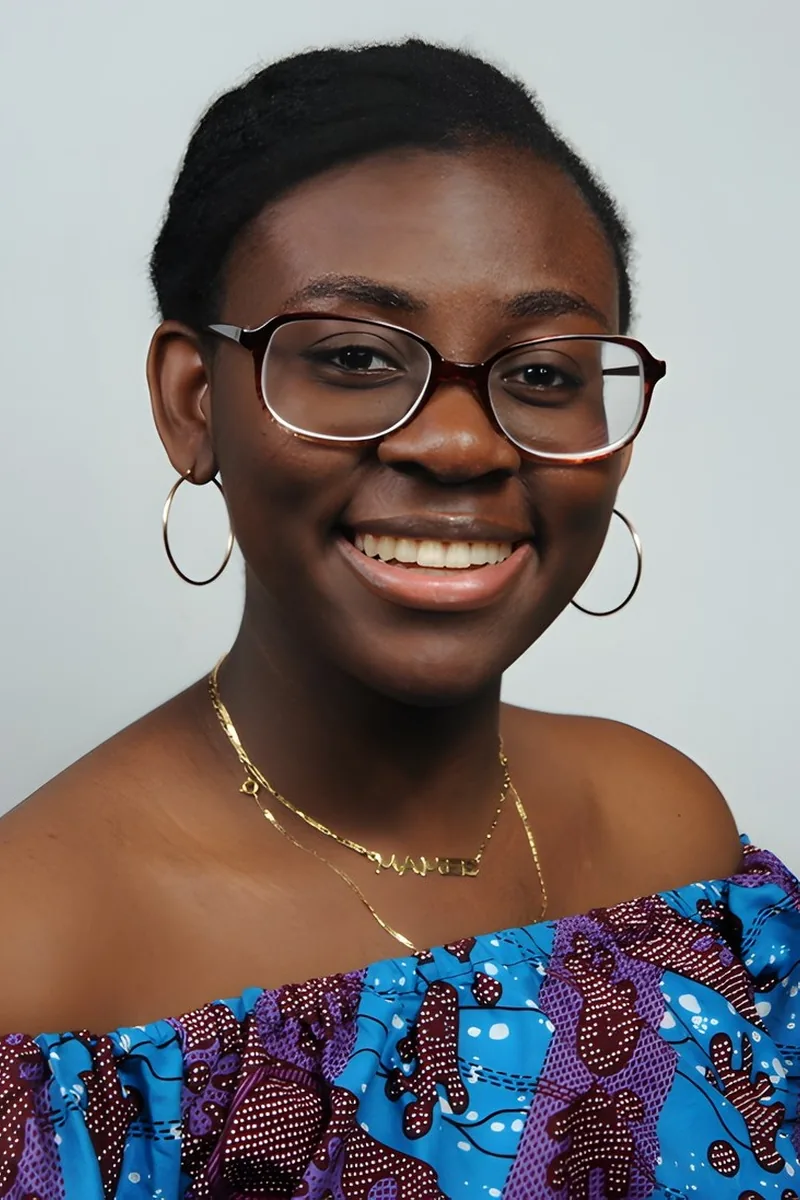
Bettina didn't just study mechanics in a textbook — she earned a PhD in mechanical engineering, meaning she's derived equations of motion for real systems where assumptions about friction, constraints, and rigid-body approximations actually matter. That depth shows up when she teaches AP Physics C: Mechanics topics like rotational dynamics and gravitational potential energy, because she can explain not just how to set up the integral but why that particular model fits the physical situation.
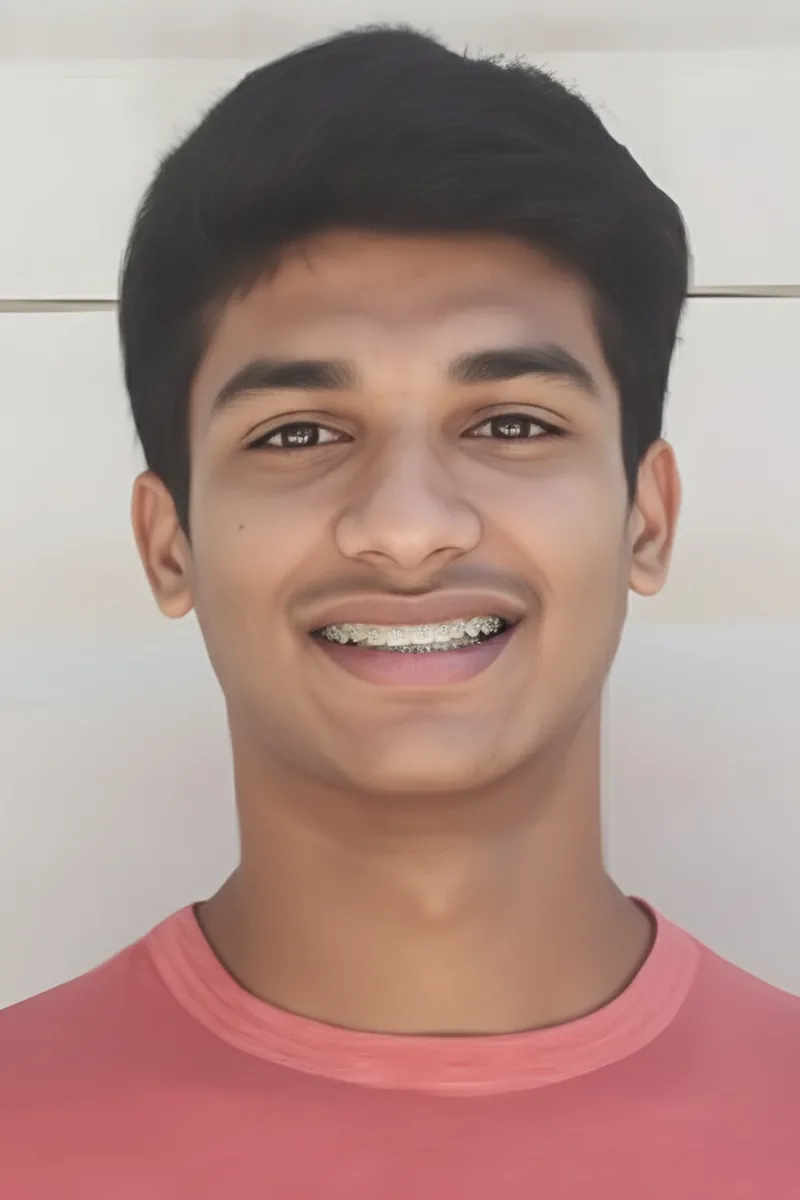
Most pre-med students avoid the calculus-heavy physics — Manideep leans into it, tackling AP Physics C: Mechanics alongside his biological sciences coursework at Northwestern, where he also TAs in the sciences. He breaks down conservation of energy and momentum problems by starting with the physical scenario and building the integral from there, so students learn a repeatable process instead of hunting for the right formula. Rated 5.0 by students.
Physics was actually Matthew's first tutoring subject — he started teaching it in high school and kept going through his biochemistry degree, where calculus-based mechanics was woven into everything from thermodynamics to molecular modeling. That crossover means he's especially good at unpacking the places where the physics and the calculus tangle together, like setting up force integrals for variable-mass systems or applying Newton's second law in its differential form. Rated 5.0 by students.
Fifteen years of teaching math and physics from middle school through college means Taha has seen exactly where students stumble when AP Physics C: Mechanics ramps up — the moment a straightforward F=ma problem suddenly requires setting up an integral for a variable force, or when rotational inertia stops being a formula to memorize and becomes something to derive. He anchors each new concept to what students already understand, building the calculus-physics connection piece by piece rather than assuming it's already there.
Pairing a computer science major with a philosophy minor gives Tahmeed an unusual edge on AP Physics C: Mechanics — he thinks algorithmically about problem structure while questioning assumptions the way the free-response section rewards. He's especially sharp on problems where students need to reason through variable-force scenarios or rotational inertia derivations, breaking the physics logic apart before touching the calculus. Rated 4.9 by students.
Dylan's physics major at Vanderbilt means he's working through the same calculus-based Newtonian mechanics — torque integrals, rotational kinematics, differential equations for oscillating systems — that AP Physics C: Mechanics demands, and his 36 ACT reflects the quantitative precision that carries over to exam performance. He leans on graphical and physical intuition to make abstract quantities like angular momentum feel tangible before translating them into the calculus setup the free-response section scores on.
Three physics degrees and a 1570 SAT give Bryan the kind of deep mathematical fluency that AP Physics C: Mechanics rewards — particularly on problems where students need to set up differential equations for non-uniform circular motion or derive momentum impulse through integration. He teaches the course across both high school and college levels, so he knows exactly which conceptual leaps trip students up when the exam shifts from straightforward kinematics to multi-step rotational problems. Rated 5.0 by students.
Between his mechanical engineering studies at Case Western Reserve and a perfect 36 ACT, Kevin has the calculus chops and physical intuition that AP Physics C: Mechanics rewards — especially on free-response problems where a sloppy free-body diagram dooms the entire solution. He zeroes in on the skill most students underestimate: translating a physical setup into the right differential expression before any computation begins, whether it's a variable-mass system or a non-trivial torque problem.
Studying mathematics and physics at Harvard, Matthew is building the calculus and mechanics toolkit simultaneously — which means he sees the connection between a differential equation and a physical system as one idea, not two separate steps. His 34 ACT and deep comfort with multivariable calculus let him dig into the trickier AP Physics C territory, like work done by position-dependent forces or setting up moment-of-inertia integrals for composite objects, with real mathematical fluency. Rated 4.9 by students.
A PhD in Chemical and Biomolecular Engineering from Buffalo built on a nuclear engineering foundation means Sabry has spent years solving the calculus-heavy mechanics problems — work-energy integrals, rigid body torque derivations, variable-force differential equations — that AP Physics C tests in compressed form. He co-instructed both undergraduate and graduate physics and mechanics courses during his doctoral program, so he knows exactly where students confuse the physical setup with the mathematical execution and can address each independently.
Double-majoring in physics and computer science at Stony Brook, Kiran lives in the calculus-based mechanics world daily — setting up work-energy integrals, deriving equations of motion, solving the same kinds of problems AP Physics C puts on the free-response section. His 34 ACT and physics coursework give him both the mathematical fluency and the physical intuition to explain why a particular integral applies to a given force scenario, not just how to evaluate it.
Decades of chemical engineering work gave Steven a particular fluency with the calculus-based mechanics that AP Physics C demands — he's applied Newton's laws, energy methods, and differential equations to real industrial systems, not just textbook scenarios. He explains each concept multiple ways, layering physical intuition with worked examples until the connection between the physics and the integral clicks. Rated 4.9 by students.
Having TA'd multiple engineering courses at WashU while earning dual degrees in mechanical and energy engineering, Ava spent semesters breaking down the same calculus-based force analysis, work-energy theorems, and rotational dynamics that define the AP Physics C: Mechanics curriculum. Her 35 ACT speaks to the quantitative precision she brings to exam prep, and her current graduate work in environmental engineering keeps her fluent in the applied physics and differential equations students encounter on test day.
I am a graduate of Cornell University's College of Arts and Sciences. I received my Bachelor of Arts in Chemistry with Distinction in 2015. Since graduation, I was a physics/chemistry teacher and soccer coach at a private school in Virginia for a year, where I led the soccer team to an undefeated season. Before teaching and coaching professionally, I was a Teaching Assistant for the Cornell Math and Physics Departments, where I taught many subjects including calculus, mechanics, electromagnetism. Throughout my time at Cornell and as a teacher, I tutored subjects ranging from the SAT to AP Physics and Algebra II, which is where my true talents lie: in small group or one-on-one settings where I can give students the full attention they deserve and tailor my approach specifically to their learning styles. This is why I am now pursuing tutoring as a part-time occupation at Varsity Tutors. I embrace teaching all math and science subjects, especially physics and calculus, at both the college and high school level and will go above and beyond to make sure all of my students succeed, according to their definition of success. In my spare time, I enjoy playing league soccer, basketball, tennis and guitar, and also like to travel and see as much of the world as I can.
Biomedical engineering throws you into calculus-based mechanics from day one — Spencer's coursework has him modeling forces on biological systems using the same Newtonian framework and integral setups that AP Physics C tests on free-response problems. His 35 ACT and parallel teaching across both AP Calculus BC and AP Physics C mean he can diagnose whether a student's stuck on the physics concept or the calculus execution, and address the right one.
Rice's physics program throws Will into calculus-based mechanics every day — working through Lagrangian setups, variable-force integrations, and the rotational dynamics problems that make AP Physics C's free-response section so demanding. His approach starts with the underlying physical principle, then builds the math around it piece by piece, so students internalize the reasoning instead of pattern-matching to memorized solutions.
Chemical-biological engineering at the undergraduate level means Kristen solved mechanics problems with real calculus stakes — variable-force work integrals, rotational inertia derivations, coupled differential equations — long before they became exam questions. Her 36 ACT and 1590 SAT speak to the quantitative sharpness she brings to the trickiest AP Physics C problems, especially when students need to bridge the gap between setting up Newton's second law in differential form and actually executing the integration. Rated 4.9 by students.
Testimonials
Because the right AP Physics C: Mechanics tutor makes all the difference.
Average Session Rating – Based on 3.4M Learner Ratings
Practice AP Physics C: Mechanics
Free practice tests, flashcards, and AI tutoring for AP Physics C: Mechanics
Nearby AP Physics C: Mechanics Tutors
Other Savannah Tutors
Related Science Tutors in Savannah
Frequently Asked Questions
Varsity Tutors matches Savannah students with expert AP Physics C: Mechanics tutors for 1-on-1 instruction. We pair each student with a tutor based on their specific needs, learning style, and goals.
Whether you need homework help, exam prep, or want to get ahead, our AP Physics C: Mechanics tutors are ready to help.
Common challenges include gaps from earlier material, difficulty with specific concepts, and trouble applying learning to new problems. These issues can snowball quickly in AP Physics C: Mechanics.
A tutor identifies where you're stuck, fills in gaps, and provides targeted practice. The 1-on-1 format means you get help exactly where you need it.
Tutors work with your student's actual coursework—homework assignments, class notes, and upcoming tests. This keeps tutoring directly relevant to what's happening in the classroom.
When you share information about your student's school and curriculum, we can match you with a tutor who has relevant experience.
All tutors complete background checks, credential verification, and teaching evaluation. Many of our AP Physics C: Mechanics tutors hold advanced degrees or have years of teaching experience.
You can review tutor profiles to find someone with the right background for your student's level and needs.
Many students see improved grades within a few weeks, along with better understanding of AP Physics C: Mechanics concepts and more confidence tackling challenging material.
Tutors track progress and adjust their approach to ensure continued improvement.
Most students benefit from 1-2 sessions per week. More frequent sessions help if your student is significantly behind or has an important exam coming up.
Your tutor can recommend a schedule based on your student's specific situation and goals.
Tutoring is purchased in packages of hours, with rates varying by tutor experience. Varsity Tutors offers several options to fit different budgets and needs.
You can discuss pricing during your consultation to find what works best.
Your tutor will assess where your student is, discuss goals, and start working on priority areas. Most students bring current homework or upcoming test material to focus on.
By the end, you'll have a clear sense of how the tutor can help and a plan for moving forward.
Let’s find your perfect tutor
Answer a few quick questions. We’ll recommend the right plan and match you with a top 5% tutor.