Award-Winning Pre-Calculus Tutors
serving Palm Bay, FL
Pre-Calculus
Tutors in Palm Bay
Private 1-on-1 tutoring, weekly live classes for academic support, test prep & enrichment, practice tests and diagnostics, and more to elevate grades and test scores.
Based on 3.4M Learner Ratings
UniversitiesSchools & Universities
DeliveredHours Delivered
ProficiencyGrowth in Proficiency
Who needs tutoring?
No obligation. Takes ~1 minute.
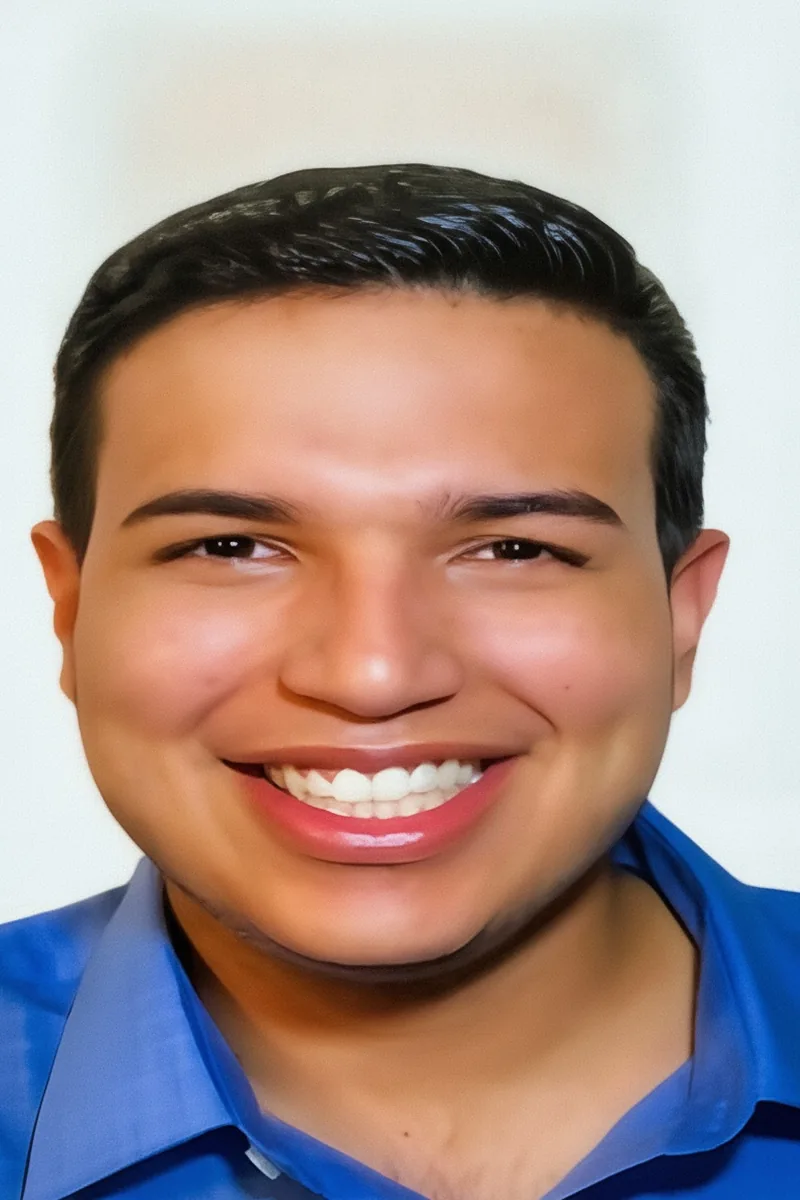
Having scored 5s on both AP Calculus BC and AP Physics C while at a Harvard-track pace of 16 AP courses, Derek built the kind of deep pre-calculus fluency — limits of rational expressions, trigonometric manipulation, composite function analysis — that only comes from leaning on those tools constantly across multiple disciplines. His computer science major adds a distinctive angle: he teaches sequences, recursive definitions, and function behavior through the algorithmic thinking that makes those concepts precise rather than fuzzy. A 1550 SAT and 4.9 rating round out the picture.
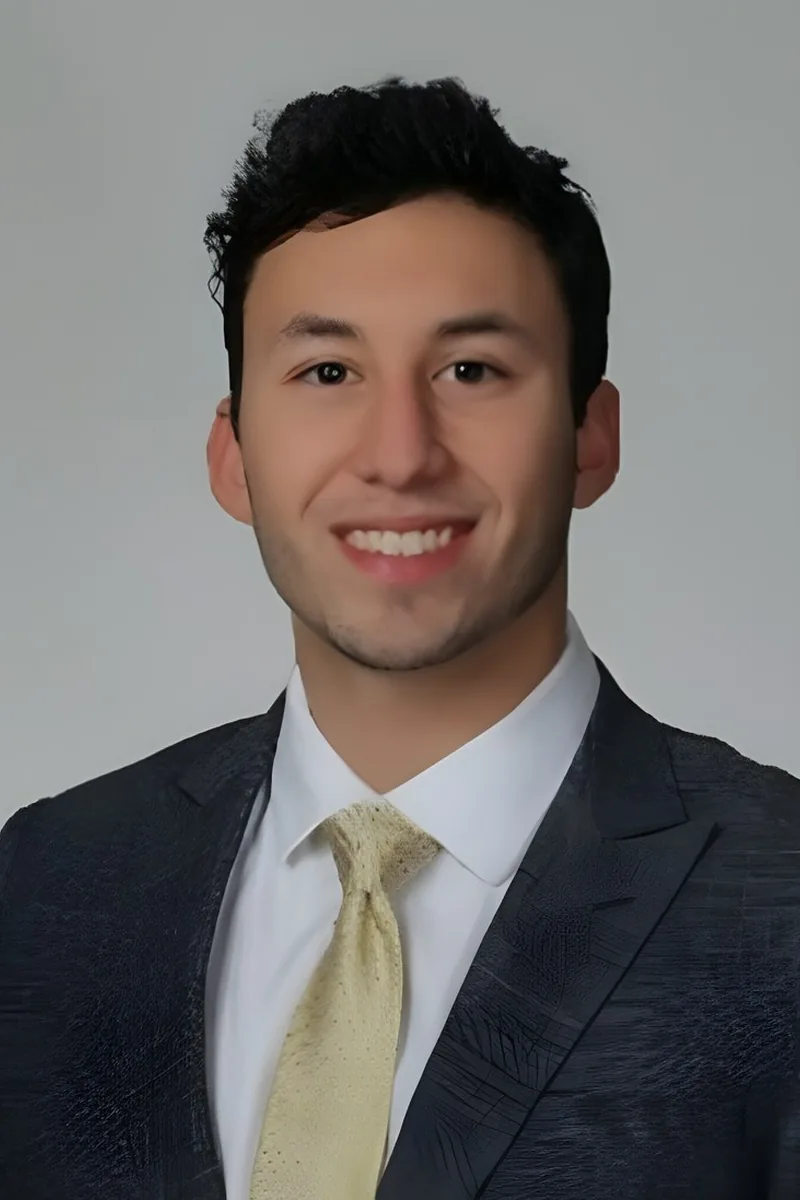
Mechanical engineering at the undergraduate level means Andrea spent semesters grinding through the exact transition pre-calculus prepares students for — mastering polar coordinates, parametric equations, and trigonometric identities before they became essential tools in dynamics and thermodynamics courses. She teaches that material as someone who knows precisely where each concept resurfaces, breaking down topics like composite functions and rational expressions by connecting them to the engineering problems they eventually power. Her 32 ACT and 4.8 rating reflect consistent results across a wide range of students.
Chemical engineering at Johns Hopkins means Joshitha encounters polynomial modeling, rational expressions, and trigonometric analysis in nearly every core course — she's not recalling pre-calculus from memory but actively using it. She zeroes in on the conceptual bridges between algebra and calculus, particularly how function transformations and composition set up the derivative thinking students will need next. Her 1580 SAT and 5.0 rating reflect the precision she brings to building that understanding.
Founding and running Mu Alpha Theta through all four years of high school meant Gabriel was teaching peers to reason through polynomial behavior, trig identities, and limit intuition long before he started tutoring professionally. His economics program at Penn keeps him fluent in the function modeling and algebraic structures that make pre-calculus the real gateway to higher math. A 35 ACT and 4.9 rating from students back up that depth.
I am graduated from Penn State University in Industrial Engineering in 2017. I've tutored ever since I was in high school, and I love helping people! I like to help my students understand math (and other topics) instead of just doing it blindly. My goal is to help my students improve their math (and other topics) and build skills that will help them find learning easier in the future! Fun fact, I used to work for Disney and I like to salsa dance!
Aerospace engineering at Princeton means Nicolas is constantly solving problems where trigonometric identities, parametric equations, and vector analysis aren't optional — they're the foundation of orbital mechanics and fluid dynamics. He teaches pre-calculus with that forward-looking fluency, breaking down how each concept slots into the bigger mathematical toolkit students will need in calculus and beyond. Holds a 5.0 rating and a 1580 SAT.
Growing up bilingual and pre-med might seem unrelated to pre-calculus, but Manuela's science prerequisites demand exactly the kind of functional reasoning this course builds — manipulating rational expressions, interpreting asymptotic behavior, and connecting algebraic structure to graphical output. She zeroes in on the transition points where students typically stall, like moving from memorizing trig values to actually understanding the unit circle as a tool. Her 1520 SAT and 5.0 rating confirm she delivers on the quantitative side.
Dalila's math degree means she didn't just pass through pre-calculus — she built on it through semesters of calculus, proof-based courses, and applied problem sets that kept circling back to the same core skills: manipulating rational expressions, reasoning about function behavior, and thinking fluently in trigonometric terms. She zeros in on the specific algebraic moves that trip students up during the transition from concrete arithmetic to abstract function analysis. Her 1520 SAT reflects the same quantitative precision she brings to breaking down transformations and compositions.
Human biology at Harvard means Destiny regularly encounters the mathematical scaffolding pre-calculus builds — exponential models for population growth, logarithmic scales for pH and enzyme activity, trigonometric functions for biorhythm analysis. She zeroes in on making the jump from algebraic manipulation to genuine functional thinking, especially around graph transformations and composite functions where students tend to lose their footing. A 35 ACT and 5.0 rating back up her quantitative instincts.
As a licensed math teacher with a mathematics degree, Jacob has spent years building the bridge between algebra and calculus in real classrooms — and pre-calculus is exactly that bridge. He digs into the spots where students typically stall, like connecting the behavior of polynomial and rational functions to their graphical representations, using scaffolded practice rooted in Common Core standards. Rated 5.0 by students.
Civil engineering coursework drills the connection between equations and physical structures — and that starts with the pre-calculus topics Wanqi uses constantly, like trigonometric functions for force resolution, polynomial modeling for load distribution, and conic sections for arch geometry. She tackles the course by bridging what students already handle in algebra to the functional reasoning calculus will demand, especially around transformations and composite functions. Her 1520 SAT and 4.8 rating round out a solid quantitative profile.
The jump to Pre-Calculus catches students off guard because it demands fluency with trigonometric identities, function transformations, and rational expressions all at once. Ankit tackles each of these by showing how they connect forward to calculus, giving students a reason to care about mastering unit circle values or composition of functions now rather than cramming later.
Graph theory and linear algebra formed the core of Benjamin's master's dissertation at the University of Essex, but the road there ran straight through pre-calculus — and he still thinks of it as the course where mathematical thinking genuinely shifts from computation to analysis. He digs into that transition with students, especially the moment when polynomial and rational function behavior stops being about solving equations and starts being about understanding structure. His dual math degrees mean he can trace every pre-calc concept forward into the advanced territory where it actually lands.
Andrew's environmental biology background means he's built models with exponential growth curves, logarithmic decay, and periodic functions long before most students see them labeled as pre-calculus — he teaches those function families by connecting them to the ecological data where they actually show up. His 33 ACT and writing minor give him the rare combination of quantitative skill and the ability to explain tricky concepts like composite functions or asymptotic behavior in plain, precise language.
Biomedical engineering at UIC meant Apoorva spent semesters immersed in the signal processing and biomechanical modeling that demand real command of trigonometric functions, polar coordinates, and composite function behavior — not just surface-level familiarity. She zeroes in on the conceptual bridges between algebra and calculus, particularly how transformations and rate-of-change intuition develop through careful work with function families. Her 34 ACT and 4.6 rating reflect steady results across a wide range of math students.
Daniel's applied math degree and computer science master's mean he's built the bridge from algebra to calculus twice — once through pure theory and once through implementation, where getting a function transformation wrong means your code breaks. He digs into the mechanics of rational functions, composite expressions, and trigonometric reasoning by emphasizing the structural logic that makes each topic predictable rather than mysterious. Holds a 5.0 rating.
During my Bachelor's studies at the University of Michigan-Dearborn, I was a mathematics and statistics tutor for a year, which I greatly enjoyed. I am currently a fourth-year Ph.D. student studying mathematics at the University of Florida. During my Ph.D. at the University of Florida, I was a teaching assistant for Calculus I, Calculus II, and Precalculus, and I was an instructor for a section of Calculus I. These experiences helped me develop my tutoring skills. Many students see math as a set of formulas that they can apply to the problems on their exams and homework. However, I feel that this way of thinking not only stifles true understanding, but also makes students' lives harder. My teaching philosophy is that if a strong conceptual understanding is built, then students will be well-equipped to answer any question that they can be asked. When I tutor, I make sure that students develop this foundation first and foremost.
With dual master's degrees in mathematics education and a state teaching certification, Anthony knows exactly where students lose the thread between algebra and calculus — and pre-calculus is where that unraveling usually happens. He zeroes in on the underlying reasoning behind topics like rational functions and asymptotic behavior, training students to extend their problem-solving to unfamiliar variations instead of leaning on memorized shortcuts. His 34 ACT confirms the quantitative depth behind that teaching philosophy.
Thirty years of teaching math and physics gives Michael an unusually clear picture of where pre-calculus students get stuck — and it's almost always at the transition from manipulating expressions to reasoning about function behavior. His molecular biology background means he taught himself to think in rates of change, exponential models, and periodic phenomena long before bringing those ideas into the classroom. He walks through topics like trigonometric identities and composite functions by connecting them to the calculus and physics concepts they're actually building toward.
I recently graduated from the University of Chicago with a B.S. in Mathematics and Computer Science, earning honors (cum laude) with a 3.88 GPA. This fall, I will begin a Ph.D. in Mathematics at Georgia Tech. I scored a 1550 on the SAT (790 Math, 760 Reading and Writing) and have a strong mathematical background spanning everything from foundational subjects to advanced university-level coursework. I have experience tutoring middle and high school students in topics ranging from algebra and geometry to calculus, as well as SAT and ACT math. My goal is to help students develop a genuine understanding of mathematics while building confidence and problem-solving skills. Whether you're preparing for the SAT or working to improve your performance in class, I'm committed to helping you succeed.
Scoring a 36 ACT while pursuing computer engineering at Georgia Tech means Yash didn't just pass through pre-calculus — he internalized the trigonometric and exponential reasoning that his engineering coursework now demands daily. He's especially sharp on the transition points where students stall: moving from memorizing unit circle values to actually understanding periodic behavior, or seeing why composite functions matter before calculus formalizes the chain rule. Rated 5.0 by students.
Juan's industrial engineering and statistics coursework at the University of Florida means he's constantly applying the exact toolkit Pre-Calculus builds — composing functions, manipulating logarithmic and exponential expressions, and reasoning about sequences and series. He zeroes in on the algebraic fluency that makes or breaks students when calculus arrives, especially strengthening the symbolic manipulation skills that often get glossed over in class. Rated 4.9 by students.
Civil engineering at UF means Cavan is constantly applying the tools pre-calculus introduces — solving systems with matrices, modeling load distributions with trigonometric functions, and analyzing rates of change that foreshadow calculus. He teaches the course knowing exactly which skills carry forward into engineering math, so students build real understanding of topics like composite functions and graphical transformations instead of surface-level familiarity. Holds a 5.0 rating and a 1500 SAT.
Philosophy at Columbia trained Ari to break complex arguments into logical steps — a skill that translates directly to pre-calculus, where students need to trace how algebraic rules extend into the behavior of polynomial, rational, and trigonometric functions. His 1550 SAT and experience teaching math across levels from elementary through AP Calculus BC mean he can pinpoint exactly where a student's algebraic reasoning starts to wobble and shore it up before the abstraction ramps up.
The leap into Pre-Calculus often feels like learning an entirely new language: polar coordinates, trigonometric identities, limits as a preview of calculus. Veronica tackles these topics by showing how each one feeds directly into the calculus and engineering coursework she's doing at the University of Florida. She makes the "why are we learning this" question easy to answer because she uses these tools every week.
I hold a Bachelor of Science degree in Mathematics from MIT, with a concentration in Philosophy at Harvard University. I have more than a decade of experience teaching High School Mathematics at international schools in Singapore, Germany, The Netherlands and Mexico. I am fluent in English and Spanish, and also have working proficiency in French, Italian, and German. I tutor Mathematics in both English and Spanish. I specialize in one to one tutoring, where I can tailor lessons to the specific needs of each student. My approach is structured and incremental, building understanding from first principles while encouraging independent thinking and problem solving. My goal is not only exam success, but also lasting confidence in Mathematics. I focus on clarity, solid foundations, and effective study habits that support students well beyond a single course or assessment. Many of my students have improved their grades significantly and gone on to succeed in competitive university programs.
The jump to pre-calculus trips up a lot of students because it layers multiple ideas at once: trigonometric identities, limits intuition, and the behavior of rational functions all converge. Navian's mechanical engineering background at UVA keeps him immersed in these exact concepts, and he connects them to real applications like wave motion and force analysis to make them click.
Most pre-calculus students hit a wall not because the math gets harder, but because the course demands a different kind of thinking — shifting from solving equations to analyzing how functions behave, transform, and connect. Emily's visual artist brain is surprisingly well-suited to this shift, since she naturally thinks in terms of transformations, symmetry, and spatial relationships when teaching topics like graphing rational functions or building intuition around the unit circle. Her 34 ACT and 5.0 rating confirm that the artistic perspective translates into real mathematical clarity.
The jump into pre-calculus — trigonometric identities, limits, and complex functions — trips up even strong math students who breezed through earlier courses. Maryam approaches each topic by connecting it to the algebra and geometry skills students already have, so concepts like polar coordinates or logarithmic functions don't feel like they appeared out of nowhere. Her 1540 SAT score speaks to the depth of her quantitative reasoning.
Priya's biotechnology program at UCF puts her squarely in the math that bridges algebra and calculus — she's actively using polynomial modeling, exponential growth curves, and trigonometric analysis in her science coursework every semester. That daily contact with the material means she teaches topics like graph transformations and composite functions as someone still fluent in the struggle of learning them, not someone reconstructing them from memory. Her 35 ACT and 4.8 rating back up the approach.
The jump to Pre-Calculus trips up a lot of students because it suddenly asks them to think about functions, limits, and trigonometric identities as interconnected ideas rather than isolated procedures. Javier walks through each concept methodically, connecting polynomial behavior and rational functions back to the algebra skills students already have. That bridging approach keeps the material from feeling like an overwhelming leap.
I am a current student at the University of Florida pursuing an Accounting degree and Entrepreneurship minor. Math has always been my passion, and I hope to show fellow students the fun in it!
Having completed the full IB program and twelve AP classes — earning National AP Scholar — Rithika built the kind of cumulative math fluency where each pre-calculus topic connects back to something she's already used. She's particularly sharp on the bridge between algebraic manipulation and the function-level thinking that trips students up: domain restrictions, end behavior, and how transformations actually reshape a graph rather than just shifting it on a page. Her Stanford coursework on the pre-med track keeps that quantitative reasoning active and current.
I am very interested in a career in the medical field, so I am apart of some pre-medical organizations. I really enjoy playing all different sports, from soccer to volleyball to tennis.
Trig identities and limit intuition tend to be the two places students stall out before calculus, and Daniel tackles both by tying them to concrete applications from his science background. His approach to pre-calc treats each topic as a tool students will actually use, which makes the abstraction feel purposeful rather than arbitrary.
I am working towards a Bachelor of Arts in Pure and Applied Mathematics as well as a Bachelor of Arts in Astronomy and Physics. I have enjoyed studying math and science since I was in elementary school. I would always help my friends out by answering their questions about the material. For about the last five years, I have had my own tutoring business where I have tutored a wide variety of math courses from elementary school math to pre-calculus and calculus. I like to make sure my students have a complete understanding of the core concepts before going into practice questions. I have also had experience helping my peers with physics and computer science courses.
Heading to law school after finishing a business economics degree at the University of Miami, Noah brings the kind of structured logical thinking to pre-calculus that makes polynomial behavior and rational function analysis feel less like guesswork. He zeroes in on building the algebraic reasoning that connects earlier coursework to the function transformations and logarithmic properties students need before calculus. His 32 ACT confirms solid quantitative instincts across the board.
The leap into Pre-Calculus trips up a lot of students because it demands fluency with trigonometric identities, complex numbers, and function transformations all at once. Arielle earned her B.S. in Mathematics and spent her college years peer tutoring these exact topics, so she knows which conceptual gaps tend to cause the biggest problems. She breaks down unit circle reasoning and limit intuition in ways that set students up for calculus rather than just getting them through the current chapter.
I have completed my Bachelor's degree from the University of Florida in both Biology and Business Administration. I currently love to tutor all students in numerous Mathematics and Science subjects as I want to spark that same passion that I have for these subjects. I have significant mastery of mathematics including pre-calculus, algebra 1/2, trigonometry, geometry, statistics, finite math, college level algebra, business math, and quantitative reasoning, etc. I have significant experience in science subjects including biology, chemistry, physics, anatomy, organic chemistry, and biochemistry as well. I love to help students use their logic and problem-solving skills in order to advance their learning ability to a higher degree more efficiently. While learning how to apply these skills in real life situations using both math and science topics, respectively. I like to tailor lesson plans and study strategies to that particular student (as we are all unique) to ensure each student understands the concepts completely. I love to help any and all students ranging from the inquisitive mind to a struggling student trying to achieve an A+ in class!
I am listening to and learning about him or her as an individual. I can also discover what motivates the student during this conversation and plan for how to frame future tutoring sessions in terms of what the student already knows and enjoys.
Testimonials
Because the right Pre-Calculus tutor makes all the difference.
Average Session Rating – Based on 3.4M Learner Ratings
Practice Pre-Calculus
Free practice tests, flashcards, and AI tutoring for Pre-Calculus
Nearby Pre-Calculus Tutors
Other Palm Bay Tutors
Related Math Tutors in Palm Bay
Frequently Asked Questions
Pre-Calculus shifts from procedural problem-solving to understanding the deeper concepts behind functions, trigonometry, and sequences. While Algebra focuses on solving equations, Pre-Calculus emphasizes recognizing patterns, analyzing function behavior, and connecting multiple representations (graphs, equations, tables). This conceptual leap is where many students struggle, but personalized 1-on-1 instruction helps you build these connections rather than just memorizing formulas.
Word problems require translating real-world situations into mathematical models—a skill that takes practice and strategy. Expert tutors help you develop a systematic approach: identifying what you know, defining variables, selecting the right function or equation, and checking if your answer makes sense in context. With guided practice and feedback on your reasoning, you'll build confidence in tackling unfamiliar problem types.
Graphing is how you visualize function behavior—seeing where functions increase, decrease, have asymptotes, or cross axes tells you far more than an equation alone. Pre-Calculus requires you to move fluidly between equations and their graphs, understanding how changes to an equation affect its shape. Personalized tutoring helps you develop this visual intuition, which is essential for success in Calculus and beyond.
Showing your work reveals your thinking process and helps identify exactly where errors occur—whether it's a conceptual misunderstanding or a calculation mistake. Teachers and tutors use your work to give targeted feedback and help you build problem-solving strategies you can apply to new situations. When you work with a tutor, they can guide you through each step and help you understand not just the answer, but why each step matters.
Math anxiety often stems from feeling lost or unsupported, but personalized 1-on-1 instruction creates a low-pressure environment where you can ask questions freely and learn at your own pace. Tutors help you break problems into manageable steps, celebrate small wins, and build confidence through mastery. Many students find that understanding the 'why' behind concepts—rather than just memorizing—transforms their relationship with math.
Your first session is about building rapport and understanding where you are. A tutor will ask about your current Pre-Calculus topics, identify specific challenges (whether it's trigonometry, logarithms, or function analysis), and discuss your goals. From there, you'll work together on a problem or concept to establish a baseline and create a personalized plan that addresses your needs and learning style.
Yes. Pre-Calculus courses in Palm Bay schools may follow different textbooks and pacing, but the core concepts—functions, trigonometry, sequences, and limits—are consistent. Varsity Tutors connects you with expert tutors who adapt to your specific curriculum and materials, whether you're using a traditional textbook, an online platform, or your teacher's custom resources. This ensures tutoring aligns seamlessly with what you're learning in class.
Pre-Calculus is the foundation for Calculus—if you understand functions, limits, and rates of change deeply, Calculus becomes far more manageable. Tutoring focuses on building conceptual understanding and problem-solving flexibility, not just procedural skills. By mastering Pre-Calculus concepts and developing confidence in your abilities, you'll be well-prepared for the next level of mathematics.
Let’s find your perfect tutor
Answer a few quick questions. We’ll recommend the right plan and match you with a top 5% tutor.