Award-Winning College Physics Tutors
serving Jacksonville, FL
College Physics
Tutors in Jacksonville
Private 1-on-1 tutoring, weekly live classes for academic support, test prep & enrichment, practice tests and diagnostics, and more to elevate grades and test scores.
Based on 3.4M Learner Ratings
UniversitiesSchools & Universities
DeliveredHours Delivered
ProficiencyGrowth in Proficiency
Who needs tutoring?
No obligation. Takes ~1 minute.

A molecular and cellular biology major might not scream 'physics tutor,' but Jason's AP Chemistry tutoring background and heavy science coursework at University of North Florida mean he's comfortable with the quantitative reasoning that underpins mechanics and thermodynamics — especially the overlap between physical chemistry and introductory physics concepts like energy, pressure, and kinetics. He breaks problems down step by step, making sure the setup logic clicks before any numbers get plugged in. Holds a 5.0 rating.
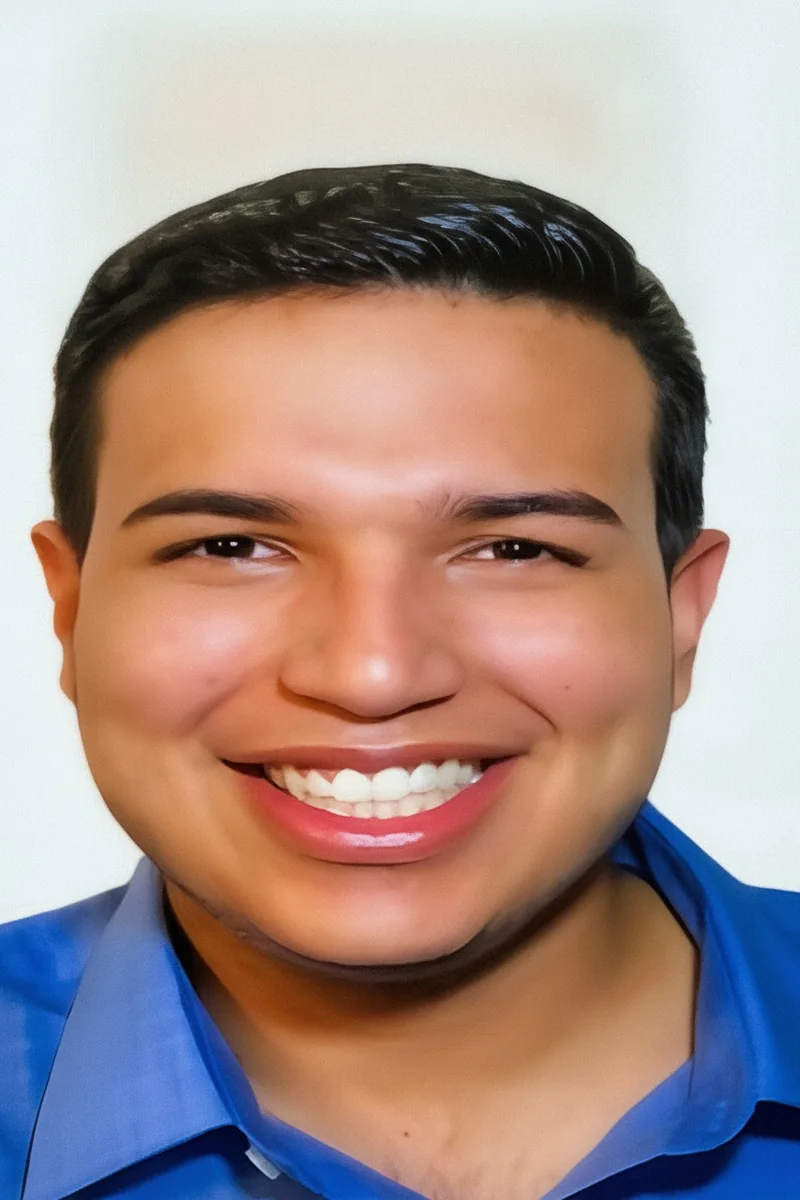
Studying computer science and applied math at Harvard means Derek uses physics constantly — from electromagnetism in circuit design to mechanics in computational modeling. He tackles college-level topics like Lagrangian dynamics and wave equations by connecting the math to physical intuition, making dense derivations feel less abstract.
I am graduated from Penn State University in Industrial Engineering in 2017. I've tutored ever since I was in high school, and I love helping people! I like to help my students understand math (and other topics) instead of just doing it blindly. My goal is to help my students improve their math (and other topics) and build skills that will help them find learning easier in the future! Fun fact, I used to work for Disney and I like to salsa dance!
Daniel's applied math degree gives him the calculus fluency that college physics lives on — setting up integrals for center-of-mass problems, solving second-order differential equations for oscillatory motion, working through vector fields in electromagnetism. His software development career adds a second layer: he teaches students to approach multi-step physics problems the way a programmer debugs code, isolating variables and testing assumptions systematically before committing to a solution path. Rated 5.0 by students.
Graduate statistics teaching at USF means Matthew regularly translates complex quantitative relationships into something students can actually work with — a skill that transfers directly to college physics, where setting up equations of motion or interpreting force diagrams demands the same structured, step-by-step reasoning. His psychology background at Johns Hopkins also included a heavy dose of research methods and data analysis, so he's comfortable walking through experimental design and error propagation in physics labs. Rated 4.8 by students.
A medical student who triple-majored in theoretical mathematics, computer science, and chemistry, Lance has the unusual combination of deep calculus fluency and hands-on science training that college physics actually requires — he's not just recalling formulas but deriving them from first principles. His TA experience across more than a dozen courses means he's seen the specific conceptual breakdowns students hit in topics like electromagnetism and rotational motion, and he knows how to rebuild that understanding on the spot.
Neuroscience at Northwestern meant Amira spent semesters deep in the physics that governs how the brain actually works — electrical potentials across membranes are capacitor problems, ion flow follows current equations, and every fMRI study she read depended on electromagnetism. That pre-med science track also put her through the full calculus-based mechanics and thermodynamics sequence, so she can walk through force diagrams and energy conservation with the fluency of someone who needed those tools to understand her own major.
As a medical student who scored a 33 ACT, Kaitlyn tackles college physics problems the way she learned to in her biology coursework — by grounding abstract forces, energy, and wave concepts in the physical systems they actually describe, from pressure in fluid columns to the optics behind a microscope. She breaks down the problem-setup phase that most students rush past, teaching them to identify whether they're dealing with conservation laws, Newton's laws, or field equations before touching a formula. Rated 4.8 by students.
Graduate-level botany and marine biology involve more physics than most people realize — fluid dynamics in plant vasculature, optics in photosynthesis research, wave mechanics in marine acoustics — so Tara came into college physics with a working sense of how these concepts behave in living systems. She taught lab courses during her master's program and developed a knack for giving students new frameworks for attacking problems, particularly in mechanics and thermodynamics, that click where textbook explanations don't.
St. John's College runs entirely on primary sources — Kelsey reads Newton's *Principia* and Maxwell's original papers, not textbook summaries of them, which means she understands the reasoning physicists actually used to derive the laws that show up on college exams. That deep-reading approach pays off when students need to untangle what a problem is really asking before they can set up the math. Her 34 ACT reflects the analytical sharpness she brings to quantitative coursework.
Biochemistry forced Lorenzo to internalize the physics that most pre-med students skim past — thermodynamic cycles in metabolic pathways, electrostatics in molecular interactions, and fluid dynamics in biological systems. He brings that cross-disciplinary lens to college physics, breaking down mechanics and energy problems by connecting the math to the physical picture rather than treating equations as recipes to follow.
Being a medical student at UCF who previously TA'd biology at UCSD, Kevin knows exactly where the physics shows up that pre-med students dread — optics in vision, fluid dynamics in circulation, pressure and gas behavior in respiration — and he teaches those connections explicitly rather than leaving students to figure them out on a problem set. His human biology degree means he naturally anchors abstract force diagrams and energy calculations to the body systems students already care about. Rated 4.9 by students.
As a biochemistry TA and pre-med student at the University of Florida, Rangish regularly encounters physics principles hiding inside biological systems — osmotic pressure as a fluid statics problem, diffusion rates governed by kinetic energy, enzyme kinetics rooted in thermodynamic favorability. That cross-disciplinary lens makes him especially useful for students who need to see how force, energy, and motion concepts actually connect to something beyond the textbook problem set. Rated 4.9 by students.
I am looking to help you with your math and physics questions. I am a graduate student studying hurricane physics and enjoy using my deep understanding of material to help others. Hope to meet you soon!
Studying for the MCAT while holding a human biology degree means Susie is actively grinding through the physics that overlaps both exams — optics, fluid dynamics, forces, and energy — keeping her problem-solving sharp and her memory of common stumbling points fresh. She connects physics concepts back to biological systems (think pressure in blood vessels or torque in joint mechanics), which gives pre-med students an anchor that makes abstract equations feel purposeful. Rated 4.8 by students.
Fifteen passed AP exams — including both Physics C courses — means Nathan encountered college-level mechanics and E&M before most students set foot in a university lecture hall, and his computer science work at UCF keeps him sharp on the mathematical and logical problem-solving those courses demand. He breaks down force diagrams, circuit problems, and wave behavior by walking through the reasoning step by step, so the physics clicks rather than just the algebra. Rated 4.9 by students.
Neuroscience is sneakily physics-heavy — membrane capacitance, ionic current flow, diffusion equations, electromagnetic principles behind EEG and MRI — and Evan's B.S. in the field means he's worked through all of it firsthand. That gives him a practical angle on college physics topics like circuits, waves, and electromagnetism that connects textbook problems to systems students can actually picture. Rated 5.0 by students.
I'm currently an undergraduate student at Georgia Institute of Technology pursuing a degree in Electrical Engineering. I mostly tutor subjects that reside in the STEM field as those subjects are my strong points. I have been a tutor in the past back in high school. During that time, I realized that helping students understand difficult material can be very awarding. In my free time, when I'm not studying for school or practicing sports, I like to play video games and hangout with friends. Every once in a while I'll pick up my violin and play songs that I've learned in the past; I find it very relaxing.
College-level physics demands comfort with calculus-based derivations that many students didn't encounter in high school. Conrad's biophysics coursework covered mechanics, thermodynamics, and electrodynamics at the university level, so he knows exactly where the difficulty spikes — particularly around rotational dynamics and Maxwell's equations. He walks through derivations step by step, connecting each line of math back to the physical picture.
Biomedical engineering at Miami means Brandon is knee-deep in the physics that governs medical devices — fluid dynamics through artificial valves, electrical signals in biosensors, stress analysis on implant materials — so the problems on a college physics syllabus map directly onto his daily coursework. He breaks down force diagrams and energy methods by tying them back to the engineering applications that make the concepts stick. Holds a 5.0 rating.
A microbiology degree from the University of Florida means Roy spent years in courses where physics shows up uninvited — diffusion rates, osmotic pressure, centrifugation forces, light microscopy optics — so he knows how to ground abstract physics concepts in processes students can actually picture. He breaks down mechanics and wave behavior by connecting the math to the physical situation first, making sure the equation choice follows from understanding rather than guesswork.
Annalyn's aeronautical engineering degree means she didn't just study college physics — she applied it, calculating lift forces, analyzing fluid flow over airfoils, and solving statics problems where getting the free-body diagram wrong meant a failed design. That hands-on engineering context makes her especially effective at teaching mechanics and dynamics, since she can show students how textbook concepts like Newton's laws and energy conservation play out in real systems. Her additional training in laser and optical technology adds depth when courses reach wave optics and electromagnetic radiation.
Biomedical sciences coursework gave Emyli a front-row seat to physics in action — fluid pressure in circulatory systems, optics in diagnostic imaging, biomechanical forces on joints and tissues — so she teaches college physics concepts through the biological applications that make them concrete. She's especially strong at walking through the math behind mechanics and wave phenomena, connecting each equation back to something students can visualize. Rated 4.6 by students.
Studying biophysics at Rice means Aadith lives where physics and biology collide — modeling protein folding forces, analyzing fluid flow through membranes, applying thermodynamic principles to living systems — so he brings a concrete, research-informed perspective to the mechanics, waves, and electromagnetism that fill college physics syllabi. His 1590 SAT reflects serious quantitative chops, and his dual exposure to physics and biochemistry means he can walk through a tough problem from multiple angles until the reasoning clicks.
Graduate work in Chemical and Physical Biology at Vanderbilt meant Dennis spent years applying thermodynamics, fluid dynamics, and electromagnetism to biological systems — the same core physics concepts that fill college problem sets, just in a research context where getting the physics wrong meant failed experiments. He breaks down force, energy, and field problems by connecting them to the physical intuition behind the math, which is especially useful for pre-med and life science students navigating calculus-based physics for the first time. Holds a 5.0 rating.
Predentistry requires a deep pass through college physics — optics, fluid dynamics, mechanics of materials — and Erica tackled that coursework at Harvard alongside a History of Science degree that gave her an unusual ability to explain *where* physical concepts come from and how they evolved into the frameworks students use today. She breaks down problem-solving by connecting the conceptual narrative to the math, so students aren't just plugging into formulas but understanding the physics driving each step. Rated 4.9 by students.
College-level physics layers calculus and more rigorous problem-solving onto the conceptual foundations from high school, and Samantha's Cornell science background means she's fluent in both the math and the theory. She breaks down topics like rotational dynamics, electric fields, and thermodynamic cycles using visual models and step-by-step dimensional analysis that keep the problem-solving process clear.
Running an immunology lab at Columbia University Medical Center means Matthew applies physics daily in ways most tutors haven't — calibrating imaging equipment, analyzing force and pressure data in tissue samples, and troubleshooting instruments that depend on optics and electromagnetism. That hands-on fluency, combined with a physics degree and a 35 ACT, lets him teach college-level mechanics and E&M problems by connecting equations to the physical systems they actually describe.
Three years of tutoring introductory physics while completing dual bachelor's degrees in physics and mathematics gave Justin a detailed map of exactly where students lose the thread — the jump from one-dimensional kinematics to rotational analogs, the shift from intuitive force reasoning to formal energy methods. His PhD in Computational Mathematics at the University of Chicago deepened that foundation, adding fluency with the differential equations and vector calculus that make the leap from algebra-based to calculus-based physics so steep. Rated 5.0 by students.
College-level physics demands more mathematical rigor than high school — suddenly, problems involve calculus-based derivations and vector analysis alongside conceptual reasoning. As a Johns Hopkins biomedical engineering and applied math student, Nicholas lives in that intersection of advanced math and physical modeling every semester. He walks through topics like rotational dynamics, electric fields, and wave optics with the precision college courses require.
A chemistry degree from Yale means Zosia spent years in courses where physics does the heavy lifting — thermodynamics driving reaction spontaneity, quantum mechanics explaining atomic structure, electrostatics governing molecular interactions — so she knows these concepts from the inside out. She's particularly effective at teaching students to translate word-heavy problem statements into clean free-body diagrams or energy bar charts before touching an equation. Rated 4.9 by students.
Studying applied physics at Cornell means Ritesh isn't just teaching college physics concepts — he's actively using them in coursework and research. He digs into the areas that trip up most introductory students, like applying Newton's laws to rotational systems, working through Gauss's law problems, or connecting energy conservation to real circuits. His 4.6 rating speaks to his ability to make those connections click.
Studying civil engineering at Cornell means Ryan solves physics problems for a living — calculating load distributions, analyzing force vectors in structural systems, and applying fluid mechanics principles that come straight out of college physics coursework. He scored a 35 ACT, which speaks to the quantitative precision he brings when breaking down mechanics or electromagnetism problems step by step. Rated 4.7 by students.
Working at an ExxonMobil refinery before MIT Sloan meant Caroline spent years applying thermodynamics, fluid mechanics, and force analysis to real industrial systems — the same physics that fills college problem sets, except with actual consequences for getting the math wrong. Her mechanical engineering M.S. from WashU (magna cum laude) gave her deep fluency with calculus-based derivations, so she can walk through everything from torque problems to heat transfer without skipping the steps that textbooks gloss over. Rated 5.0 by students.
Chemical engineering at Vanderbilt means Greg solves physics problems daily — fluid mechanics, heat transfer, thermodynamics, and force balances are baked into every core course, so his explanations come from repeated, hands-on application rather than textbook summaries. His math double major gives him the calculus fluency to walk through derivations cleanly, especially when problems involve integration over continuous systems or solving second-order differential equations of motion. Rated 5.0 by students.
Testimonials
Because the right College Physics tutor makes all the difference.
Average Session Rating – Based on 3.4M Learner Ratings
Nearby College Physics Tutors
Other Jacksonville Tutors
Related Science Tutors in Jacksonville
Frequently Asked Questions
College Physics requires both conceptual understanding and problem-solving skills, and many students struggle with translating real-world scenarios into mathematical models. Common pain points include mastering unit conversions, balancing equations, applying Newton's laws to complex situations, and visualizing abstract concepts like electromagnetic fields and wave behavior. Personalized tutoring helps students build a solid foundation in these areas by breaking down difficult concepts and connecting them to practical applications.
Lab work is crucial for developing scientific reasoning and understanding how theoretical concepts apply in practice. Tutors can help you design experiments, analyze data, interpret results, and write clear lab reports that demonstrate your understanding of the scientific method. They can also help you troubleshoot experimental challenges and connect your lab observations back to the physics principles you're learning in lecture.
Memorizing formulas might help you pass a single test, but true understanding means you can apply physics principles to new, unfamiliar problems—which is what College Physics courses demand. Expert tutors focus on building conceptual understanding by helping you visualize how forces interact, why equations work the way they do, and how to approach problem-solving systematically. This deeper understanding leads to better grades and genuine confidence in the subject.
Your first session is about understanding where you are and where you want to be. A tutor will assess your current grasp of foundational concepts, identify specific areas of struggle (whether that's kinematics, energy, circuits, or something else), and learn about your learning style. From there, they'll create a personalized plan to address your challenges and help you build the skills you need to succeed in your course.
Problem-solving in College Physics isn't just about plugging numbers into formulas—it's about understanding what's happening physically and choosing the right approach. Tutors teach you systematic strategies for tackling problems: identifying what you know and what you need to find, choosing appropriate equations, checking your work, and recognizing when your answer makes physical sense. With guided practice and feedback, you'll develop the confidence and skills to handle increasingly complex problems.
Many College Physics concepts—like electric fields, wave interference, or orbital mechanics—are hard to picture. Tutors use diagrams, simulations, real-world analogies, and step-by-step explanations to make abstract ideas concrete and intuitive. By connecting these concepts to things you can observe or imagine, you'll develop a deeper understanding that makes problem-solving and exam preparation much easier.
Varsity Tutors connects you with expert tutors for College Physics for students in Jacksonville who understand both the subject matter and your specific needs. You can share details about your course, your challenges, and your goals, and we'll match you with a tutor who's experienced in helping students master College Physics concepts and succeed in their coursework.
Absolutely. Tutors can help you review key concepts, practice problem-solving under timed conditions, identify gaps in your understanding, and build test-taking strategies. They'll focus on the topics most likely to appear on your exam and help you develop the conceptual clarity and problem-solving speed you need to perform confidently on test day.
Let’s find your perfect tutor
Answer a few quick questions. We’ll recommend the right plan and match you with a top 5% tutor.