Award-Winning ACT Tutors
serving Fort Collins, CO
ACT
Tutors in Fort Collins
Private 1-on-1 tutoring, weekly live classes for academic support, test prep & enrichment, practice tests and diagnostics, and more to elevate grades and test scores.
Based on 3.4M Learner Ratings
UniversitiesSchools & Universities
DeliveredHours Delivered
ProficiencyGrowth in Proficiency
Who will be getting tutoring?
No obligation. Takes ~1 minute.
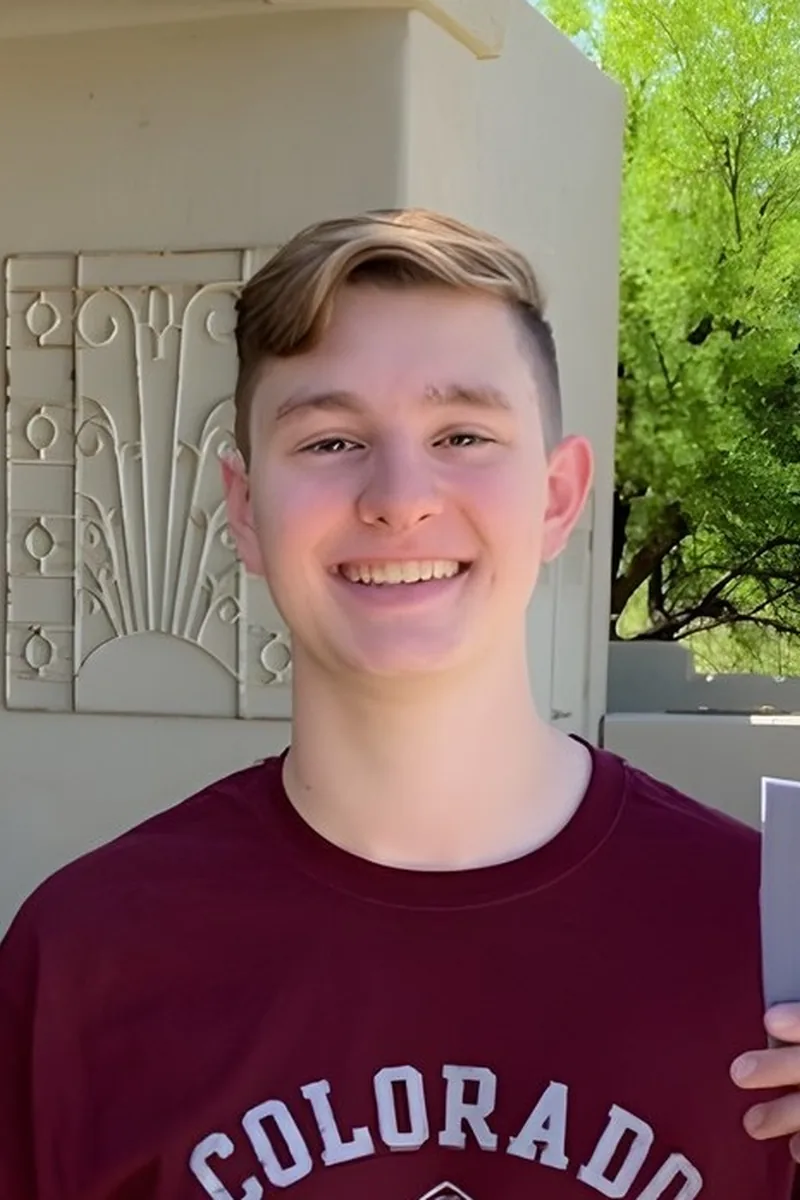
Studying both Applied Mathematics and Engineering Physics at Colorado School of Mines means Jude doesn't just know the ACT's Math and Science content — he thinks in it daily, which frees up prep time to zero in on the English and Reading strategies that round out a top score. His 36 composite came from treating each section like a distinct problem set with its own rules, and he runs sessions as back-and-forth conversations rather than lectures, pressing students with questions until they can spot their own mistakes in real time. Rated 4.9 by students.

Scoring a 34 composite on the ACT taught Brockton which strategies actually move the needle — especially on the Science section, where his neuroscience background makes parsing dense data passages second nature. He studied pedagogy formally as a learning assistant at CU Boulder, so he breaks down pacing, question triage, and section-specific tactics in a way that's structured rather than improvised. That combination of high-score experience and real teaching training translates directly into efficient prep sessions.
Scoring a 35 composite means Risha knows how to perform consistently across all four ACT sections — not just ace one and coast on the others. As a chemical engineering major at Georgia Tech, she brings particular strength to the Math and Science sections but also breaks down the English and Reading passages using the same systematic, pattern-based approach she teaches for quantitative problems. Rated 5.0 by students, she tailors pacing strategies and question-triage techniques to each student's score goals.
Mechanical engineering students eat math and physics for breakfast, which gives Christian a natural home in the ACT's Math and Science sections — but his college essay and literature tutoring experience means the English and Reading halves aren't afterthoughts either. He treats the ACT as a skills test that rewards pattern recognition over panic, and his 34 composite backs that up. Rated 5.0 by students.
Double-majoring in biochemistry and MCD biology at CU Boulder means Oliver genuinely understands the science content buried in ACT passages — he reads those experiment-based questions the way they're meant to be read, as data problems rather than science trivia. That same analytical training carries into Math, while his college essay and literature tutoring experience keeps his English and Reading strategies grounded in real writing mechanics. He scored a 33 composite and holds a 5.0 rating from students.
Colton scored a 32 on the ACT and has since navigated the SAT, AP, IB, and MCAT exams as well — so he knows standardized testing inside and out. He breaks the ACT into manageable strategies for each section, from pacing on the Math portion's later trigonometry questions to eliminating answer choices efficiently in Science. Rated 4.7 by students, he uses shortcuts and pattern recognition to turn test anxiety into confidence.
Rohith's astronomy major means he's comfortable with the quantitative reasoning and data-heavy passages that define the ACT Science section, while his experience teaching history, literature, and essay editing keeps the English and Reading sides covered without gaps. He earned a 32 composite and approaches prep by connecting each section's content to the broader analytical skills students already have — turning unfamiliar graph questions or rhetorical strategy problems into something recognizable.
Rosemary scored a 32 on the ACT and tutors all four sections — English, Math, Reading, and Science — which means students get a single tutor who can address weaknesses across the entire exam instead of piecing together help from multiple sources. Her environmental biology background is especially useful for the Science section, where interpreting experimental designs and conflicting viewpoints trips up even strong students. She breaks each passage type into a repeatable strategy so test day feels familiar rather than frantic.
Studying astrophysics and chemistry at CU Boulder means Graham juggles the exact mix of quantitative reasoning, scientific data analysis, and technical reading that the ACT throws at students across all four sections. He earned a 33 composite and uses his dual-science background to demystify the Science section's graph-heavy passages while keeping his English and Reading strategies grounded in the analytical writing he does for college coursework. Rated 5.0 by students.
Scoring a 32 ACT composite while double-majoring in Biotechnology and Forensic Science, Arely knows how to manage time-intensive study schedules and still perform on test day. She breaks the exam into section-specific strategies — from pacing on the Science passages to eliminating answer choices efficiently in English — so students build confidence across all four sections.
Computer science at KU means Austin thinks in logic and problem-solving, which shows up most clearly in how he teaches the ACT Math section's later questions — the ones where brute-force calculation fails and strategic reasoning saves time. His 33 composite and breadth across English, Reading, and Science let him build a full-test plan, but he's particularly sharp at helping students decode the Science section's dense graphs without getting lost in the experimental details. Rated 5.0 by students.
Licensed to teach high school and trained in philosophy — a discipline built on dissecting arguments and spotting logical gaps — Paige applies that same analytical lens to every ACT section, from the rhetoric-heavy English questions to the data-heavy Science passages. Her 32 composite, 5.0 student rating, and experience teaching everything from calculus to Spanish mean she can genuinely address content weaknesses across the full exam rather than just coaching test tricks.
Three semesters teaching ESL to immigrants and refugees at Tufts gave Danielle something most ACT tutors lack — a trained instinct for spotting exactly where a student's understanding breaks down and adjusting on the fly. She earned a perfect 36 composite and applies that adaptability across all four sections, with particular strength in the English and Reading strategies her language-teaching background sharpened. Rated 5.0 by students.
Most ACT prep treats all four sections like they require the same skillset — Benjamin actually lives in both worlds, with a computer science degree and a graduate English program at Columbia giving him native fluency in quantitative reasoning and close reading alike. He earned a perfect 36 composite and uses that dual background to teach section-specific strategies, whether it's eliminating trap answers in Reading or managing the Math section's escalating difficulty curve. Rated 5.0 by students.
Competition math experience and a 36 composite mean Tracy doesn't just know the ACT Math section — she knows how to move through it at speed, recognizing which problems reward calculation and which reward estimation. Her economics training sharpens the data-reading and logical reasoning that drive the Science and Reading sections, while native Mandarin fluency reflects the kind of disciplined language processing that translates surprisingly well to ACT English grammar patterns. Rated 4.9 by students.
Notre Dame trained Benjamin in finance and economics, but his 36 ACT composite — a perfect score — is what matters here: he knows every section cold and teaches the specific computation shortcuts and pattern-recognition tricks that turn near-misses into correct answers under time pressure. His math and science instincts are obvious, but his breadth across writing, literature, and essay editing means the English and Reading sections get the same depth of attention. Rated 5.0 by students.
Neuroscience at Columbia trains a specific kind of thinking — pulling signal from noise in dense, data-heavy material — and that's essentially what the ACT Science and Reading sections demand. Sarah scored a 35 composite and applies that same analytical rigor across all four sections, teaching students to decode unfamiliar passages quickly and avoid the second-guessing that burns time. Rated 5.0 by students.
Having recently taken the ACT herself and earned a perfect 36 composite, Rhea knows the difference between understanding content and understanding the test — two separate skills that require separate strategies. Her pre-med coursework at the University of Chicago keeps the Science and Math sections second nature, while her Spanish and literature background means she's equally comfortable drilling the rhetorical and grammar patterns that drive English and Reading scores. Rated 4.8 by students.
A PhD in Computational Mathematics from the University of Chicago paired with dual bachelor's degrees in physics and math means Justin doesn't bluff his way through any ACT section — the Math and Science content is second nature, and his literature, philosophy, and essay editing background keeps the English and Reading sides just as grounded. He earned a 1560 SAT and 33 ACT composite, and he uses that cross-disciplinary fluency to teach students how each section actually thinks, from the Science section's emphasis on graph literacy over scientific knowledge to the English section's small set of recycled grammar conventions. Rated 5.0 by students.
Northwestern's Honors Program in Medical Education compressed Anna's premed and MD training into a single accelerated track — meaning she learned early how to master large volumes of material under tight time constraints, which is essentially what the ACT demands across all four sections. She scored a perfect 36 composite and uses that experience to teach students how to allocate their attention strategically, particularly on the Reading and Science sections where running out of time costs more points than content gaps. Rated 5.0 by students.
Having just gone through the ACT herself — earning a perfect 36 composite — Sreya knows which moments in each section actually cost students points, from the tricky pronoun-antecedent questions buried in English to the time crunch on Science's conflicting-viewpoints passages. Her chemistry and computer science coursework at Michigan means the Math and Science content is second nature, freeing her to zero in on the reading speed and strategic elimination skills that push scores from the low 30s into the mid-30s. Rated 5.0 by students.
Bidyut's biomedical engineering and computer science coursework at Johns Hopkins means the ACT's Math and Science sections play to strengths he uses every day — but his tutoring across literature, history, psychology, and essay editing keeps the English and Reading strategies just as sharp. He earned a perfect 36 composite and uses that full-spectrum background to diagnose exactly which question types are costing a student points, then builds targeted drills around those specific weaknesses. Rated 5.0 by students.
Dana's public policy training at Brown means she spent years dissecting dense arguments and pulling evidence from complex texts — the exact muscle the ACT's Reading and English sections test, and a skill most prep courses gloss over. Her perfect 36 composite means she's equally sharp on Math and Science, where she teaches students to stop overthinking data passages and start treating them as straightforward information-retrieval exercises.
Cornell's chemical engineering program forced Rahul to master everything from thermodynamics to technical writing under pressure — a combination that maps neatly onto the ACT's full spread of math, science, and English content. He earned a perfect 36 composite and leans heavily on conceptual understanding when prepping students, teaching them to reason through unfamiliar Science passages and tricky Math problems instead of relying on memorized shortcuts. Rated 4.9 by students.
Testimonials
Because the right ACT tutor makes all the difference.
Average Session Rating – Based on 3.4M Learner Ratings
Practice ACT
Free practice tests, flashcards, and AI tutoring for ACT
Nearby ACT Tutors
Other Fort Collins Tutors
Related Test Prep Tutors in Fort Collins
Frequently Asked Questions
Varsity Tutors matches Fort Collins students with expert ACT tutors for 1-on-1 instruction. We pair each student with a tutor based on their specific needs, learning style, and goals.
Whether you need homework help, exam prep, or want to get ahead, our ACT tutors are ready to help.
Common challenges include gaps from earlier material, difficulty with specific concepts, and trouble applying learning to new problems. These issues can snowball quickly in ACT.
A tutor identifies where you're stuck, fills in gaps, and provides targeted practice. The 1-on-1 format means you get help exactly where you need it.
Tutors work with your student's actual coursework—homework assignments, class notes, and upcoming tests. This keeps tutoring directly relevant to what's happening in the classroom.
When you share information about your student's school and curriculum, we can match you with a tutor who has relevant experience.
All tutors complete background checks, credential verification, and teaching evaluation. Many of our ACT tutors hold advanced degrees or have years of teaching experience.
You can review tutor profiles to find someone with the right background for your student's level and needs.
Many students see improved grades within a few weeks, along with better understanding of ACT concepts and more confidence tackling challenging material.
Tutors track progress and adjust their approach to ensure continued improvement.
Most students benefit from 1-2 sessions per week. More frequent sessions help if your student is significantly behind or has an important exam coming up.
Your tutor can recommend a schedule based on your student's specific situation and goals.
Tutoring is purchased in packages of hours, with rates varying by tutor experience. Varsity Tutors offers several options to fit different budgets and needs.
You can discuss pricing during your consultation to find what works best.
Your tutor will assess where your student is, discuss goals, and start working on priority areas. Most students bring current homework or upcoming test material to focus on.
By the end, you'll have a clear sense of how the tutor can help and a plan for moving forward.
Let’s find your perfect tutor
Answer a few quick questions. We’ll recommend the right plan and match you with a top 5% tutor.