Award-Winning AP Calculus AB Tutors
serving Aurora, CO
AP Calculus AB
Tutors in Aurora
Private 1-on-1 tutoring, weekly live classes for academic support, test prep & enrichment, practice tests and diagnostics, and more to elevate grades and test scores.
Based on 3.4M Learner Ratings
UniversitiesSchools & Universities
DeliveredHours Delivered
ProficiencyGrowth in Proficiency
Who needs tutoring?
No obligation. Takes ~1 minute.

Colton's biomedical engineering coursework at UVA required fluency in calculus well beyond the AP level, which means he can explain limits, derivatives, and integrals with the kind of depth that makes free-response questions feel manageable. He breaks down the chain rule, related rates, and Riemann sums using gradual build-up rather than formula memorization, so the reasoning behind each step clicks.
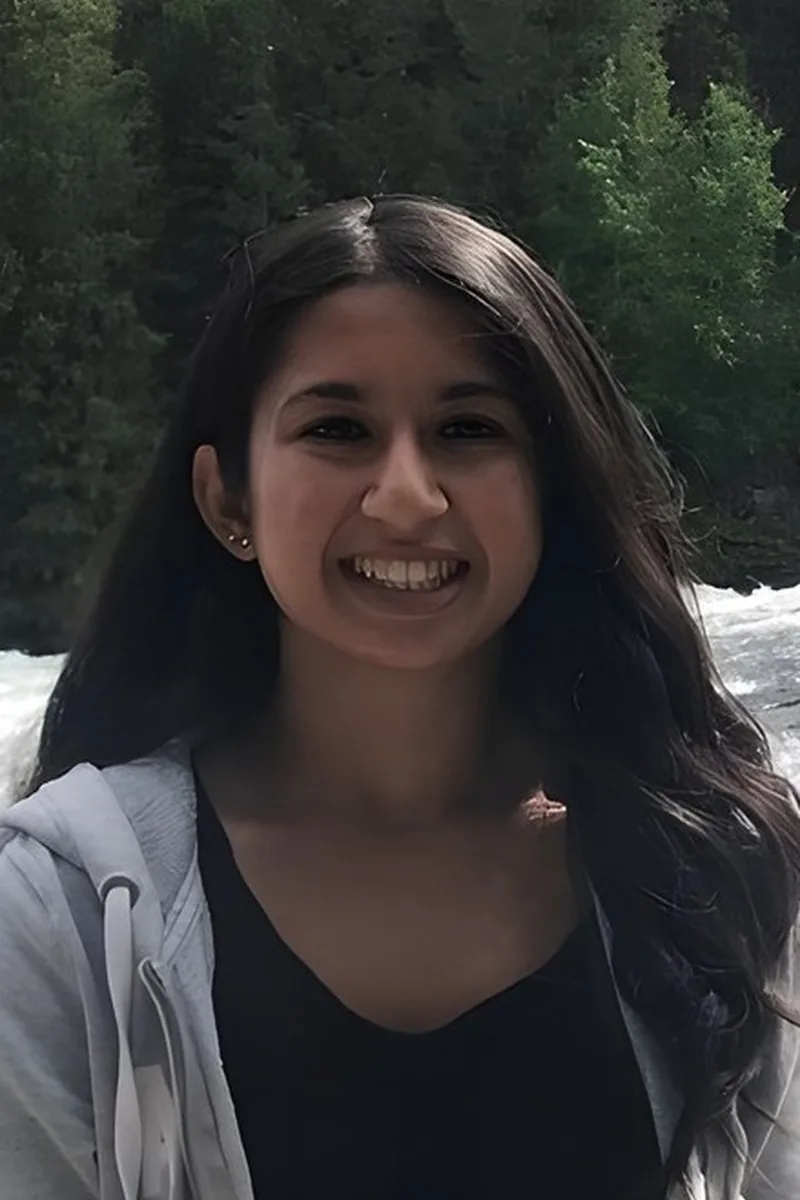
I am a student at the Georgia Institute of Technology studying Chemical Engineering. For the past several years, I have worked with students extensively. Through hosting events for younger kids to learn about STEM and for older teens to practice empathetic design, I know the importance of teaching students in ways that engage them rather than frustrate them, which I apply to my teaching. I have tutored high school students in a drop-in resource center in various subjects including math of all levels, chemistry, and English, making me adequately equipped in a variety of topics. I have also tutored several students long-term. Establishing relationships with students and exploring their unique learning styles is my favorite part of tutoring. I prioritize helping students discover HOW to learn in a manner that is the most effective for them, so they can begin to use those skills on their own throughout their education. Learning is a lifelong skill that requires practice for improvement; I strive to help my students gain confidence in their ability to learn.
The jump from Pre-Calc to AP Calculus AB is where a lot of students lose confidence, especially around limits, the chain rule, and related rates problems. Jude tackles these by asking targeted questions that push students to discover the logic themselves, making the ideas stick far longer than passive note-taking would. His dual focus on applied math and engineering physics at Colorado School of Mines keeps him fluent in every AB topic.
Astrophysics at CU Boulder means Graham uses calculus daily — from modeling orbital mechanics to analyzing rate-of-change problems that mirror real AP exam questions. He breaks down limits, derivatives, and integrals by connecting each concept to the physical intuition behind it, making the Fundamental Theorem of Calculus click rather than just seem like another formula. Rated 5.0 by students.
Computer science at KU's Honors Program means Austin writes code that depends on calculus concepts daily — recursive functions mirror limits, algorithm efficiency ties back to rates of change — so he teaches the AB curriculum with an eye toward what these ideas actually do beyond the exam. He's particularly strong at walking students through the setup of free-response problems, where translating a scenario into the right derivative or integral expression is the real challenge. Rated 5.0 by students.
Limits, derivatives, and integrals each build on the last, so a shaky grasp of one concept can quietly undermine everything that follows. Evan breaks AP Calculus AB into those building blocks, connecting each new rule — chain rule, u-substitution, related rates — back to the graphical and physical intuition that makes it click. His physics background gives him a deep well of real-world examples to draw from.
Teaching calculus at Harvard as a Course Assistant gives Sanjana a front-row seat to the mistakes students make most often — and the explanations that actually click. She breaks down AB topics like related rates, the Fundamental Theorem, and integration techniques by connecting each one back to the graphical intuition behind it.
The jump from pre-calc to AP Calculus AB trips up students who memorized trig identities and function rules without understanding why they work. Kerr rebuilds that foundation by unpacking derivatives and integrals as ideas — rates of change and accumulated quantities — before drilling the mechanics of chain rules and Riemann sums. Rated 4.9 by students, he brings a concept-first approach shaped by his quantitative coursework at Vanderbilt.
Brett spent his senior year at Syracuse tutoring student athletes through AP-level calculus, breaking down limits, derivatives, and integration techniques for students who needed concepts explained more than once and in more than one way. His engineering background at Penn means he can show exactly how the chain rule or a Riemann sum connects to real problems in science and design.
Materials science engineers live in calculus — Jennifer's coursework meant using derivatives to characterize how material properties change under stress and integrals to calculate energy absorption across deformation curves, so she teaches AB concepts with that built-in sense of what the math physically describes. Her 1550 SAT and 33 ACT back up the quantitative precision she brings to tricky topics like implicit differentiation and area-between-curves problems. Rated 5.0 by students.
Studying chemical engineering and math at Vanderbilt means Greg lives in calculus — using derivatives to model reaction rates and integrals to balance mass and energy flows — so the AB curriculum's toughest concepts have a concrete anchor in his everyday coursework. His 1550 SAT and 5.0 tutoring rating back up an approach that emphasizes building each problem's setup from the physics or chemistry it describes, which is exactly the skill that separates strong free-response scores from mediocre ones.
Having already completed multivariable calculus and linear algebra as a freshman in Northwestern's engineering program, Dylan teaches AB concepts like limits, derivative rules, and integration techniques with the confidence of someone who uses them as building blocks for more advanced work every week. His 1500 SAT and 5.0 rating back up an approach grounded in making sure students understand the reasoning behind each step before moving on to the next application.
Limits, derivatives, and the Fundamental Theorem of Calculus all require a shift in mathematical thinking that trips up even strong algebra students. Jake's quantitative training at Northwestern gives him a clear framework for walking through each concept step by step, connecting the graphical intuition to the formal rules. His 5.0 rating speaks to how well that approach lands.
Limits, derivatives, and integrals click faster when a student sees how each concept builds on the last — and Tim's computational science training at MIT means he can show exactly how those connections work, from the epsilon-delta definition through the Fundamental Theorem. He's tutored every level of high school math up through AP Calculus BC, so he knows precisely where AB students tend to stumble on topics like related rates and accumulation functions.
Having taught introductory calculus as a course assistant at Harvard, Richard has seen firsthand which AP Calculus AB concepts — limits, the chain rule, related rates, accumulation functions — trip students up most often. He builds intuition around why derivatives and integrals work the way they do, which makes the problem-solving on exam day feel less like guesswork.
Limits, derivatives, and integrals become far more intuitive when a student sees why they matter, not just how to compute them. Dennis's physics background means he can ground every AB Calculus concept — from the chain rule to Riemann sums — in tangible problems involving motion, area, and rates of change.
Being a TA for two math classes at Stanford sharpened Helen's ability to spot exactly where students lose the thread — whether it's the conceptual jump from average to instantaneous rate of change or the mechanics of setting up a definite integral from a word problem. Her 1580 SAT and 34 ACT reflect the kind of precise, fast reasoning that the AB exam's time-pressured free-response section demands. Rated 5.0 by students.
Most AB students can differentiate a polynomial just fine — it's the moment a free-response question asks them to interpret the meaning of a derivative or set up an integral from a word problem that things fall apart. Zac tackles those conceptual gaps head-on, breaking application problems into smaller reasoning steps before any computation starts. His 34 ACT and 4.9 rating point to the kind of structured, clear thinking that makes tough calculus concepts land.
Testimonials
Because the right AP Calculus AB tutor makes all the difference.
Average Session Rating – Based on 3.4M Learner Ratings
Practice AP Calculus AB
Free practice tests, flashcards, and AI tutoring for AP Calculus AB
Nearby AP Calculus AB Tutors
Other Aurora Tutors
Related Math Tutors in Aurora
Frequently Asked Questions
Varsity Tutors matches Aurora students with expert AP Calculus AB tutors for 1-on-1 instruction. We pair each student with a tutor based on their specific needs, learning style, and goals.
Whether you need homework help, exam prep, or want to get ahead, our AP Calculus AB tutors are ready to help.
Common challenges include gaps from earlier material, difficulty with specific concepts, and trouble applying learning to new problems. These issues can snowball quickly in AP Calculus AB.
A tutor identifies where you're stuck, fills in gaps, and provides targeted practice. The 1-on-1 format means you get help exactly where you need it.
Tutors work with your student's actual coursework—homework assignments, class notes, and upcoming tests. This keeps tutoring directly relevant to what's happening in the classroom.
When you share information about your student's school and curriculum, we can match you with a tutor who has relevant experience.
All tutors complete background checks, credential verification, and teaching evaluation. Many of our AP Calculus AB tutors hold advanced degrees or have years of teaching experience.
You can review tutor profiles to find someone with the right background for your student's level and needs.
Many students see improved grades within a few weeks, along with better understanding of AP Calculus AB concepts and more confidence tackling challenging material.
Tutors track progress and adjust their approach to ensure continued improvement.
Most students benefit from 1-2 sessions per week. More frequent sessions help if your student is significantly behind or has an important exam coming up.
Your tutor can recommend a schedule based on your student's specific situation and goals.
Tutoring is purchased in packages of hours, with rates varying by tutor experience. Varsity Tutors offers several options to fit different budgets and needs.
You can discuss pricing during your consultation to find what works best.
Your tutor will assess where your student is, discuss goals, and start working on priority areas. Most students bring current homework or upcoming test material to focus on.
By the end, you'll have a clear sense of how the tutor can help and a plan for moving forward.
Let’s find your perfect tutor
Answer a few quick questions. We’ll recommend the right plan and match you with a top 5% tutor.