Award-Winning AP Calculus BC Tutors
serving San Jose, CA
AP Calculus BC
Tutors in San Jose
Private 1-on-1 tutoring, weekly live classes for academic support, test prep & enrichment, practice tests and diagnostics, and more to elevate grades and test scores.
Based on 3.4M Learner Ratings
UniversitiesSchools & Universities
DeliveredHours Delivered
ProficiencyGrowth in Proficiency
Who needs tutoring?
No obligation. Takes ~1 minute.

Double-majoring in computer science and English is an unusual combination, but Milan's CS coursework means he's actively working through the series, integration techniques, and convergence reasoning that BC piles on top of AB — and his English training makes him unusually precise at explaining the logic behind each step. He breaks down topics like Taylor polynomial construction by building up from the derivative concepts students already trust, so the BC-specific material feels earned rather than arbitrary. His 1540 SAT speaks to the cross-disciplinary rigor he brings to problem-solving.
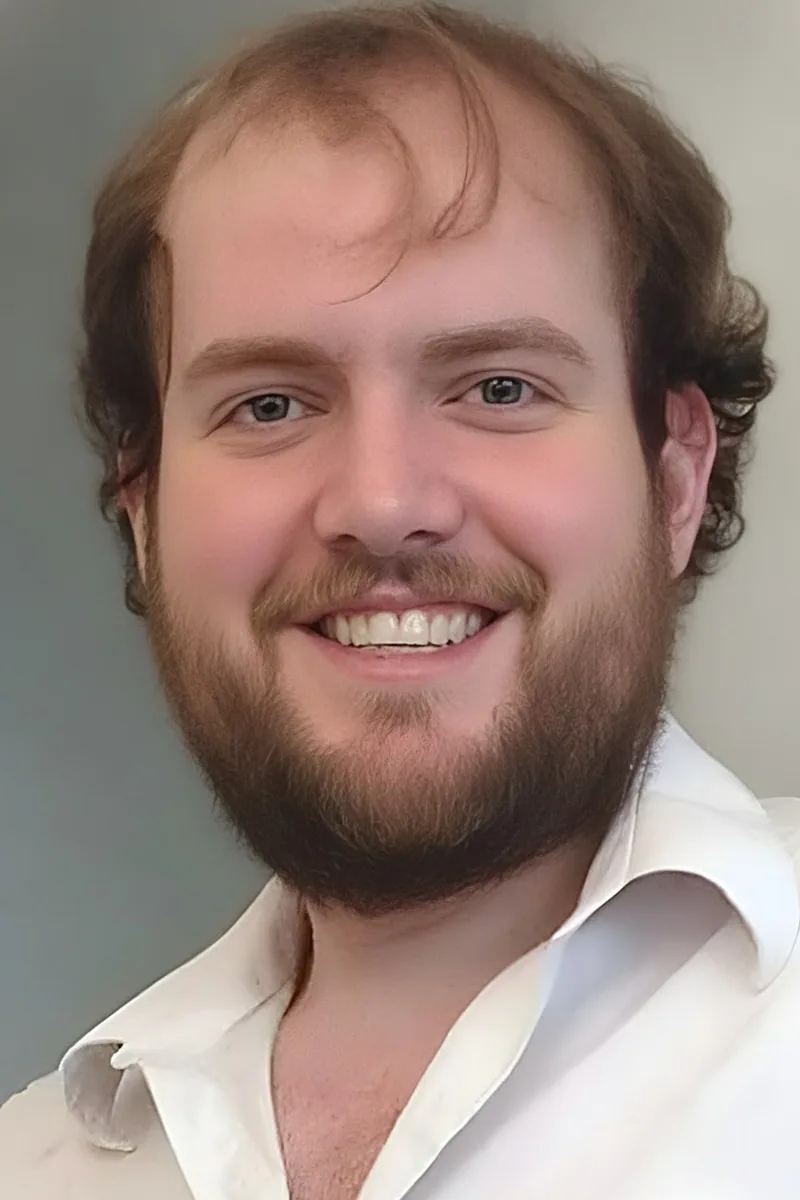
Most BC tutors come from engineering or STEM research — Michael's path through NYU's drama program is unusual, but his 1500 SAT and 35 ACT reflect genuine mathematical chops, and his performance background means he's unusually good at reading when a student's nod actually means confusion. He breaks down the BC-specific jump into series convergence and Taylor polynomial construction by treating each new tool as a logical argument that has to hold together, not just a formula to memorize.
An English and Environmental Studies major might not scream calculus, but Ari's 1590 SAT — nearly a perfect score on the math section — signals serious quantitative chops beneath the humanities surface. He teaches BC topics like series convergence and parametric equations by emphasizing the underlying logic and structure, an approach that clicks especially well for students who need to understand the 'why' before the 'how.' Rated 4.9 by students.
I'm an affable chemistry-loving person whose joy come from delivering knowledge :D
Harvey Mudd's engineering curriculum throws you into BC-level calculus from day one — Daniel was computing improper integrals and building series approximations in his physics and engineering courses while simultaneously learning the theory behind them in math classes. That dual exposure means he teaches topics like convergence tests and Taylor polynomial error bounds with a concrete sense of what they're actually for, not just how to get through the exam.
BC Calculus layers convergence tests, parametric equations, and polar curves on top of an already demanding AB foundation, and most students struggle because they never fully locked in the earlier material. Alain approaches series and sequences by building intuition for why a ratio test works before drilling the mechanics. His math minor at UCLA took him well beyond BC-level content, so he can contextualize even the trickiest topics like Taylor series error bounds.
Scoring a 36 on the ACT while studying economics at Vanderbilt means Kerr lives comfortably in the quantitative reasoning that BC Calculus demands — and his computer science focus sharpens the algorithmic thinking behind recursive sequences and series convergence. He teaches BC's trickiest leaps, like moving from basic integration to constructing Taylor polynomials, by grounding each new idea in the conceptual logic rather than just the procedural steps. Rated 4.9 by students.
Having worked as a teaching assistant for multiple engineering courses at Washington University in St. Louis, Ava spent hours breaking down the calculus that trips students up most — and BC's jump into series convergence, parametric derivatives, and advanced integration techniques is exactly the material she kept revisiting with struggling engineers. Her dual degree in mechanical and energy engineering means she's applied Taylor expansions and improper integrals to real thermodynamic and fluid systems, giving her a concrete vocabulary for explaining why these tools matter beyond the AP exam.
BC Calculus throws students into series convergence tests, parametric equations, and polar coordinates — topics that feel disconnected unless someone ties them back to the core ideas of AB. Dylan's physics major at Vanderbilt means he uses calculus daily and can show exactly how Taylor series or integration by parts behave visually, not just symbolically. He turns abstract series into something students can sketch, interpret, and reason through on exam day.
Having TA'd Calculus I and II at Rice while pursuing a graduate degree in computational and applied mathematics, Sakibul knows exactly where the AB-to-BC transition trips students up — particularly when series convergence and parametric differentiation demand a sharper kind of reasoning than anything before. He breaks down topics like interval of convergence arguments and integration techniques by rebuilding the logic from scratch rather than handing over shortcuts. His applied math background means he treats Taylor approximations and error bounds as precision tools, not abstract busywork.
Penn's economics program leans heavily on calculus-driven modeling, and Mandy is working through that curriculum right now — which means BC topics like series approximations and integration techniques show up in her coursework as tools for analyzing economic behavior, not just abstract exercises. She's especially clear at walking through the logic of convergence tests and connecting new BC material back to the AB foundations underneath it. Holds a 5.0 rating.
Biomedical engineering at Yale means Jonathan lives in the calculus that comes after most students stop — modeling biological systems with differential equations, approximating nonlinear tissue behavior with series expansions, running convergence analysis on numerical simulations. That daily exposure makes him especially effective at teaching the logic behind the ratio and integral tests, because he's seen firsthand what happens when you pick the wrong one. Holds a 5.0 rating.
BC Calculus layers convergence tests, parametric equations, and polar curves on top of an already demanding AB foundation, and keeping all of it organized is half the battle. Tessa's approach is to unpack each new topic by tying it back to core ideas students already understand — showing, for instance, how Taylor series are really just an extension of local linearity. She's a math major at Yale with a 4.9 client rating.
Series convergence tests, parametric equations, polar curves — BC Calculus piles on concepts fast, and falling behind on one unit can cascade through the rest of the course. Ethan breaks each new topic back to its AB foundation before building upward, so students see Taylor series and integration techniques as extensions of ideas they already own rather than entirely new material.
Teaching discrete math at Penn while finishing a CS master's means Keenan lives in the world of rigorous mathematical argument — the same mindset that separates students who survive BC from those who actually understand it, especially when series convergence proofs and error bound reasoning demand more than mechanical computation. His philosophy undergraduate training adds an unusual edge: he treats each BC concept like a logical claim that needs justification, which makes topics like the Lagrange remainder or comparison tests feel structured rather than arbitrary. Rated 5.0 by students.
Most people who breeze through math can't explain it — Daniel learned BC Calculus by grinding through the logic of every convergence test, every parametric derivative, every series expansion until it genuinely made sense, and that's exactly how he teaches it. As an applied mathematics undergrad, he's currently using these tools in upper-level coursework, so he knows which BC concepts tend to feel arbitrary and how to make the reasoning behind them stick.
When students hit BC's convergence tests and feel like they're just memorizing a checklist of names — ratio, root, integral, comparison — Samuel reframes each test as a question about how a series behaves, turning rote steps into genuine reasoning. His applied mathematics coursework means he's actively using Taylor series and parametric models in contexts where getting the convergence wrong isn't just a lost point but a broken solution. That perspective, plus a 1590 SAT reflecting sharp quantitative instincts, keeps his teaching grounded in understanding rather than procedure-shuffling.
Most BC students can follow a convergence test step by step but freeze when asked to choose which test to apply — that decision-making is where Nima, a physics major heading to Duke on a full merit scholarship, spends most of his teaching energy. His physics training means he treats series and parametric equations as descriptions of real motion and real forces, which gives students an intuitive anchor when the abstraction piles up. A 1580 SAT and 4.7 rating back up his ability to make that AB-to-BC jump feel manageable.
Testimonials
Because the right AP Calculus BC tutor makes all the difference.
Average Session Rating – Based on 3.4M Learner Ratings
Practice AP Calculus BC
Free practice tests, flashcards, and AI tutoring for AP Calculus BC
Nearby AP Calculus BC Tutors
Other San Jose Tutors
Related Math Tutors in San Jose
Frequently Asked Questions
AP Calculus BC builds on calculus fundamentals and covers limits, derivatives, integrals, differential equations, sequences, and series. The course includes all AB topics plus additional material on parametric equations, polar coordinates, and vector-valued functions. For students in San Jose preparing for the exam, understanding how these topics interconnect—especially the relationship between derivatives and integrals—is crucial for success on both multiple-choice and free-response sections.
Students often struggle with series convergence tests, parametric and polar calculus, and applying integration techniques to unfamiliar problem types. The free-response section requires not just computational skill but also clear mathematical communication—explaining your reasoning matters as much as getting the right answer. Personalized 1-on-1 instruction helps identify which specific concepts are holding you back and builds confidence in tackling complex multi-step problems.
Score improvement depends on your starting point and commitment level, but targeted tutoring typically helps students move up 1-2 score points on the 1-5 scale. The biggest gains come from addressing specific weak areas—whether that's mastering integration techniques, improving problem-solving speed, or learning to write clear mathematical explanations for free-response questions. Consistent practice with expert tutors, combined with regular practice tests, gives you the best chance at reaching your target score.
Ideally, start tutoring at least 3-4 months before the exam to cover all content and allow time for practice tests and review. If you're starting closer to exam day, focus on your weakest topics first and use practice tests to identify gaps. Tutors can help you create a personalized study schedule that balances learning new material with reinforcing concepts you've already covered, ensuring you're test-ready without cramming.
Time management is critical—the multiple-choice section requires efficiency, so practice working through problems quickly without sacrificing accuracy. On free-response questions, show all your work and explain your reasoning clearly, since partial credit is awarded for correct methods even if your final answer is wrong. Expert tutors can teach you how to identify which problems to tackle first, when to skip and return to a question, and how to avoid common mistakes under timed conditions.
Practice tests are essential—they help you get comfortable with the exam format, identify weak areas, and build stamina for the full 3-hour exam. Taking full-length practice tests under timed conditions reveals whether your struggles are conceptual (needing more instruction) or strategic (needing better time management). Tutors can review your practice test results with you, pinpoint patterns in your mistakes, and help you develop targeted strategies to address them before test day.
Varsity Tutors connects you with expert tutors for students in San Jose who specialize in AP Calculus BC and understand the specific challenges of the curriculum. You can specify your goals—whether you're aiming for a 3, 4, or 5—and get matched with a tutor whose teaching style fits your learning needs. The process is straightforward: share your situation, and you'll be connected with qualified tutors ready to help you prepare.
Your first session typically focuses on understanding where you stand—what concepts you've mastered, where you're struggling, and what your score goals are. The tutor will assess your problem-solving approach, identify gaps in understanding, and discuss a customized study plan tailored to your timeline and needs. This foundation helps ensure that every subsequent session targets what matters most for your success on exam day.
Let’s find your perfect tutor
Answer a few quick questions. We’ll recommend the right plan and match you with a top 5% tutor.