Award-Winning AP Pre-Calculus Tutors
serving Long Beach, CA
AP Pre-Calculus
Tutors in Long Beach
Private 1-on-1 tutoring, weekly live classes for academic support, test prep & enrichment, practice tests and diagnostics, and more to elevate grades and test scores.
Based on 3.4M Learner Ratings
UniversitiesSchools & Universities
DeliveredHours Delivered
ProficiencyGrowth in Proficiency
Who needs tutoring?
No obligation. Takes ~1 minute.
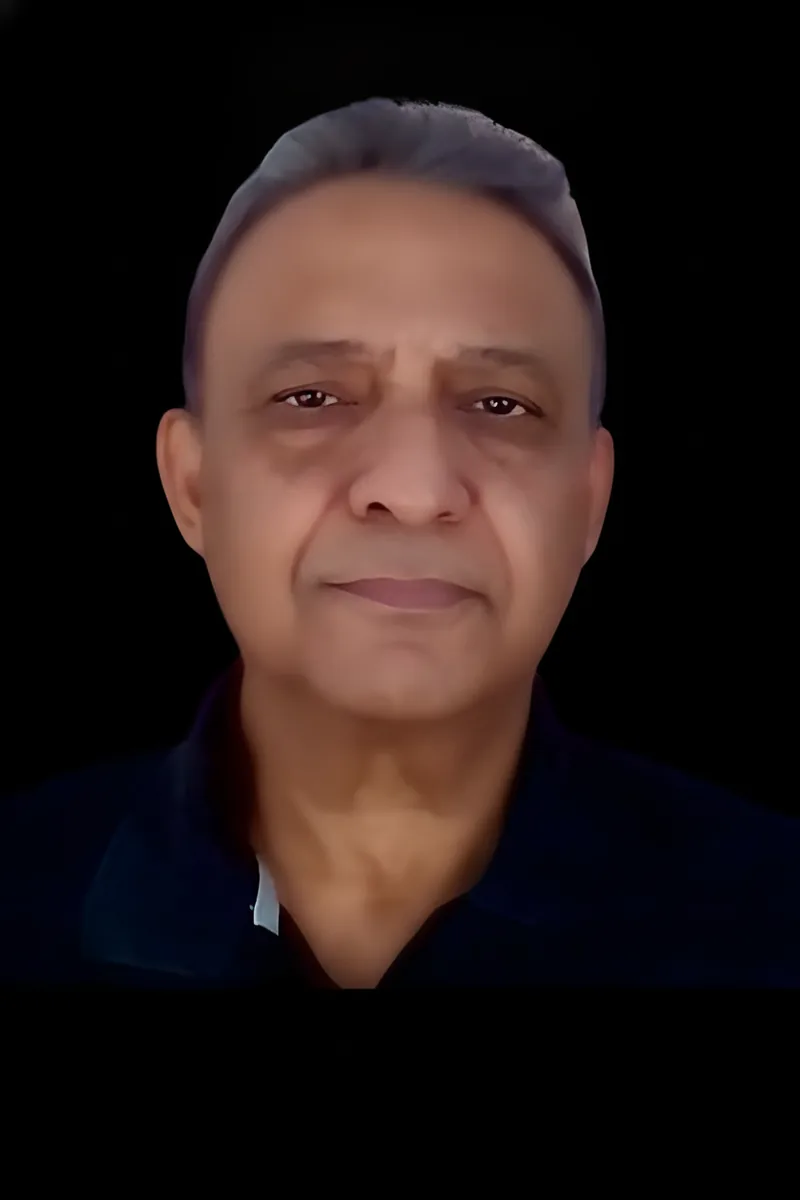
I am a career Mathematics teacher, specializing in IB AA and AI, both at the SL and HL levels. If I have to sum up my professional life, I would say the following about my experience: Examiner with the International Baccalaureate Organization (IBO) for Higher Level (AA) Mathematics. Massachusetts State Teaching Certification: Licensed to teach Mathematics (6-12). Massachusetts State Teaching Certification: Licensed to teach Physics. Training: IB (Physics), IT (Industry). MBA in Finance. BS in Pure and Applied Mathematics. Diverse Classroom Experience spanning over 30 years teaching in USA, China, UAE, Qatar, Syria and Egypt within the IB (Analysis and Approaches as well as Applications and Interpretations), IGCSE and US HS (including AP) Diploma curricula. Multilingual capability with fluency in English and Urdu, and in Hindi. Familiarity with various world cultures and their values; well- traveled in Far East, South Asia, Middle East, North Africa, Europe and North America. I will be most happy to expand on any of the above as needed.
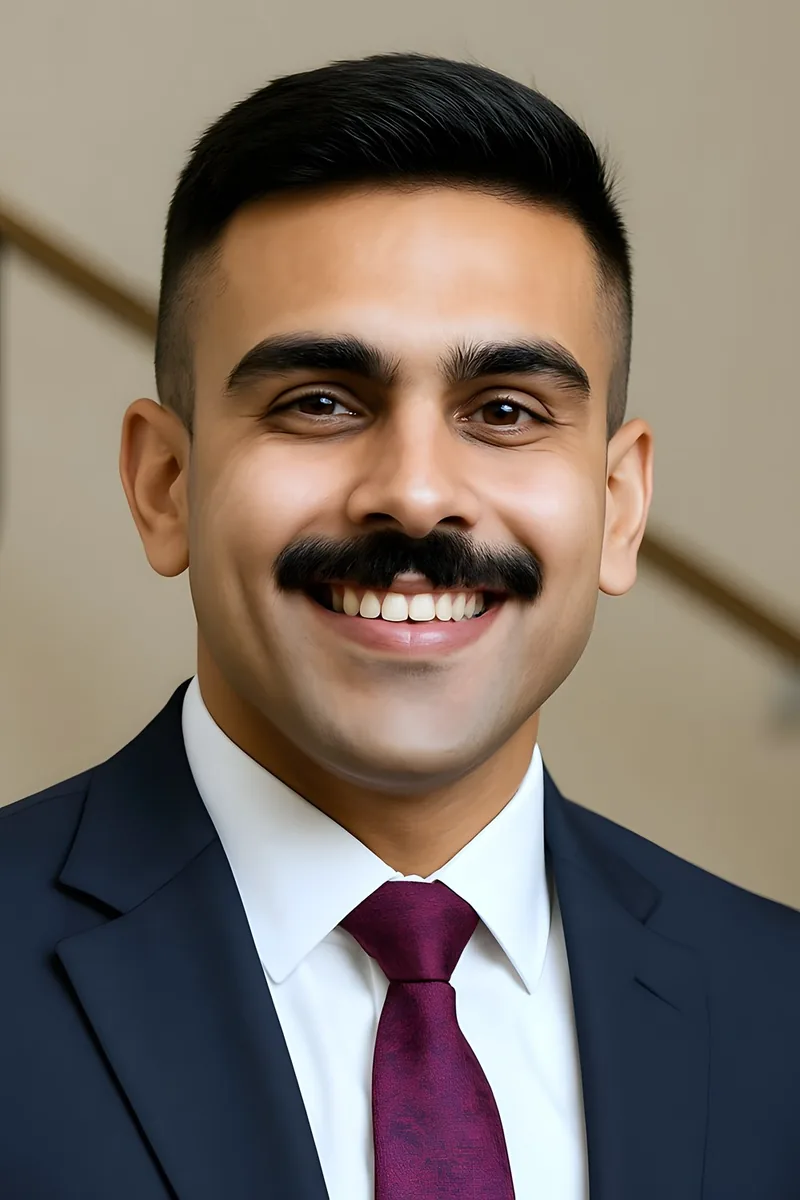
Training AI models at Western University means Syed regularly implements the polynomial, trigonometric, and exponential functions that AP Pre-Calculus covers — fitting curves to data, tuning activation functions, and modeling nonlinear relationships all require genuine fluency with how these function families behave. His electrical engineering background at LUMS added a layer of signal-processing intuition that makes him especially sharp on trigonometric identities and periodic modeling, two areas where the AP exam demands more than rote computation. He walks students through the reasoning behind composition and transformation questions until the logic feels automatic, not memorized.
I love math, and have a passion for sharing that love and knowledge. Progressing through courses of mathematics teaches much beyond what is on the page. It teaches problem-solving, critical and creative thinking. I try not only to teach the mechanics of math, but instill an appreciation for the skills the process can develop. And while math is my favorite subject to tutor, I have had training in and am qualified for all sections of SAT and ACT test prep, and enjoy working with students to help them learn and meet their college goals.
Hi! I'm Palmer Blackstock, a passionate tutor with a Bachelor's degree in Physics from the University of Chicago and over two years of experience in tutoring high school and college students. My primary focus is on Physics at both introductory and advanced levels, with an additional focus in math subjects like Algebra, Pre-Calculus, and AP Calculus. In my past tutoring I've helped students grasp complex concepts in mechanics, waves, and electromagnetism, as well as math concepts in trigonometry and calculus. I believe in a collaborative, student-centered approach, where I'll ask the student what they know, what they don't know, and what they want to get out of our tutoring sessions. I always tailor my lessons to meet a student's individual needs. I'm dedicated not only to enhancing a student's understanding of math and science concepts but also fostering a love of science by providing engaging content and real-world examples. In addition to my passion for education, I also love writing and journalism, especially finding engaging methods for science communication. I enjoy reading books and listening to science podcasts. But I'm also an avid video game and board game player.
I am a doctoral candidate at the University of Calgary, Canada. I received my Master of Science in chemical engineering with focus on modelling complex materials in 2016. During graduate school, I have acted as a teaching assistant (TA) extensively, teaching a very wide variety of courses to students across different age groups. While I tutor a broad range of subjects, I am most passionate about the physical sciences. In my experience TAing university courses, I have learned how to explain a concept from many different points of view, to make it understandable to the most number of students. In my spare time, I enjoy reading, hiking, digital photography and playing chess.
Unlock your academic potential with a tutor who bridges the gap between elite performance and foundational mastery. As a National AP Scholar with advanced coursework in Multivariable Calculus and Data Structures, I bring high-level expertise to your studies. Whether you are tackling complex algorithms or advanced math, I provide the precise guidance you need to excel. My experience at Kumon and Mathnasium taught me that even the most complex goals start with strong basics. I believe in both individual learning as well learning through guided practice, so whatever your way to learn I can accomodate to help you do the very best.
Studying Astronomy, Astrophysics, and Planetary Science at Florida Institute of Technology, Matthew uses trigonometric and exponential models to describe everything from stellar luminosity curves to orbital dynamics — the same function families AP Pre-Calculus builds its entire framework around. He teaches composition and transformation questions by walking students through what's actually happening to a function's shape and why, drawing on the physical intuition that comes from applying these tools to real systems daily. His experience tutoring college peers in calculus and advanced physics means he can pinpoint exactly where a student's algebraic reasoning needs tightening before the AP exam.
I love helping people! Whether it's learning math, writing, reading, etc. or playing sports, I really enjoy seeing other succeed via my assistance. I try to relate to students in whatever they enjoy and in doing so, apply concepts to our like interests to work through difficult subjects as well as to help foster a good, professional relationship. I have tutored several students in both math and English in the past and they have enjoyed resounding success and continue to reach out for my assistance. I look forward to working with and meeting many students and parents while helping them succeed in any way I can. When I am not tutoring, I enjoy playing sports (golf, basketball, softball, volleyball), playing with my dog, and hanging out with my wife. In addition, I am a meteorologist and oceanographer following my graduation at Penn State University with a BS in Meteorology. Finally, I am presently a student at MIT pursuing a Master's degree in Physical Oceanography.
Hello! My name is Mihir, and I'm a passionate and experienced math tutor with a strong academic foundation. I hold a B.S. in Mathematics from Carnegie Mellon University, where I concentrated in Discrete Mathematics and Logic and earned a Minor in Computer Science. I also completed my M.S. in Computer Science at the University of Illinois at Urbana-Champaign. My background equips me with both deep mathematical knowledge and a problem-solving mindset that I bring into every tutoring session. I specialize in tutoring Math at the middle and high school levels. In the past, I've taught SAT Math, AP Calculus, AP Chemistry, and Algebra 1 and 2, among other subjects. My teaching approach focuses on building intuition and a sense of methodical problem-solving so that students can avoid memorization and cramming. I believe that this is the best way for students to be assured of their own skills and have confidence in tackling problems on their own.
As a passionate tutor working on a Bachelor's degree in Economics, Mathematics, and Philosophy from the University of Toronto, I have over two years of tutoring experience that spans various subjects, including Writing, English, and advanced math topics. My approach centers on creating engaging, tailored lessons that resonate with students' individual goals and interests. I believe in fostering a supportive learning environment where trial and error can lead to discovery and growth. My experience includes working with elementary and high school students, helping them navigate their homework, prepare for tests like the SAT, and cultivate a deeper appreciation for math and writing. I am deeply motivated to inspire students and help them achieve their academic aspirations while nurturing their curiosity and confidence. I enjoy: Writing, Reading, Piano, Fencing, Archery, Math, Economics, Philosophy, Law.
Geophysics graduate work at the University of Iceland had Caroline building and interpreting the same trigonometric and exponential models that AP Pre-Calculus tests — fitting seismic wave data and thermal decay curves requires genuine fluency with how these function families behave, not just formula recall. She leans on that modeling background to teach the course's composition and transformation questions as tools for describing real phenomena, which is exactly the reasoning lens the AP framework rewards. Her master's-level math fluency also means she can preview how each concept connects to the calculus sequence ahead.
Hi! I'm Utkarsha, and I genuinely enjoy helping students of all levels and learning styles better know subjects they would like help with. Whether you want to know math, English, Tableau, data science, or economics better, or are prepping for the SAT, I'm here to make it understandable and even enjoyable until you're confident! As a math major & an econ minor with a near-perfect SAT score (Math 800, English 780), I'm excited to share my know-how and deep understanding in these subjects. Throughout my years of experience in tutoring, I've successfully coached over 100 students to improve their math class grades (in all levels from elementary school math to college) and reach near-perfect SAT scores and via my unique personalized guidance on core content and test-taking strategies. That's because my tutoring approach is focused on bridging the gap between where you're at and where you want to reach in terms of what you know. Let's work together to reach (or even exceed) your goals!
Testimonials
Because the right AP Pre-Calculus tutor makes all the difference.
Average Session Rating – Based on 3.4M Learner Ratings
Nearby AP Pre-Calculus Tutors
Other Long Beach Tutors
Related Math Tutors in Long Beach
Frequently Asked Questions
AP Pre-Calculus covers a comprehensive range of functions and their properties, including polynomial, rational, exponential, and logarithmic functions. The course also includes trigonometry, sequences and series, and parametric equations. Understanding these foundational concepts is critical because they directly prepare you for AP Calculus, where you'll need to recognize function behavior quickly during problem-solving.
Many students struggle with the transition from algebra to more abstract function concepts, particularly with graphing transformations and understanding function composition. Trigonometry and the unit circle often present timing challenges during exams, and connecting multiple concepts to solve complex problems can feel overwhelming. Personalized 1-on-1 instruction helps identify exactly where your understanding breaks down and builds confidence in these high-level topics.
The AP Pre-Calculus exam consists of two sections: a multiple-choice section (40 questions, 1 hour 15 minutes) and a free-response section (4 questions, 1 hour). The multiple-choice questions test conceptual understanding and problem-solving speed, while free-response questions require you to show your work and justify your reasoning. Working with a tutor on timed practice tests helps you develop pacing strategies and learn to manage test anxiety by becoming familiar with question formats before exam day.
Score improvement depends on your starting point and commitment level, but students typically see meaningful gains when they focus on weak areas with targeted practice. If you're struggling with specific topics like trigonometry or logarithms, personalized instruction can help you master those concepts quickly. Consistent practice combined with expert guidance usually leads to 1-2 score improvements on the AP scale, though some students see more significant jumps when addressing fundamental gaps.
A solid study plan typically involves mastering one major topic at a time (like functions, then trigonometry, then sequences), then mixing topics together in cumulative practice. Spacing out your study over several months with regular practice tests helps reinforce learning better than cramming. Varsity Tutors connects you with expert tutors who can create a personalized study schedule based on your pacing, identify your weakest topics early, and adjust your plan as you progress toward the exam.
Practice tests serve two critical purposes: they help you identify specific weak areas under timed conditions, and they build test-taking stamina and confidence. Taking full-length practice tests regularly reveals whether your struggles are conceptual (you don't understand the topic) or procedural (you understand it but work too slowly). Working through practice tests with a tutor allows you to review mistakes immediately, learn time-management strategies, and refine your approach before the actual exam.
An effective AP Pre-Calculus tutor should have strong subject expertise, experience with the AP curriculum, and the ability to explain abstract concepts clearly. They should be skilled at identifying exactly where your understanding breaks down—whether it's a conceptual gap or a computational error—and adapting their teaching style to your learning needs. Varsity Tutors connects you with expert tutors who specialize in AP Pre-Calculus and understand the specific challenges students in Long Beach schools face.
Your first session typically focuses on assessment and planning. A tutor will review your current understanding, discuss your goals (like targeting a specific AP score), and identify your strongest and weakest topic areas. This diagnostic helps create a personalized study plan tailored to your needs, ensuring that subsequent sessions focus on the concepts that will have the biggest impact on your AP exam performance.
Let’s find your perfect tutor
Answer a few quick questions. We’ll recommend the right plan and match you with a top 5% tutor.