Award-Winning Algebra Tutors
serving Anaheim, CA
Algebra
Tutors in Anaheim
Private 1-on-1 tutoring, weekly live classes for academic support, test prep & enrichment, practice tests and diagnostics, and more to elevate grades and test scores.
Based on 3.4M Learner Ratings
UniversitiesSchools & Universities
DeliveredHours Delivered
ProficiencyGrowth in Proficiency
Who needs tutoring?
No obligation. Takes ~1 minute.
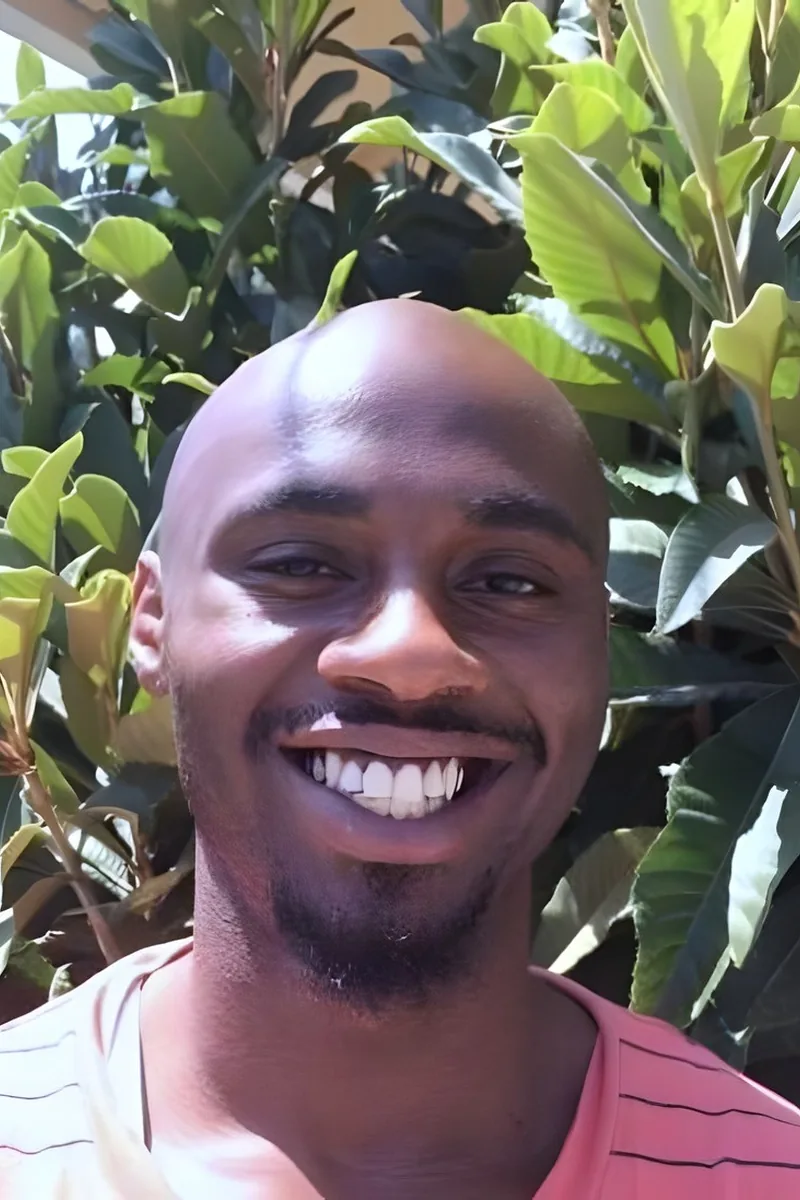
Brian treats algebra as the thinking framework it actually is — not a set of procedures to repeat. Whether a student is wrestling with systems of equations, factoring polynomials, or translating word problems into expressions, he connects each skill back to the logical reasoning that makes algebra useful far beyond the math classroom. His Caltech economics and CS training relied heavily on algebraic modeling, so he brings real context to every lesson.

Word problems are where most algebra students panic — but they're actually Ema's favorite part of the subject, because translating a real scenario into an equation is a skill that bridges her English literature brain with her math tutoring background. A Harvard English grad who's spent five years teaching math from arithmetic through pre-calculus, she reads word problems the way she reads prose: pulling out what matters, naming the unknowns, and building a clean equation from the narrative. Rated 5.0 by students.
Scoring a 36 on ACT Math and working through AP Calculus BC and Multivariable Calculus means Jackie built her higher math on top of rock-solid algebraic fluency — she can trace any concept back to the foundational moves that make it work. She's especially effective at showing students how to translate word problems into equations, a skill her Business Communications background reinforces by training her to extract meaning from dense, wordy material. Rated 5.0 by students.
Sean treats algebra as a language — each equation is a sentence with its own grammar and logic. He breaks down topics like systems of equations and inequalities by connecting them to real scenarios, making the abstract feel concrete. His 1480 SAT score speaks to the kind of mathematical fluency he brings to every session.
Most Algebra frustration comes from one place: students learn steps without understanding what the steps accomplish. Christina teaches the reasoning behind techniques like factoring quadratics and solving systems so that when a problem looks slightly different from the textbook example, students aren't stuck. Her CS background gives her a knack for translating word problems into equations — the skill most students find hardest.
Katrina tackles algebra by connecting abstract expressions to concrete reasoning — the same skill set she honed analyzing sociological data at Yale. Whether it's solving systems of equations or simplifying rational expressions, she walks through each step until the logic clicks rather than just the answer.
Solving systems of equations or factoring quadratics becomes much less mechanical when a student understands what's actually happening on the graph. Aaron breaks algebra down through conversation, asking targeted questions that reveal whether a student truly grasps a method or is just following steps. His 5.0 client rating speaks to how well that interactive style lands with learners.
Pre-med coursework demands constant algebraic fluency — rearranging dosage formulas, solving rate equations in chemistry, manipulating variables in physics — so Timothy treats algebra as something he uses daily, not something he left behind in high school. As a current medical student with a 4.9 tutoring rating, he's especially good at unpacking word problems that blend real-world context with abstract setup, since translating messy scenarios into clean equations is basically what clinical problem-solving requires.
When variables start replacing numbers, a lot of students lose their footing — not because the math is harder, but because nobody explained *why* the rules work. Kiersten tackles algebra by grounding abstract ideas like systems of equations and inequalities in real scenarios, building the kind of number sense that makes higher math feel approachable rather than arbitrary.
Most algebra frustration comes from a shaky grasp of what variables actually represent — students can follow steps but freeze when a word problem or unfamiliar format appears. Chris teaches the logic underneath procedures like factoring, systems of equations, and quadratic analysis so students can adapt to new problems on their own. His perfect 800 SAT Math score started with exactly this kind of algebraic fluency.
Carla approaches algebra by connecting abstract expressions to logical reasoning — the same skill she hones in her English and French studies. Whether it's solving systems of equations or simplifying rational expressions, she breaks problems into manageable steps and makes sure students understand the "why" behind each move.
The LSAT's logic games section is essentially algebra in disguise — setting up variables, translating word problems into equations, and solving systems of constraints. Keith brings that same structured thinking to algebra tutoring, walking students through how to set up and manipulate expressions, inequalities, and functions so the process feels logical rather than mechanical.
The jump from arithmetic to algebra trips students up because variables demand a new kind of thinking — tracking unknowns, balancing equations, translating word problems into expressions. Daniel tackles this by encouraging students to discover patterns on their own, stepping in only when they need a nudge in the right direction. His science training gives him a knack for making abstract algebraic concepts feel concrete and logical.
When variables start replacing numbers, many students lose confidence — Jennifer rebuilds it by grounding every equation in something concrete. She's especially effective at unpacking word problems, translating messy real-world scenarios into clean algebraic expressions students can actually solve.
Most struggles in Algebra come down to one thing: students learn procedures without understanding what the symbols actually represent. Shant attacks that head-on, walking through how variables model real quantities and why operations like distributing or factoring make logical sense. Years of working with high schoolers across Los Angeles sharpened his ability to spot exactly where a student's understanding breaks down.
Most algebra frustration comes not from the math itself but from losing track of what a variable actually represents in a given problem. John teaches students to read equations the way he reads texts — pulling apart structure, identifying what's known and unknown, and building toward a solution step by step. His 5.0 client rating speaks to how well that approach lands.
The leap from arithmetic to algebraic thinking — manipulating expressions, solving multi-step equations, graphing linear relationships — is one of the biggest conceptual shifts in a student's math life. Raquel has taught foundational math across age groups, from elementary students at Kumon to adults preparing for the GED, and she's skilled at translating abstract notation into step-by-step reasoning that actually sticks.
The jump from arithmetic to variables trips up more students than any single topic in algebra — and it's usually because nobody explained what an equation actually *means* before drilling procedures. Andrew tackles that head-on, building intuition around expressions, inequalities, and systems so that solving them feels like reasoning rather than guessing which rule to apply.
Most algebra struggles come down to one thing: students can follow a procedure but can't explain why it works. Anna digs into the reasoning behind techniques like factoring quadratics and solving systems of equations, so students can adapt when a problem doesn't look exactly like the textbook example. Her 1520 SAT score reflects the kind of mathematical fluency she brings to every session.
Factoring a quadratic is straightforward once you understand what factoring actually means — but most students are taught the shortcut before the concept. Jerome reverses that order, unpacking why expressions behave the way they do so that solving equations, graphing lines, and working with inequalities all connect to the same core logic.
I am a graduate of Duke University with a degree in Health Policy and Education Policy. While at Duke University I was a student athlete, participated in the leadership of several clubs and service groups; as well as, working as a Math and Reading tutor. After graduation I spent a year pursing a business venture allotted to me through the Elevator Pitch Competition, my senior year of college, which I won in my category - Non-Profits. After that year, I joined the Teach for America Fellowship, where I fell in love with teaching. The Teach for America Fellowship is 2 years; however, after my first year due to the recognition and growth in my classroom I was invited to start a school. I spent 2 years at that school prior to getting married and moving to California, a few months ago, with my amazing, aerospace loving, husband.
Word problems are where most algebra students freeze, not because the math is harder but because translating English into equations is a separate skill no one explicitly teaches. John makes that translation process visible — breaking a problem's language into known quantities, unknowns, and relationships before touching any algebra. His years of peer tutoring at LMU gave him a sharp eye for where individual students get stuck in that process.
A self-described nerd who makes bad puns, Mitch keeps algebra sessions loose enough that students aren't afraid to ask questions about factoring or systems of equations. Behind the humor is an engineer's precision — he teaches each manipulation as a logical move with a clear reason, not just a trick to memorize for the test.
Linda has tutored Algebra 1 extensively since graduating from Cornell, so she knows the specific spots where students get stuck — distributing negatives, setting up word problems, and graphing linear equations for the first time. She walks through each type of problem methodically, making sure students understand the logic behind each step rather than just copying a procedure. That structured approach builds confidence that carries into more advanced coursework.
A lot of algebra frustration comes from not understanding *why* a technique works — why you flip the inequality sign when multiplying by a negative, or what completing the square actually accomplishes geometrically. Emily breaks down each procedure into its underlying logic, building the kind of algebraic fluency that holds up when problems stop looking like textbook examples.
A UCLA cum laude graduate who tutored peers throughout college, Nicole approaches algebra by anchoring abstract variables to concrete problems — turning word problems about rates, mixtures, or growth into clear equations students can set up on their own. She's especially effective at demystifying systems of equations and inequalities for students who feel lost when letters replace numbers.
When factoring or systems of equations start to feel like arbitrary symbol-shuffling, Dorothy pulls students back to what's actually happening — why does setting each factor equal to zero find the solutions? Her approach to algebra emphasizes that kind of reasoning, so students can adapt to unfamiliar problems instead of freezing when a question looks slightly different from the homework.
Most Algebra struggles come down to one thing: students learn procedures without understanding what the symbols actually represent. Milan unpacks variables, equations, and functions as a language — fitting, given his English degree — so that solving a system of equations or factoring a quadratic feels like reading a sentence rather than following a recipe. He scored a 1540 on the SAT and teaches math at every level through AP Calculus BC.
Ben approaches algebra with the same logical rigor he brings to his philosophy coursework, treating each equation as an argument that needs to hold together step by step. He's particularly effective at unpacking word problems — translating messy real-world scenarios into clean expressions and inequalities — because his English background makes him sharp at parsing language.
Mechanical engineering at UC Irvine means Alok solves algebra problems before breakfast — rearranging force equations, isolating variables in thermodynamic formulas, substituting values into kinematic expressions — so the mechanics of algebraic manipulation are second nature. He's particularly effective at teaching students how to translate word problems into clean equations, since engineering training is essentially four years of doing exactly that.
The jump from arithmetic to algebra trips students up when they try to memorize procedures instead of understanding what an equation is actually saying. Janani zeroes in on translating word problems and real situations into algebraic expressions, building the kind of reasoning that makes factoring, systems of equations, and inequalities feel logical rather than random.
Visual and Environmental Studies at Harvard might seem far from algebra, but Tom's coursework demands constant spatial reasoning and quantitative analysis — scaling dimensions, calculating proportions, and translating visual relationships into precise numerical terms. He brings that concrete, visual instinct to teaching concepts like graphing and solving for unknowns, making abstract notation feel grounded in something students can actually picture.
Solving equations and simplifying expressions are tools Krista uses constantly in her GIS and Earth Sciences work at USC — from rearranging formulas for slope calculations to modeling linear relationships in environmental data. She breaks algebra down by connecting each manipulation to a concrete reason it matters, which tends to make skills like factoring and graphing lines stick longer.
A linguistics background turns out to be surprisingly useful for algebra — both subjects are about recognizing structure, manipulating symbols according to rules, and translating between representations. Naama applies that structural thinking when teaching everything from factoring polynomials to solving systems of equations, so students understand the logic behind each step rather than following recipes.
The jump from solving for x to manipulating systems of equations and quadratic functions is where a lot of students lose confidence in math. Kevin zeroes in on the logical structure underneath each problem type — showing, for instance, how factoring a quadratic and graphing a parabola are really the same conversation from two different angles. His dual science background means he never runs out of concrete examples to make algebraic relationships feel tangible.
I am a recent graduate of the University of Virginia living in Los Angeles. While at UVA, I earned a 3.95 GPA and graduated my major program with Highest Distinction. I have eight years of tutoring experience (including starting my own tutoring program) and have worked with students of all ages. I'm looking forward to helping people with their studies in any way I can.
Years of math competitions taught Judy to see algebra not as a set of procedures but as a toolkit for solving problems — factoring a quadratic, manipulating inequalities, or interpreting what a graph actually tells you. She started tutoring algebra to peers back in middle school and never stopped. That long track record means she's encountered nearly every way a student can get stuck on topics like systems of equations or rational expressions.
Most Algebra struggles come down to one thing: students learn steps without understanding why those steps work, so every new problem type feels like starting over. Whitney reverses that pattern by teaching the reasoning behind factoring, equation-solving, and graphing so that skills transfer across topics instead of staying siloed.
A neuroscience degree requires fluency in the algebraic foundations that many students rush past — manipulating equations, working with functions, and translating word problems into solvable expressions. Helen breaks down these skills methodically, especially for students who struggle with the jump from arithmetic thinking to variable-based reasoning. Rated 5.0 by students.
A lot of algebra frustration comes from shaky confidence with the basics — distributing, combining like terms, or setting up equations from word problems. Nina zeroes in on exactly where a student's understanding breaks down and rebuilds from that point, using real-world examples that make abstract expressions feel less arbitrary. She keeps sessions conversational and low-pressure, which tends to unlock the kind of thinking algebra actually requires.
Testimonials
Because the right Algebra tutor makes all the difference.
Average Session Rating – Based on 3.4M Learner Ratings
Practice Algebra
Free practice tests, flashcards, and AI tutoring for Algebra
Nearby Algebra Tutors
Other Anaheim Tutors
Related Math Tutors in Anaheim
Frequently Asked Questions
Varsity Tutors matches Anaheim students with expert Algebra tutors for 1-on-1 instruction. We pair each student with a tutor based on their specific needs, learning style, and goals.
Whether you need homework help, exam prep, or want to get ahead, our Algebra tutors are ready to help.
Common challenges include gaps from earlier material, difficulty with specific concepts, and trouble applying learning to new problems. These issues can snowball quickly in Algebra.
A tutor identifies where you're stuck, fills in gaps, and provides targeted practice. The 1-on-1 format means you get help exactly where you need it.
Tutors work with your student's actual coursework—homework assignments, class notes, and upcoming tests. This keeps tutoring directly relevant to what's happening in the classroom.
When you share information about your student's school and curriculum, we can match you with a tutor who has relevant experience.
All tutors complete background checks, credential verification, and teaching evaluation. Many of our Algebra tutors hold advanced degrees or have years of teaching experience.
You can review tutor profiles to find someone with the right background for your student's level and needs.
Many students see improved grades within a few weeks, along with better understanding of Algebra concepts and more confidence tackling challenging material.
Tutors track progress and adjust their approach to ensure continued improvement.
Most students benefit from 1-2 sessions per week. More frequent sessions help if your student is significantly behind or has an important exam coming up.
Your tutor can recommend a schedule based on your student's specific situation and goals.
Tutoring is purchased in packages of hours, with rates varying by tutor experience. Varsity Tutors offers several options to fit different budgets and needs.
You can discuss pricing during your consultation to find what works best.
Your tutor will assess where your student is, discuss goals, and start working on priority areas. Most students bring current homework or upcoming test material to focus on.
By the end, you'll have a clear sense of how the tutor can help and a plan for moving forward.
Let’s find your perfect tutor
Answer a few quick questions. We’ll recommend the right plan and match you with a top 5% tutor.