Award-Winning Statistics Tutors
serving Detroit, MI
Statistics
Tutors in Detroit
Private 1-on-1 tutoring, weekly live classes for academic support, test prep & enrichment, practice tests and diagnostics, and more to elevate grades and test scores.
Based on 3.4M Learner Ratings
UniversitiesSchools & Universities
DeliveredHours Delivered
ProficiencyGrowth in Proficiency
Who needs tutoring?
No obligation. Takes ~1 minute.
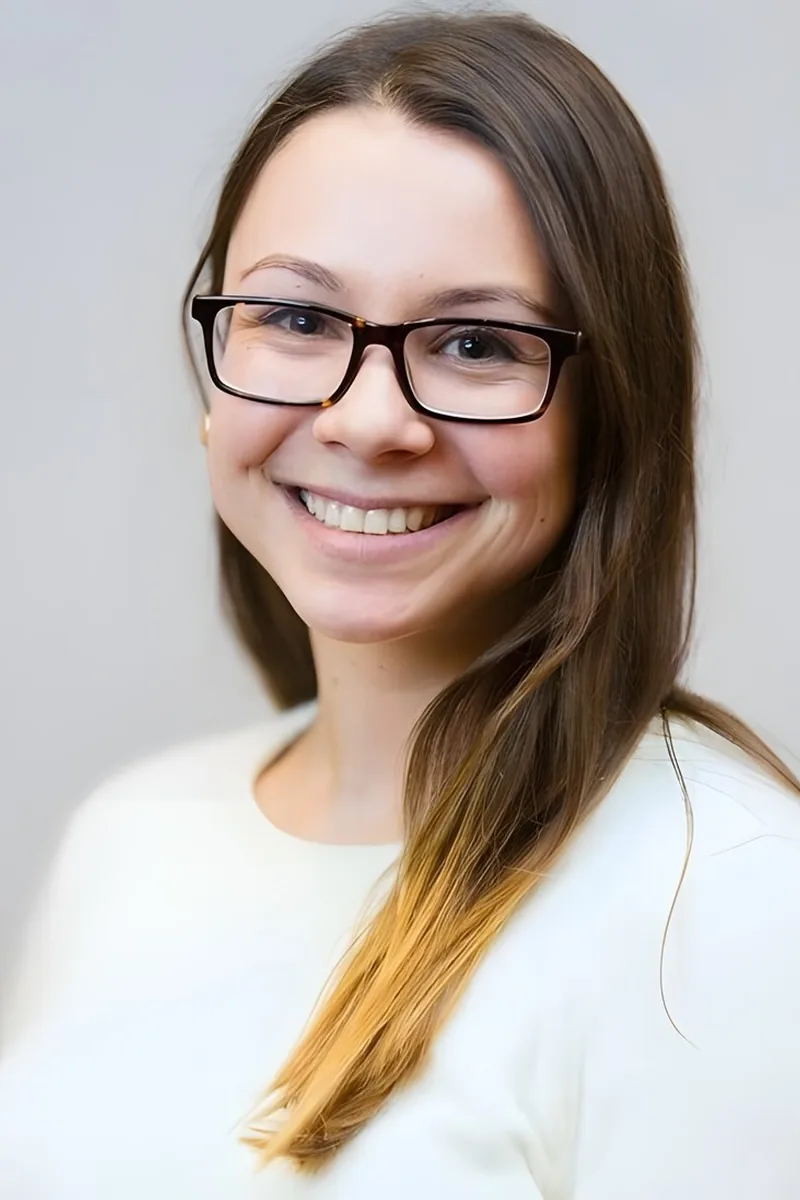
Running regression analyses, interpreting p-values, and choosing between parametric and nonparametric tests are things Martha does routinely in her social psychology research at Michigan. That hands-on fluency means she can explain not just how to compute a standard deviation or set up a hypothesis test, but why each step matters and what the results actually tell you. Rated 5.0 by students.
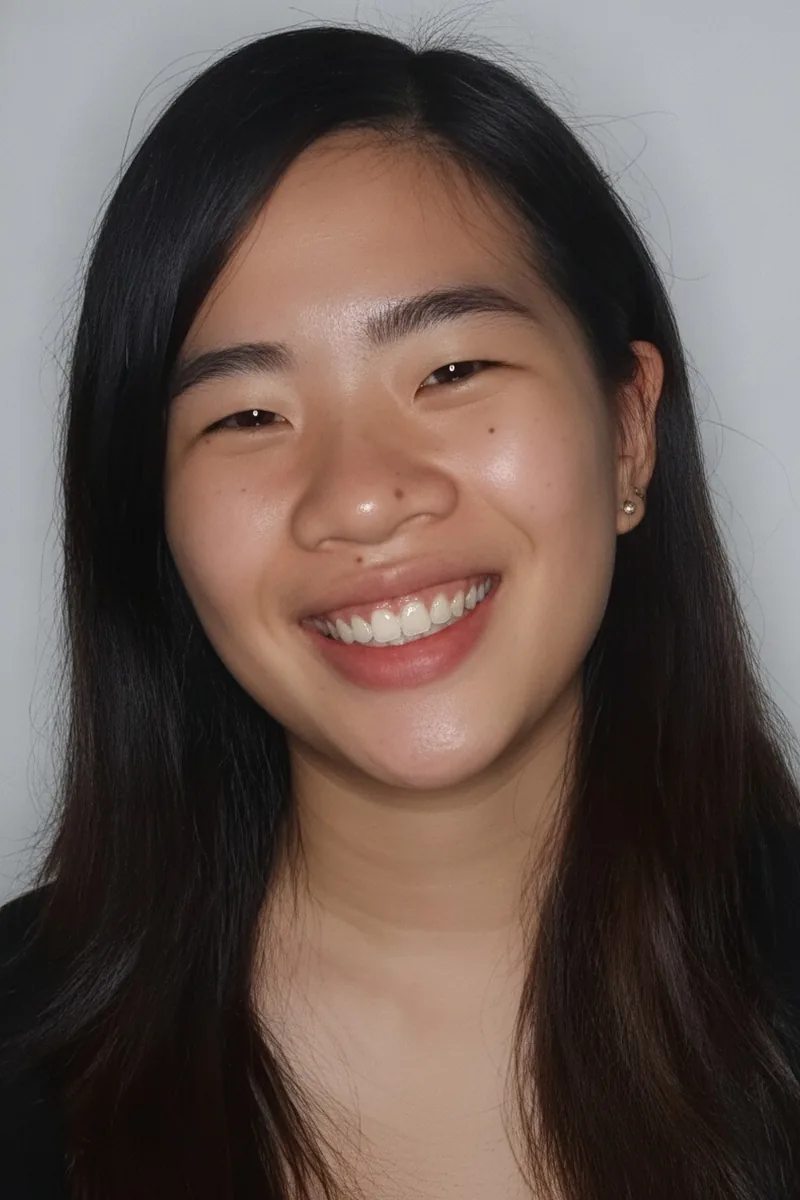
At Michigan Ross, Kerry runs into statistics through a business lens — market analysis, forecasting, and interpreting data to support strategic decisions, which means she teaches concepts like regression, probability, and hypothesis testing with a practical edge most textbook-only tutors lack. Her 33 ACT score reflects sharp quantitative reasoning, and she applies that same precision to breaking down problems involving distributions and variability so the logic behind each calculation is clear.
Economics training at the undergraduate level is essentially applied statistics — regression models, probability distributions, hypothesis testing. Jack's econ degree means he doesn't just teach the formulas; he connects them to real scenarios where data actually drives decisions. That practical lens makes abstract concepts like standard deviation and confidence intervals far easier to internalize.
Between his biomedical engineering degree and his graduate research, Adam has run enough statistical analyses to know which concepts actually confuse students: conditional probability, hypothesis testing, and interpreting p-values top the list. He walks through each problem by asking what the data is actually telling you before touching any formulas. That applied perspective makes topics like regression and confidence intervals feel purposeful rather than abstract.
Economics and statistics share a language — probability distributions, hypothesis testing, and regression all show up in both fields. Thomas studied economics and mathematics as an undergraduate, so he teaches statistics with an eye toward what these tools actually measure and why a particular test applies to a particular dataset. That context makes concepts like p-values and confidence intervals click faster.
I'm a premedical student at Cornell University with extensive experience tutoring students, especially in chemistry at the high school and undergraduate level, writing at the high school and undergraduate level, and SAT/ACT prep.
I am a current medical student at the University of Michigan Medical School. I studied biology, business and Spanish at the University of Alabama, graduating summa cum laude. During college, I worked as a tutor with a tutoring company similar to Varsity Tutors where I taught college/high school/middle school Spanish, Chemistry, English, Biology, and Math. I also worked as an English as a Second Language volunteer instructor for 3 years during college and was an English Teaching Assistant at the Universidad Pontificia Bolivariana in Medellin, Colombia.
I am a undergraduate freshman of the University of Michigan, studying business at the Ross School of Business. Working together with students and having a good time while seeing steady improvements has proven to provide me great joy. I believe that communication and relationship building is crucial for students to open up about their struggles and also for me to identify problems they don't realize they can improve on, so this is a key aspect of all of my lessons. During my free time, I enjoy playing sports or snacking on desserts while binge-watching Friends!
I am a recent graduate of the University of Michigan in Ann Arbor. I received my Master's degree in Biomedical Engineering with a minor in Computer Science and am currently applying to medical school. During college, I enjoyed tutoring children through a program called the Detroit Education Society, where I developed a passion for teaching the underserved, helping to bridge the education gaps between communities. While I tutor a broad range of subjects, I am most passionate about Math, Science, and English. I focus on teaching the fundamentals and inspiring students to love what they learn. In my spare time, I enjoy playing basketball, reading books, and hanging out with my friends.
I am 26 years old born and raised in Seattle Washington, University of British Columbia graduate and current 3rd year medical student. You may look at my accomplishments and assume I must have had a very consistent successful education process. This is not necessarily true, I struggled throughout high school with coursework and was slowly falling behind my peers. I was working very hard but was not getting the academic results that I wanted. I also reached out to academic tutors to help me understand core concepts in various subjects that my peers were not having any trouble with. Even during my undergraduate degree, I reached out to various academic tutors to give me an extra viewpoint on various difficult subjects and concepts. I understand what it is like to need extra help with coursework, I understand growing curious minds and the concepts that give many trouble because I have been through it. I am now a dean's list student at the top of my class in Medical school, and I can truly see how possible it is for any student to reach their academic goals no matter where you have come from. I believe the most intelligent individuals are the ones who can identify their weakness and seek help from others to succeed.
I am currently a sophomore at the University of Michigan Ann Arbor. I received my high school diploma from Northville High School with a perfect 4.0 GPA. I have been tutoring students for many years now in topics such as math, science, and Spanish. It is my goal to create a personalized plan for my students to help them best succeed in whatever they desire. I will work passionately to help you achieve outstanding standardized test scores, great grades in school, and a broader knowledge of whatever topic you would like to know more about. I can tutor in ACT prep (I received a 36/36), SAT prep (I received a 1560/1600), PSAT prep (I received a 1500/1520 - National Merit Finalist), AP prep, math, science, and Spanish. I can work with students of any age. Please feel free to message me for more information or set up a meeting!
I'm your girl! I majored in Biochemistry at the University of Michigan and am looking to help any students in need of assistance.
My background in math, economics, and finance has taught me to focus on understanding rather than memorizing. Having recently been a student myself, I understand how students think and where they can get stuck, which helps me stay patient and explain things from their perspective. As a bilingual speaker of English and Mandarin, I can also explain concepts in both languages when helpful.
A year as a course assistant in Harvard's math department gave Richard a front-row seat to where students get tripped up — and in statistics, it's almost always the jump from computing a value to interpreting what it means. He teaches concepts like variability, correlation, and probability by connecting the math to the kind of data-driven arguments he encounters in his government coursework, where a misread confidence interval can derail an entire policy claim.
Engineering at Dartmouth meant Rachel lived in data — running experiments, interpreting distributions, and making decisions based on probability and hypothesis testing. She brings that practical fluency to statistics tutoring, connecting concepts like standard deviation and confidence intervals to real scenarios instead of leaving them as abstract formulas.
Probability distributions, hypothesis testing, and confidence intervals require a different kind of mathematical thinking than most students are used to. Nicholas pairs his applied mathematics background at Johns Hopkins with real problem-solving instincts, teaching students to interpret what a p-value actually means and when to apply which test. He's especially effective at connecting statistical reasoning to the kind of data analysis students encounter in science and engineering contexts.
Understanding when to use a standard deviation versus an interquartile range — or why a skewed distribution changes your entire analysis — requires more than formula memorization. Vinson approaches statistics through data interpretation first, walking through probability distributions, hypothesis testing, and regression with an emphasis on what the numbers actually tell you. He's studying computational math at Rice, where statistical reasoning is woven into his daily coursework.
Probability distributions, hypothesis testing, and regression analysis are central to both engineering and business — and Caroline has graduate-level training in both. Her mechanical engineering M.S. from WashU built her statistical modeling skills, while her current MBA at MIT Sloan sharpens how she interprets data for real-world decisions. She teaches the reasoning behind each method so formulas stop feeling like black boxes.
Industrial engineering at Georgia Tech is essentially applied statistics — probability distributions, hypothesis testing, and regression analysis were daily tools throughout Ilesh's coursework. He teaches statistics by grounding abstract formulas in real data scenarios, so concepts like standard deviation and confidence intervals actually make intuitive sense.
Emily's computational biology concentration at Cornell is essentially applied statistics — she uses probability distributions, confidence intervals, and regression analysis to interpret biological data every week. That hands-on context lets her explain statistical reasoning through concrete examples rather than abstract formulas.
Designing and optimizing light filters for optical multiplexers at Norfolk State required Dennis to apply statistical methods to real engineering data — fitting distributions, quantifying uncertainty, and interpreting experimental results. He teaches statistics with that practitioner's perspective, making topics like standard deviation, probability, and regression feel like problem-solving tools rather than abstract formulas.
Graduating from an IB high school with top marks and then completing a math degree at Brown means Zofia encountered statistics from both sides — the structured hypothesis testing and chi-square analyses of the IB curriculum, and the rigorous probability theory that underpins it all at the university level. She breaks down concepts like conditional probability and sampling distributions by connecting them to the mathematical machinery students rarely get to see in a standard stats course. Her 3.87 GPA in a demanding program speaks to the precision she brings to every session.
Understanding statistics means learning to think critically about variability, probability, and what data can actually tell you. Tashina applies statistical methods daily in her PhD research in brain sciences — hypothesis testing, confidence intervals, regression — and she unpacks each concept by connecting it to the kind of real analysis questions that make the material stick.
As experienced and passionated educator with a Bachelor's degree in Computer Science from Rice University, I am passionate about empowering students to achieve their academic goals. With over 3 years of tutoring experience in subjects such as AP Computer Science A, Machine Learning, and SAT Math, I adapt to different learning styles and create a supportive learning environment. My teaching philosophy centers on personalized instruction, where I connect with each student to understand their unique learning styles and challenges. I take pride in guiding students through the complexities of computer science and college application essays, equipping them with the skills they need for future success. Outside of tutoring, I enjoy exploring new technologies and engaging in coding projects to improve my teaching approach.
Probability distributions, hypothesis testing, and regression analysis all click faster when you've actually used them to make decisions. Hari's finance background means he's applied statistical methods to real datasets — forecasting, risk analysis, variance modeling — and he teaches the logic behind each test so students can choose the right approach on their own.
Testimonials
Because the right Statistics tutor makes all the difference.
Average Session Rating – Based on 3.4M Learner Ratings
Practice Statistics
Free practice tests, flashcards, and AI tutoring for Statistics
Other Detroit Tutors
Related Math Tutors in Detroit
Frequently Asked Questions
Statistics education varies across Detroit's 54 school districts, with different high schools and colleges using different textbooks and approaches—some emphasize AP Statistics content, while others focus on introductory statistics or data analysis skills. Tutors work with students to understand their specific curriculum, whether that's probability distributions, hypothesis testing, regression analysis, or exploratory data analysis. This personalized approach means students get instruction tailored to their actual coursework rather than generic statistics lessons.
Statistics word problems require students to translate real-world scenarios into mathematical models—they need to identify what type of problem it is, determine which statistical methods apply, and then execute the calculations. Many students can perform statistical procedures in isolation but struggle to recognize when to use them. Tutors help students develop problem-solving strategies by breaking down word problems into components, identifying key information, and building connections between the scenario and appropriate statistical tools. This conceptual foundation makes it easier to approach unfamiliar problems with confidence.
In Statistics, showing work means documenting your reasoning at each step—identifying parameters, stating hypotheses, calculating test statistics, and interpreting results in context. Teachers and tutors look for this because it reveals whether students understand the 'why' behind the procedure, not just the 'how.' Many students can plug numbers into formulas but can't explain what their answer means. Tutors emphasize this conceptual layer by having students write interpretations alongside calculations, which strengthens both understanding and grades.
Statistics anxiety often stems from feeling overwhelmed by unfamiliar terminology, abstract concepts like probability, or the pressure of getting 'the right answer' on a test. One-on-one tutoring creates a low-stakes environment where students can ask questions without judgment, work through problems at their own pace, and gradually build confidence as they recognize patterns and master techniques. Tutors also help reframe Statistics as a tool for understanding real data rather than abstract math, which makes it feel more tangible and less intimidating.
Statistics involves interconnected concepts—probability underlies distributions, distributions are the foundation for inference, and inference connects to hypothesis testing and confidence intervals. Students who only memorize procedures miss these connections and struggle when problems don't fit the expected format. Tutors help students visualize relationships, practice problems that highlight when to use different methods, and discuss the 'big picture' of why statisticians use certain approaches. This conceptual web makes Statistics feel less like a collection of unrelated formulas and more like a coherent framework for reasoning about data.
Graphs are essential in Statistics for both exploring data and communicating findings—histograms reveal distributions, scatterplots show relationships, and box plots enable comparison across groups. Many students struggle to interpret graphs or create them accurately, missing important patterns like skewness, outliers, or non-linear relationships. Tutors help students move beyond just drawing graphs to understanding what they reveal about data, using graphs to inform statistical choices (like whether to use a mean or median), and recognizing how graphs can clarify or misrepresent data. This visual reasoning strengthens both statistical thinking and communication skills.
AP Statistics focuses on inference, experimental design, and rigorous hypothesis testing, while introductory college or high school courses may emphasize descriptive statistics, basic probability, and data exploration. AP students typically need deeper conceptual understanding and familiarity with the AP exam format and calculator use, whereas intro students might focus more on interpretation and real-world applications. Varsity Tutors connects students with tutors who have expertise in the specific course—whether that's AP, introductory, or specialized statistics coursework—so instruction matches the curriculum's depth and focus.
Let’s find your perfect tutor
Answer a few quick questions. We’ll recommend the right plan and match you with a top 5% tutor.