Award-Winning AP Art History Tutors
serving Tampa, FL
Who needs tutoring?
FEATURED BY


TUTORS FROM
- YaleUniversity
- PrincetonUniversity
- StanfordUniversity
- CornellUniversity
Award-Winning AP Art History Tutors serving Tampa, FL

Certified Tutor
9+ years
Christianna
Christianna holds a master's in architecture, which means she doesn't just teach AP Art History's required works — she can explain the structural innovations behind the Pantheon's dome, the flying buttresses at Chartres, or Le Corbusier's use of reinforced concrete. That firsthand design knowledge t...
Massachusetts Institute of Technology
Masters, Architecture
Rice University
Bachelors

Certified Tutor
10+ years
Sarah
Most students walk into AP Art History expecting a slide-memorization marathon and quickly discover the exam actually tests contextual analysis — explaining how a Benin bronze reflects trade networks or why Baroque architecture served Counter-Reformation goals. Sarah's interdisciplinary background i...
Yale University
Current Undergrad, Political Science and Government

Certified Tutor
9+ years
Emma
Studying ancient Mediterranean civilizations at Carleton means Emma lives in the material AP Art History covers — Greek temple architecture, Roman sculptural programs, Near Eastern reliefs. She connects visual analysis to the historical and cultural contexts that the AP exam rewards, teaching studen...
Carleton College
Bachelor in Arts, Classical, Ancient Mediterranean, and Near Eastern Studies

Certified Tutor
David
David's liberal arts training in English and critical reading translates well to AP Art History, where the real challenge isn't memorizing the 250-image set but writing tightly argued essays that connect visual evidence to cultural context. He treats each work like a text to be read — teaching stude...
University
Bachelor's

Certified Tutor
3+ years
Moses
A Yale-trained art historian with a degree in Art History, Criticism, and Conservation, Moses brings the exact academic background this exam was designed to test — he can unpack how conservation practices and critical theory shape the way we interpret works across the 250-image set. He's particularl...
Yale University
Bachelor in Arts, Art History, Criticism, and Conservation

Certified Tutor
7+ years
Andrew
Studying architecture at Columbia means Andrew doesn't just recognize Bernini's colonnade or Le Corbusier's Villa Savoie — he understands the structural, cultural, and theoretical ideas behind them. That depth is exactly what AP Art History requires, since the exam asks students to analyze visual ev...
Columbia University in the City of New York
Master of Architecture, Architecture
Vanderbilt University
Bachelor in Arts

Certified Tutor
7+ years
Justin
Two master's degrees from Yale and Duke — one in Religious Studies with an ancient history focus, the other grounding him in the intersection of religion, culture, and visual tradition — mean Justin can contextualize sacred and devotional works across the 250-image set with real scholarly depth, fro...
Yale University
Master of Arts in Religious Studies (focus on ancient history)
Duke University
Bachelor of Arts in History and Religious Studies (minor in Economics)

Certified Tutor
Erica
Erica's English and Latin degrees from Oberlin give her a surprisingly useful toolkit for AP Art History — she can parse the cultural and literary contexts behind Classical and Renaissance works while teaching students to write the precise analytical prose the exam's free-response questions demand. ...
Oberlin College
Bachelor in Arts, English; Latin Language and Literature
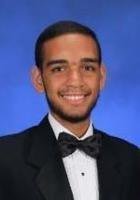
Certified Tutor
6+ years
Christopher
Christopher's memory-sport training — he's actively working toward a Guinness World Record — gives him a genuinely unusual skill set for tackling the 250-image set, where students need to recall specific works, artists, dates, and cultural contexts under exam pressure. But he pairs those memorizatio...
Johns Hopkins University
Bachelor of Science, Cellular and Molecular Biology

Certified Tutor
6+ years
Elena
Studying art history at Vanderbilt means Elena doesn't just recognize a Bernini sculpture or a Mughal miniature — she can explain the cultural, religious, and political contexts that produced them. AP Art History covers 250 required works spanning global traditions, and Elena teaches students to ana...
Vanderbilt University
Bachelor of Science, Child Development
Practice AP Art History
Free practice tests, flashcards, and AI tutoring for AP Art History
Other Tampa Tutors
Related Social Studies Tutors in Tampa
Frequently Asked Questions
The AP Art History exam is scored on a scale of 1-5, with most colleges granting credit for scores of 3 or higher. The exam consists of two sections: a multiple-choice section (50% of your score) covering 250 required artworks and architectural works, and a free-response section (50% of your score) with essay questions that test your ability to analyze and contextualize art across different cultures and time periods. Understanding the exam's structure and what scorers are looking for in your responses is crucial for effective preparation.
Many students struggle with memorizing the 250 required artworks and their historical contexts—it's easy to confuse artists, periods, and cultural movements. Others find the free-response essays challenging because they require you to analyze unfamiliar artworks on the spot using vocabulary and frameworks you've learned. Time management during the exam is another common issue, as students need to balance careful analysis with moving through questions efficiently. Personalized tutoring can help you develop strategies to organize information, practice analyzing artworks systematically, and build confidence in your essay writing.
Most students benefit from starting AP Art History preparation 3-4 months before the exam, though this depends on your familiarity with art history and your starting point. A solid study schedule might involve 5-7 hours per week of focused review, including time for learning the required artworks, practicing free-response essays, and taking full-length practice tests. Working with a tutor can help you create a personalized study plan that targets your specific weaknesses, whether that's memorizing artworks, understanding historical context, or improving your essay analysis skills.
Rather than rote memorization, successful AP Art History students organize artworks by time period, culture, and theme, which helps you understand connections and remember details more naturally. Creating visual flashcards with images, artist names, dates, and historical significance—then grouping them by era or movement—makes the material more manageable and meaningful. Many students find it helpful to study artworks in thematic clusters (e.g., "works exploring power and authority" or "innovations in perspective") rather than chronologically, as this mirrors how the exam tests your knowledge. A tutor can help you develop organizational systems that work for your learning style and ensure you're building deep understanding alongside memorization.
Strong AP Art History essays follow a clear structure: identify the artwork, provide historical context, analyze formal elements (composition, color, technique), and connect these observations to larger themes or movements. Practice analyzing unfamiliar artworks using the same framework repeatedly so you can apply it confidently under timed conditions. Many students benefit from learning a consistent analytical vocabulary and practicing essays with real AP prompts to get comfortable with the timing—you'll typically have 40 minutes per essay. Tutors can review your practice essays, identify patterns in what you're missing, and help you refine your analysis and writing efficiency.
The multiple-choice section tests both your knowledge of the 250 required artworks and your ability to recognize artistic styles, techniques, and historical periods. Success comes from not just knowing "what" each artwork is, but understanding "why" it matters—the historical context, artistic innovations, and cultural significance. Practice with released AP exams and diagnostic tests to identify which time periods or cultures you're weakest in, then focus your study there. Time management is key: aim to spend about 45-50 seconds per question, which gives you time to think carefully without getting stuck. Working with a tutor helps you develop efficient strategies for eliminating wrong answers and recognizing patterns in how AP tests its questions.
Expert tutors can create a personalized study plan based on your current knowledge and target score, helping you prioritize which artworks and periods to focus on first. They can teach you analytical frameworks for approaching unfamiliar artworks, review your practice essays with detailed feedback, and help you identify and close knowledge gaps before test day. Tutors also help many students manage test anxiety by building confidence through practice, explaining question formats clearly, and developing time-management strategies specific to your pacing challenges. Varsity Tutors connects you with tutors experienced in AP Art History who understand what colleges are looking for and can tailor their instruction to your learning style.
Score improvement depends on your starting point, how much time you commit to studying, and how consistently you apply feedback from your tutor. Students who start with foundational gaps and work with a tutor for 3-4 months often see improvements of 1-2 points on the AP scale, while those already scoring 3s may find it more challenging to reach a 4 or 5. The most significant gains typically come from developing a systematic approach to learning the required artworks, practicing essay analysis regularly, and identifying your specific weak areas. Your tutor can set realistic goals based on your current level and help you track progress through practice tests and timed essay practice.
Connect with AP Art History Tutors in Tampa
Get matched with local expert tutors