Award-Winning Calculus Tutors
serving Port St. Lucie, FL
Calculus
Tutors in Port St. Lucie
Private 1-on-1 tutoring, weekly live classes for academic support, test prep & enrichment, practice tests and diagnostics, and more to elevate grades and test scores.
Based on 3.4M Learner Ratings
UniversitiesSchools & Universities
DeliveredHours Delivered
ProficiencyGrowth in Proficiency
Who needs tutoring?
No obligation. Takes ~1 minute.

The jump to Calculus demands comfort with abstraction — understanding what a derivative actually represents, not just how to apply the power rule. Jessica tackles limits, integration techniques, and rate-of-change problems by connecting them to concrete scenarios, drawing on the quantitative reasoning she sharpened through her science-heavy coursework at Penn and in medical school.
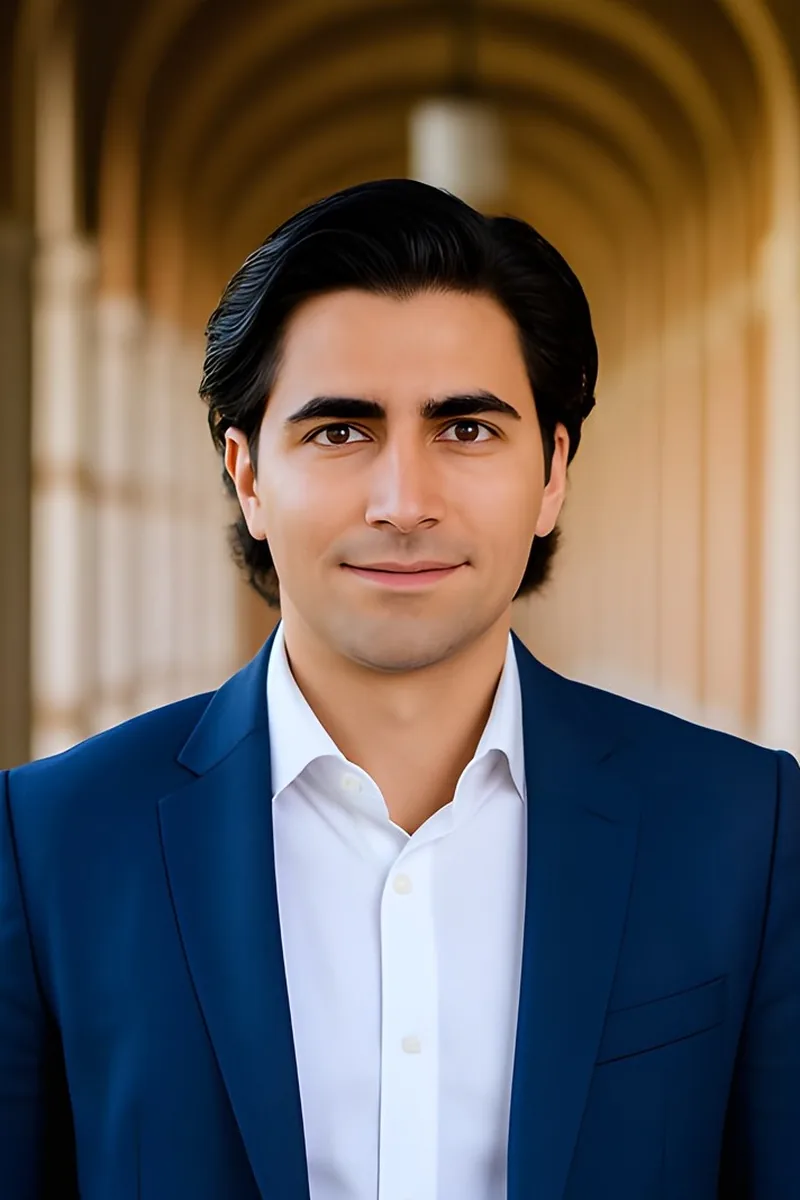
Perry's biology training at Rice meant heavy exposure to applied calculus — modeling population growth with differential equations, analyzing rates of change in biochemical reactions. He brings that real-world grounding to limits, derivatives, and integrals, making abstract concepts feel purposeful rather than purely theoretical.
Accounting coursework drills the quantitative reasoning that underpins calculus — marginal analysis, cost optimization, and modeling how financial variables change over time all rely on derivatives and integrals. Tiffany's business and legal training means she can ground early calculus concepts like rate-of-change problems and area-under-the-curve interpretations in practical scenarios where the math actually drives decisions.
After scoring 5s on both AP Calculus AB and BC, Derek continued into applied mathematics at Harvard, where integration techniques and differential equations became everyday tools. He unpacks the reasoning behind the chain rule, u-substitution, and the Fundamental Theorem so that students internalize the logic rather than just pattern-matching homework problems.
Neuroscience at Duke demands heavy calculus — from modeling neural firing rates with differential equations to applying integrals in pharmacokinetic analysis. Michelle brings that applied perspective to topics like limits, derivatives, and integration techniques, connecting abstract rules to real problems so the reasoning behind each step clicks.
Computational science at the University of Chicago is essentially applied calculus — optimization algorithms, numerical integration, and modeling dynamic systems all require fluency with derivatives and integrals at a level most math courses only introduce. Kaylah's background in statistics and neuroscience means she's used calculus to solve real problems, from analyzing rates of change in cognitive data to building computational models. She teaches the material by connecting each rule to the quantitative reasoning it actually powers.
Three engineering degrees gave Andrea a relationship with calculus that goes well beyond the textbook — she's applied integration techniques, differential equations, and multivariable concepts to real mechanical systems. She unpacks problems like volumes of revolution or optimization by showing students the physical intuition behind the math, which makes the abstract machinery far easier to retain.
The jump from derivatives as formulas to derivatives as ideas — rates of change, optimization, area accumulation — is where most calculus students stall. Hari approaches each concept graphically and algebraically in parallel, so students see what a limit or integral actually represents before drilling computation. His finance and economics training gives him a deep library of applied problems to make abstract ideas tangible.
Engineering courses at Johns Hopkins throw multivariable integrals and differential equations at students constantly, so Joshitha's fluency with calculus is battle-tested. She digs into the conceptual backbone of each topic — what a derivative actually measures, why the Fundamental Theorem ties two seemingly different operations together — and then connects that understanding to efficient problem-solving. Whether it's limits, integration techniques, or applications, she makes the logic visible.
American Studies isn't a math-heavy major, so Olivia is straightforward that calculus sits well outside her academic focus. That said, a 1560 SAT demonstrates she can handle serious quantitative reasoning, and her knack for breaking complex material into clear, structured explanations — honed across years of writing and literature tutoring — carries over well to unpacking early calculus ideas like limits and derivative rules where the notation is often scarier than the logic.
Psychology research at Duke involves more quantitative work than most people expect — Santiago has encountered calculus concepts like rates of change and curve analysis in statistical modeling and experimental design coursework. His 1440 SAT confirms solid quantitative reasoning, and his instinct as a tutor is to unpack *why* a rule works before drilling the procedure, treating a derivative the way he'd treat a passage in a close reading: one layer at a time.
Research in a clinical neuroscience lab at Vanderbilt means Anabel uses calculus constantly — modeling neural signal decay, quantifying rates of synaptic change, and interpreting the curves that describe how biological systems evolve over time. That daily exposure to applied math gives her a practical vocabulary for teaching derivatives and integrals that connects each rule to something measurable. Her 33 ACT composite and previous work at a dedicated math tutoring center back up the quantitative chops.
Whether it's epsilon-delta definitions, chain rule applications, or setting up integrals for area between curves, calculus rewards students who understand the reasoning behind each technique. Gabriel's coursework at Penn in both economics and computer science means he uses calculus regularly in applied contexts — optimization models, marginal analysis, numerical methods — and brings that real-world grounding into every session.
The jump from "find the derivative" to "understand what the derivative means" is where most calculus students stall. Caitlin tackles limits, rates of change, and integration by tying each idea back to real behavior — how a function moves, where it peaks, why the area under a curve matters. Her 5.0 rating speaks to how well that approach clicks.
Studying aerospace engineering at Princeton means Nicolas uses derivatives and integrals daily — for modeling forces on a wing, optimizing energy systems, and solving differential equations that describe real motion. He unpacks the chain rule, integration techniques, and limit definitions with that applied perspective, so the calculus feels purposeful rather than procedural.
Limits, derivatives, and integrals each layer on the last, so a shaky grasp of one topic creates confusion that compounds fast. Manuela's approach to Calculus emphasizes understanding what a derivative actually represents — a rate of change at a point — before drilling techniques like the chain rule or integration by substitution. That conceptual grounding is what her pre-med coursework demanded and what she brings to every session.
Physical therapy doctoral work at Washington University in St. Louis is steeped in calculus — biomechanical force curves, joint torque calculations, and the rate-of-change math behind human movement analysis are all part of James's daily academic life. That hands-on fluency with derivatives and integrals means he can ground abstract calculus concepts in tangible, physical examples of how bodies accelerate, decelerate, and bear load. His 33 ACT and years teaching math across NYC public schools round out a tutor who's comfortable with both the theory and the classroom side.
Studying spacecraft trajectories, orbital mechanics, and the gravitational evolution of planetary bodies means Miriam has used calculus as a daily working language throughout her PhD and research career. She teaches derivatives and integrals the way she actually encounters them — as tools for describing how physical systems change over time — and can walk through everything from chain rule mechanics to multivariable applications with the fluency of someone who writes NASA grant proposals built on that math. Rated 5.0 by students.
I am graduated from Penn State University in Industrial Engineering in 2017. I've tutored ever since I was in high school, and I love helping people! I like to help my students understand math (and other topics) instead of just doing it blindly. My goal is to help my students improve their math (and other topics) and build skills that will help them find learning easier in the future! Fun fact, I used to work for Disney and I like to salsa dance!
An anthropology degree might not scream calculus, but Libby's 31 ACT composite and her breadth across math subjects — from elementary through calculus — show she can navigate quantitative material and break it down for students still building comfort with the basics. Her teaching style leans on patience and structure, walking through early concepts like limits and continuity one careful step at a time until the reasoning feels solid.
Integration techniques, related rates, and the chain rule all come down to recognizing structure — and Dalila's math degree means she's drilled those patterns deeply enough to teach them from the inside out. She's especially effective at connecting the algebra and trig students already know to the calculus ideas built on top of them, so new concepts like limits of compositions or trig substitution don't feel like they came out of nowhere. Her 1520 SAT confirms the quantitative fluency behind that approach.
A chemical engineering degree from Princeton means Shellee didn't just take calculus — she applied derivatives and integrals daily to model reaction rates, fluid dynamics, and thermodynamic systems. That applied perspective lets her explain concepts like the chain rule or integration by parts through concrete examples that give the math real meaning. She breaks intimidating multi-step problems into manageable pieces students can replicate on their own.
Licensed to teach middle and high school math, Jacob has taken students through the full arc from pre-algebra up through AP Calculus BC — so when he explains integration by parts or Taylor series, he knows exactly which earlier skills a student might be missing and can patch those gaps on the fly. His math degree means the theory behind the techniques is second nature, not something he's reverse-engineering from a solutions manual. Rated 5.0 by students.
Limits, derivatives, and integrals each demand a different kind of thinking, and Paulkey's graduate work in computer science gave him daily practice applying calculus concepts to real computational problems. He unpacks each rule — chain rule, u-substitution, integration by parts — by showing why it works before drilling how to use it. That approach turns calculus from a collection of formulas into a subject that actually makes sense.
Studying Human Biology at Harvard means Destiny uses calculus constantly — modeling rates of change in biological systems, interpreting area-under-the-curve problems, and working through differential equations. She brings that applied perspective to tutoring, connecting integration techniques and limit problems to real scenarios that make the math feel purposeful.
Psychology research at both Brandeis and University College London required Amanda to work with statistical models grounded in calculus — normal distributions, rates of change in developmental data, and the integral-based logic behind probability curves. That quantitative training, paired with a 1470 SAT, means she can walk through early calculus concepts like limits and derivatives by connecting them to the data-driven reasoning she used throughout her graduate work.
Whether it's a first encounter with limits and derivatives or a deeper dive into integration techniques, calculus demands both conceptual understanding and mechanical fluency. Wanqi's civil engineering degree means she's applied every major calculus concept — from related rates to definite integrals — to real structural and design problems, and she brings that applied perspective into every session.
Environmental biology coursework put Andrew through calculus in its most applied form — modeling population dynamics, nutrient cycling rates, and the exponential growth curves that describe how ecosystems actually change over time. That background means he teaches derivatives and integrals as tools that answer real questions about how quantities shift, not just as abstract symbol manipulation. His 33 ACT composite confirms the quantitative chops to back it up.
Benjamin's graduate work at the University of Essex deepened his understanding of the theoretical backbone behind limits, derivatives, and integrals — the kind of depth that lets him explain not just how to apply the chain rule, but why it works. He tackles calculus by connecting each new technique back to the geometric and algebraic intuition students already have, making topics like related rates and integration by parts feel less like memorized procedures.
Biomedical engineering at UIC meant Apoorva didn't just take calculus — she relied on it daily, from modeling fluid dynamics in biological systems to analyzing signal processing curves where derivatives and integrals carry real physiological meaning. That depth shows when she teaches: integration techniques and series convergence aren't abstract exercises but tools she's actually used. Her 34 ACT composite and 4.6 rating back up the quantitative chops.
Integration techniques like u-substitution and integration by parts often feel like guesswork until someone shows you the pattern-recognition behind choosing the right method. Ankit's computer science training at Duke sharpened his ability to think algorithmically about calculus problems — breaking multi-step integrals and series convergence questions into repeatable decision trees.
Machine learning research is built on calculus — gradient descent, backpropagation, and optimization all require fluency with derivatives, partial derivatives, and integrals. Brandon's MS in Computer Science and two years in the AI industry mean he's applied these concepts to real engineering problems, not just textbook exercises. That practical grounding lets him explain the chain rule or multivariable optimization with the kind of concrete purpose that makes the math stick.
A Vanderbilt neuroscience major, Mariam uses calculus regularly in her coursework — modeling rates of change in biological systems, analyzing curves, and applying integration to real data. She teaches limits, derivatives, and integrals by grounding each concept in what it actually represents, which makes the chain rule or u-substitution feel purposeful instead of mechanical. Students who need both the theory and the computation covered walk away with a much clearer picture.
Honestly, calculus sits well outside Heidi's core training in journalism, English, and Spanish — but her Medill and Binghamton coursework demanded the kind of precise, logical sequencing that early calculus rewards, and she's comfortable tutoring math at foundational levels. She's strongest at untangling the conceptual side of limits and basic derivatives, walking through each step the way she'd walk through an argument in an essay: one clear claim building on the last.
Having completed a mathematics degree that went well beyond Calc 3, Lance treats calculus not as a collection of derivative rules to memorize but as a framework for understanding how things change. He digs into the reasoning behind limits, the Fundamental Theorem, and integration techniques so students can tackle unfamiliar problems on exams with confidence.
Aerospace engineering at Georgia Tech is essentially applied calculus — orbital mechanics, fluid dynamics, and thrust equations all demand fluency with derivatives, integrals, and differential equations that Vansh works through daily in his coursework. That engineering context lets him teach concepts like the chain rule or integration by parts as tools that solve real problems, not just exercises on a worksheet. Rated 5.0 by students.
Economics relies heavily on calculus — optimization, marginal analysis, and integration all show up constantly in upper-level coursework. Stephen, who holds a PhD in Economics from Rice and teaches at Fordham, breaks down derivatives and integrals by connecting them to real decision-making models, giving students both the mechanical skill and the intuition behind it.
An English literature degree doesn't scream calculus, and Robert is honest about that — this isn't his deepest subject. That said, his experience tutoring algebra and pre-calculus means he can support the conceptual groundwork that early calculus demands, particularly translating the slope of a line into the idea of a derivative and making sense of limit notation before it spirals into abstraction.
Understanding what a derivative actually measures — not just how to apply the power rule — is the difference between surviving calculus and commanding it. Daniel digs into the conceptual foundations of limits, Riemann sums, and the Fundamental Theorem so that techniques like integration by parts or related rates problems follow naturally. His PhD-level math and CS work means he's used calculus as a daily tool, not just a classroom exercise.
Mechanical engineering doesn't just use calculus — it lives inside it. Benjamin spent his BS program applying integrals to fluid dynamics, using derivatives to analyze stress and strain, and solving differential equations that govern how physical systems behave, so he teaches the subject with an engineer's instinct for what each concept actually does in practice.
Testimonials
Because the right Calculus tutor makes all the difference.
Average Session Rating – Based on 3.4M Learner Ratings
Nearby Calculus Tutors
Other Port St. Lucie Tutors
Related Math Tutors in Port St. Lucie
Frequently Asked Questions
Many students struggle with the transition from algebra and precalculus to the conceptual thinking required in Calculus. The biggest hurdles are understanding limits and continuity, mastering derivative and integral concepts, and applying calculus to real-world word problems. Additionally, students often feel overwhelmed by the symbolic notation and multi-step problem-solving required. Personalized tutoring helps break down these abstract concepts into concrete, understandable pieces so students build genuine understanding rather than just memorizing procedures.
During the first session, a tutor will assess your current understanding of foundational concepts like functions, limits, and rates of change. They'll identify specific gaps or misconceptions that might be holding you back, and discuss your learning goals—whether you're preparing for an AP exam, improving your grade, or building confidence. From there, the tutor creates a personalized plan tailored to your pace and learning style, focusing on the areas where you need the most support.
Showing work in Calculus isn't just about getting points—it reveals your problem-solving process and helps identify exactly where errors occur. A tutor can guide you through the logic behind each step, explaining not just what to do but why you're doing it. This approach builds conceptual understanding and helps you catch your own mistakes, which is essential for success on tests and in higher-level math courses.
Word problems require you to translate real-world situations into mathematical language, set up equations correctly, and then solve them—that's three layers of complexity. Many students struggle because they jump straight to calculations without understanding what the problem is asking. Tutors help you develop a systematic approach: reading carefully, identifying what you know and what you need to find, and connecting the problem to relevant calculus concepts like rates of change or optimization.
Absolutely. Math anxiety often stems from feeling lost or making repeated mistakes without understanding why. Working with a tutor in a low-pressure, one-on-one setting allows you to ask questions freely, work at your own pace, and experience small wins that build confidence. When you understand the concepts rather than just memorizing formulas, you naturally feel more in control and less anxious about problem-solving.
Yes. Whether your school uses AP Calculus AB, AP Calculus BC, IB Calculus, or a standard college-prep curriculum, tutors are familiar with different approaches and can adapt their teaching to match your specific course. They understand how different textbooks present limits, derivatives, and integrals, and can help you navigate whichever version your class is using while reinforcing the core concepts that apply across all programs.
Calculus is built on interconnected concepts—derivatives and integrals are inverses, rates of change appear in many contexts, and optimization problems all follow similar logic. A tutor helps you step back from individual problems to see these larger patterns and connections. This deeper understanding makes it easier to tackle new problems because you recognize the underlying structure, rather than treating each problem as completely separate.
Graphing is a critical skill in Calculus because it helps you visualize concepts like limits, continuity, and the relationship between a function and its derivative. Tutors can teach you how to sketch graphs by hand, interpret what graphs tell you about behavior and rates of change, and connect algebraic solutions back to what you see on a graph. This visual understanding often clicks faster than pure algebra and makes abstract concepts feel more concrete.
Let’s find your perfect tutor
Answer a few quick questions. We’ll recommend the right plan and match you with a top 5% tutor.