Award-Winning AP Physics C: Electricity and Magnetism Tutors
serving San Diego, CA
AP Physics C: Electricity and Magnetism
Tutors in San Diego
Private 1-on-1 tutoring, weekly live classes for academic support, test prep & enrichment, practice tests and diagnostics, and more to elevate grades and test scores.
Based on 3.4M Learner Ratings
UniversitiesSchools & Universities
DeliveredHours Delivered
ProficiencyGrowth in Proficiency
Who needs tutoring?
No obligation. Takes ~1 minute.

Gauss's law, Ampère's law, and Faraday's law each require students to set up integrals over surfaces and paths that feel nothing like standard calculus problems. Vishank's comfort with multivariable math and his experience teaching across physics and calculus let him bridge that gap — showing exactly how to choose a Gaussian surface or an Amperian loop and why the math works the way it does.
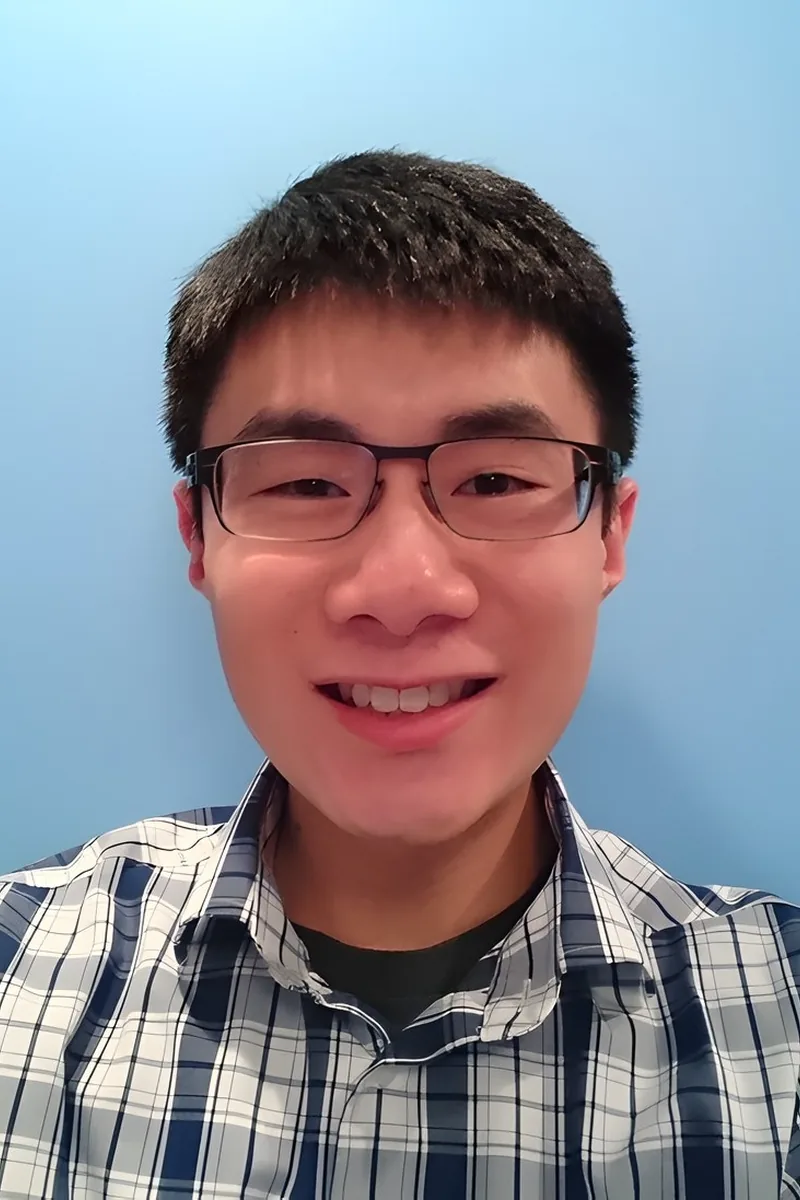
Gauss's law, Ampère's law, Faraday's law — AP Physics C: E&M throws vector calculus at students who are still getting comfortable with electric fields and circuits. Will breaks each law down to its physical meaning first, then layers in the integral formulations so students understand what they're computing and why. As a current Rice physics student, he's recently worked through this exact material at the college level.
Gauss's law, Ampère's law, Faraday's law — AP Physics C: E&M asks students to wield vector calculus inside electromagnetic theory, which is a steep jump from most prior coursework. Steven approaches each topic by first explaining the physical picture, then showing the mathematical framework, then working through a practical example that ties both together. His PhD in chemical engineering required deep work with electromagnetic principles and multivariable calculus alike.
AP Physics C: E&M is one of the toughest AP exams because it layers calculus on top of already abstract concepts like Gauss's law, Faraday's law, and RC circuits. Ian's chemical engineering program at Cornell covers electromagnetism in depth, so he can unpack Maxwell's equations and walk through the calculus-heavy derivations the exam demands. He treats each problem as a chance to build physical intuition, not just grind through integrals.
Gauss's law, Ampère's law, Faraday's law — AP Physics C: E&M asks students to choose the right tool for each field configuration and then execute the calculus cleanly. Sophia breaks each problem into two phases: identifying the symmetry that dictates the approach, then setting up and evaluating the integral. Her 5.0 rating speaks to how clearly she communicates concepts that most students find abstract.
Gauss's law, Ampère's law, Faraday's law — AP Physics C: E&M asks students to wield vector calculus in physical contexts that feel genuinely abstract at first. Jacques tackles this by grounding each law in a concrete setup (a charged sphere, a solenoid, a changing magnetic flux) before layering in the integral formulations. His engineering training at Princeton and decades of classroom physics teaching make him unusually comfortable in this territory.
This is Michael's home turf. As an electrical and computer engineering major at Northwestern specializing in robotics and control systems, he lives in the world of Gauss's law, Faraday's law, and RC/RL circuits every semester. He unpacks Maxwell's equations and circuit analysis in ways that connect the abstract math to real systems — like the power electronics he builds for Northwestern's solar car.
AP Physics C: E&M is where calculus meets abstract field theory, and most students struggle not with the math itself but with visualizing what's happening inside capacitors, inductors, and current-carrying loops. Aleksandar pairs his UPenn physics coursework with a structured problem-solving method — breaking each scenario into a diagram, an equation selection, and a calculus setup — that turns intimidating free-response questions into repeatable steps.
Gauss's law, Ampère's law, RC circuits — AP Physics C: E&M piles abstract vector calculus on top of already counterintuitive electromagnetic concepts. Victoria unpacks each topic by building physical intuition first, like visualizing electric field lines before setting up a flux integral, so the math serves the physics instead of obscuring it. Her background in medical imaging gives her real-world examples of how electromagnetic principles show up beyond the textbook.
AP Physics C: E&M is where calculus and physics collide — Gauss's law integrals, Faraday's law, and RC/RL circuit analysis all demand fluency in both. Jared's mechanical engineering PhD work at Lehigh means he uses Maxwell's equations and vector calculus daily, so he can unpack the math behind each concept rather than just handing students formulas to memorize.
AP Physics C: E&M is widely considered the hardest AP science exam, demanding fluency with vector calculus, Gauss's law, Faraday's law, and RC/RL circuit analysis under serious time pressure. Nima is a physics major at Duke who earned a 1580 SAT, and he unpacks these topics by deriving results from Maxwell's equations so students understand the structure behind each problem type rather than pattern-matching from examples.
Gauss's law, Faraday's law, Ampère's law — AP Physics C: E&M asks students to wield vector calculus in ways that feel like a massive leap from mechanics. Lindamulage tackles these topics regularly in his research at Brookhaven National Laboratory, so he can unpack concepts like electric flux, induced EMF, and RC circuits with the kind of physical intuition that turns intimidating math into clear reasoning.
Testimonials
Because the right AP Physics C: Electricity and Magnetism tutor makes all the difference.
Average Session Rating – Based on 3.4M Learner Ratings
Practice AP Physics C: Electricity and Magnetism
Free practice tests, flashcards, and AI tutoring for AP Physics C: Electricity and Magnetism
Nearby AP Physics C: Electricity and Magnetism Tutors
Other San Diego Tutors
Related Science Tutors in San Diego
Frequently Asked Questions
AP Physics C: Electricity and Magnetism focuses on electrostatics, conductors and insulators, electric potential, capacitance, current and resistance, magnetic fields, and electromagnetic induction. The course emphasizes calculus-based problem-solving and requires understanding both conceptual principles and mathematical applications. Most students find the transition from mechanics to field theory challenging, which is why many benefit from personalized instruction to build foundational understanding before tackling complex problem sets.
Students typically struggle most with Gauss's Law, electromagnetic induction (Faraday's Law), and understanding the relationship between electric and magnetic fields. These topics require strong calculus skills and the ability to visualize abstract field concepts—both areas where targeted tutoring makes a measurable difference. Time management during the exam is also critical, as the free-response section demands both conceptual understanding and efficient problem-solving.
The exam consists of two sections: a 45-minute multiple-choice section (35 questions) and a 45-minute free-response section (3 problems). Success requires balancing speed with accuracy—many students lose points by rushing through multiple-choice or misinterpreting free-response prompts. Tutors can help you develop test-taking strategies specific to each section, including how to allocate time and identify which problems to prioritize.
Score improvement depends on your starting point and consistency with practice. Students who work with a tutor typically see gains of 1-2 points on the 1-5 AP scale within 8-12 weeks of regular sessions, especially when combined with structured practice tests and targeted problem-solving. The key is identifying your specific weak areas—whether that's conceptual gaps in field theory or execution errors on calculations—and addressing them systematically.
Your first session focuses on assessment and goal-setting. A tutor will review your current understanding of key topics, identify specific areas where you're struggling (like Gauss's Law or induction problems), and discuss your target AP score and timeline. This personalized approach helps create a focused study plan rather than reviewing material you already understand, making your tutoring time more efficient.
Practice tests are essential—they reveal timing issues, conceptual gaps, and question-format patterns you might miss during regular studying. Taking full-length practice exams under timed conditions helps you build endurance and identify whether your mistakes stem from careless errors or deeper misunderstandings. Tutors can analyze your practice test results to pinpoint exactly where to focus your study efforts for maximum score improvement.
Yes—AP Physics C is calculus-based, so you'll need to be comfortable with derivatives, integrals, and differential equations. If your calculus foundation is shaky, this can significantly impact your ability to solve electromagnetic problems. Many students benefit from tutoring that bridges calculus and physics concepts, showing how mathematical tools directly apply to understanding electric and magnetic phenomena.
Varsity Tutors connects you with expert tutors for students in San Diego who specialize in AP Physics C and understand the specific challenges of the Electricity and Magnetism exam. You can share your goals, timeline, and preferred learning style, and get matched with a tutor who fits your needs. Whether you need help building foundational understanding or fine-tuning test-taking strategies, personalized 1-on-1 instruction allows you to work at your own pace and focus on your unique weak areas.
Let’s find your perfect tutor
Answer a few quick questions. We’ll recommend the right plan and match you with a top 5% tutor.