Award-Winning MCAT Chemical and Physical Foundations of Biological Systems Tutors
serving Tucson, AZ
Who needs tutoring?
FEATURED BY


TUTORS FROM
- YaleUniversity
- PrincetonUniversity
- StanfordUniversity
- CornellUniversity
Award-Winning MCAT Chemical and Physical Foundations of Biological Systems Tutors serving Tucson, AZ
Certified Tutor
6+ years
Rhea
The MCAT's Chemical and Physical Foundations section blends general chemistry, organic chemistry, physics, and biochemistry into passage-based problems that reward fast, integrated thinking. As a pre-med biology major at the University of Chicago, Rhea has recently worked through this exact content ...
University of Chicago
Bachelor of Science, Biology, General
Certified Tutor
10+ years
Zachary
The Chem/Phys section of the MCAT demands more than knowing general chemistry and physics — it requires applying those principles to biological systems under time pressure, from enzyme kinetics and thermodynamics to fluid dynamics in the circulatory system. Zachary's biochemistry and biophysics degr...
Yale University
Bachelors, Biochemistry and Biophysics
Certified Tutor
10+ years
Samantha
The Chem/Phys section of the MCAT demands more than content recall — it requires applying general chemistry, organic chemistry, and physics concepts within passage-based experimental scenarios. Samantha, currently in medical school, unpacks how to read data tables mid-passage, connect them to underl...
Duke University
Bachelors in Global Health Determinants, Behaviors, and Interventions
Harvard Medical School
Current Grad Student, MD
Certified Tutor
Tony
Tackling the Chemical and Physical Foundations section requires connecting general chemistry and physics concepts to biological systems — something Tony did routinely as a biology major at Yale preparing for medical school. He breaks down high-yield topics like enzyme kinetics, fluid dynamics, and e...
Yale University
Bachelor of Science in Biology
Certified Tutor
6+ years
David
Covering everything from Newtonian mechanics to amino acid chemistry, the Chem/Phys section demands fluency across disciplines that most students studied years apart. David's neuroscience background at Yale included heavy coursework in general chemistry, organic chemistry, and physics, so he connect...
Yale University
Bachelor of Science in Neuroscience
Harvard University
Current Grad Student, Bioethics and Medical Ethics
Certified Tutor
9+ years
Benjamin
Preparing for the MCAT's Chemical and Physical Foundations section requires connecting general chemistry, organic chemistry, and physics to biological systems — exactly the kind of cross-disciplinary thinking Benjamin's Vanderbilt neuroscience degree demanded. He breaks down passage-based questions ...
Vanderbilt University
Bachelor's degree in neuroscience and Russian
Certified Tutor
Laura
The Chem/Phys section of the MCAT throws biochemistry, general chemistry, organic chemistry, and physics at students in passage-based formats that demand fast analytical reading as much as content knowledge. Laura breaks down complex passages — enzyme kinetics graphs, electrochemistry calculations, ...
Massachusetts Institute of Technology
Bachelors, Economics
Certified Tutor
8+ years
Amanda
The Chemical and Physical Foundations section throws organic chemistry, physics, and general chemistry at students in passage-based formats that reward fast, accurate reasoning under pressure. Amanda tackled the MCAT herself on the path to her MD and knows which high-yield topics — enzyme kinetics, ...
The University of Alabama
Bachelor of Science, Biology, General
Baylor College of Medicine
Doctor of Medicine, Public Health
Certified Tutor
6+ years
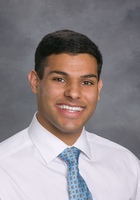
The Chem/Phys section of the MCAT demands rapid passage interpretation layered on top of general chemistry, organic chemistry, and physics — and Sanjay has been through it himself with a biochemistry degree and medical school under his belt. He breaks down passage-based reasoning strategies for topi...
Rice University
Bachelor in Arts
Certified Tutor
Jean
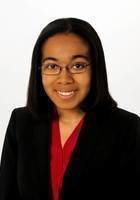
Having taken the MCAT and earned admission to Harvard Medical School, Jean knows firsthand how the Chemical and Physical Foundations section blends general chemistry, organic chemistry, and physics into passage-based reasoning problems. She teaches students to decode experimental setups quickly and ...
Harvard College
Bachelor in Arts, Sociology
Harvard Medical School
Doctor of Medicine, Medicine
Nearby MCAT Chemical and Physical Foundations of Biological Systems Tutors
Other Tucson Tutors
Related Graduate Test Prep Tutors in Tucson
Frequently Asked Questions
This section tests your understanding of chemistry and physics principles as they apply to living systems. You'll encounter general chemistry (atomic structure, bonding, thermodynamics), organic chemistry (reaction mechanisms, molecular structure), biochemistry (protein structure, metabolism), and physics (mechanics, waves, electromagnetism). The section emphasizes how these concepts connect to biological processes, so you need to think beyond memorization and understand applications.
This section demands both conceptual understanding and quick problem-solving under time pressure. Many students struggle with the breadth of material—you need solid chemistry and physics foundations—combined with the MCAT's emphasis on applying these concepts to unfamiliar biological scenarios. Additionally, the section includes data interpretation and passage-based reasoning, which requires you to extract relevant information quickly and connect it to underlying principles rather than relying on rote knowledge.
Score improvement depends on your starting point and effort level, but students who work with tutors on targeted weak areas typically see meaningful gains. If you're struggling with specific topics like thermodynamics or organic chemistry mechanisms, focused instruction can help you build conceptual clarity, which translates to faster problem-solving and better accuracy. Most students benefit from identifying their exact weak points early, then dedicating 4-8 weeks of consistent practice with expert guidance to see noticeable improvement.
The amount varies based on your background and target score, but most students spend 60-80 hours total on MCAT prep across all sections. For the Chemical and Physical Foundations section specifically, allocate time proportional to your weaknesses—if chemistry is your struggle area, you might spend 20-25 hours on this section alone. A typical schedule involves 3-4 weeks of content review followed by 4-6 weeks of practice problems and full-length tests, with tutoring sessions helping you identify gaps and optimize your study approach.
You have approximately 95 minutes to answer 59 questions, which gives you roughly 1.5-2 minutes per question including reading time. The key is recognizing which questions are straightforward knowledge checks versus those requiring deeper analysis, and spending your time accordingly. Many students benefit from practicing with full-length tests under timed conditions to develop intuition about pacing, and tutors can help you identify which question types consistently slow you down so you can develop strategies to handle them more efficiently.
Start by taking a diagnostic practice test or reviewing your performance on practice problems to pinpoint which topics consistently give you trouble—whether that's thermodynamics, acid-base chemistry, kinetics, or physics concepts. Track not just what you get wrong, but why: Are you misunderstanding the concept, misreading the question, or running out of time? A tutor can help you analyze your practice test results systematically, categorize your errors, and create a targeted study plan that prioritizes your biggest gaps rather than reviewing material you already know well.
Passage-based questions require you to extract relevant information from scientific text and apply it to novel scenarios, rather than relying solely on memorized facts. The strategy is to read actively, identify the key concept the passage is illustrating, then use that understanding to answer questions—even if they involve unfamiliar applications. Many students find it helpful to practice this skill repeatedly with tutoring guidance, learning to distinguish between information you need from the passage versus what requires background knowledge, and developing speed in recognizing question patterns.
Most MCAT experts recommend taking 8-12 full-length practice tests spread throughout your prep timeline, starting after you've completed content review. This gives you enough data to identify patterns in your performance and build test-day stamina. For the Chemical and Physical Foundations section specifically, supplement full-length tests with focused practice on individual topics—working through 50-100 questions per topic area before moving on. A tutor can help you interpret your practice test results, identify which questions reveal conceptual gaps versus careless errors, and adjust your study plan accordingly.
Connect with MCAT Chemical and Physical Foundations of Biological Systems Tutors in Tucson
Get matched with local expert tutors