Award-Winning AP Biology Tutors
serving Tucson, AZ
AP Biology
Tutors in Tucson
Private 1-on-1 tutoring, weekly live classes for academic support, test prep & enrichment, practice tests and diagnostics, and more to elevate grades and test scores.
Based on 3.4M Learner Ratings
UniversitiesSchools & Universities
DeliveredHours Delivered
ProficiencyGrowth in Proficiency
Who needs tutoring?
No obligation. Takes ~1 minute.

The best part of tutoring is promoting students' long-term success through mastery of reading, writing, math, study skills, organization, and critical thinking. In particular, I enjoy helping students build test-taking strategies and core skills for the ACT, SAT, and other admissions tests. I also support pre-K and K-12 students learning math and ELA. Before joining Varsity, I tutored in a Reading and Writing Lab for university students with learning disabilities where I earned a College Reading and Learning Association (CRLA) certification. Since joining Varsity, I have completed continuing education through the Lastinger Center for Learning. I graduated from the University of Arizona in 2021 with a BA in Cultural Anthropology. In addition to tutoring, I have worked as an instructional aide for an art program, an applied anthropology researcher, and a nonprofit program coordinator. Out of all these experiences, I enjoy tutoring the most. I look forward to working with you!
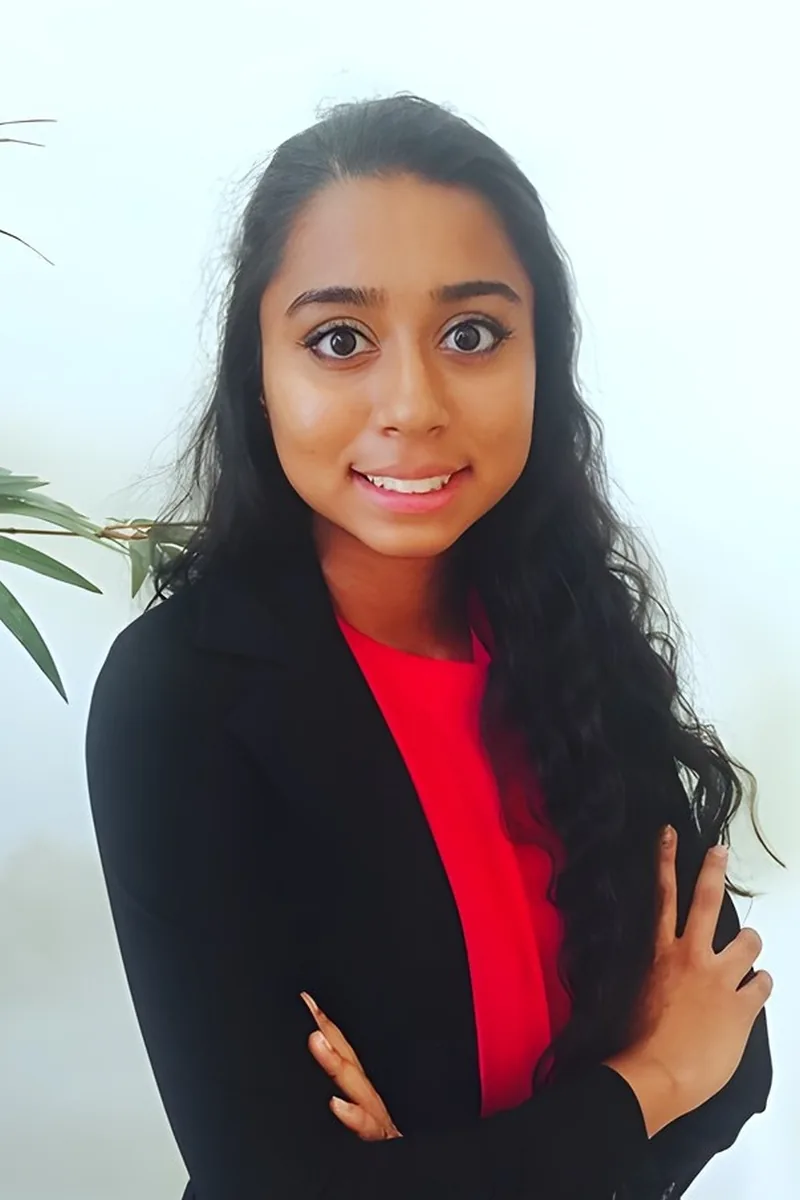
Having taken 10 AP courses in high school — including AP Biology — Thara knows the exam inside out, from the free-response rubric expectations to the way the multiple-choice questions test application over recall. She's now deepening that knowledge on Duke's pre-med track, which means topics like cellular respiration, gene regulation, and ecology aren't just test material for her — they're concepts she uses daily in college-level biology.
Every AP Biology free-response question rewards students who can connect molecular details to large-scale biological outcomes — explaining how a point mutation disrupts protein folding, or tracing energy flow from photosystem II through an entire ecosystem. Gordon earned his B.S. in Biological Sciences from Arizona State and has mentored premed undergraduates through this exact material, so he knows which experimental design and data-analysis skills the College Board actually tests.
Four years studying conservation biology at ASU means River didn't just learn AP Bio content — he lived in it, from cellular respiration pathways to ecological modeling and evolutionary mechanisms. He breaks down the exam's emphasis on experimental design and data interpretation by walking students through how actual biologists think about controls, variables, and evidence. That lab-trained instinct for analyzing figures is exactly what the AP Bio free-response section rewards.
Pursuing a B.S. in Biology at the University of Houston, Pooja is immersed daily in the same cellular processes, genetics pathways, and ecological concepts that dominate the AP Bio exam. She unpacks dense topics like signal transduction and gene regulation by tying them to experimental design questions — the format that trips up most AP students on free-response sections.
AP Bio covers a massive range, but the units that trip students up most — cellular energetics, gene expression, and ecology modeling — all reward the kind of quantitative thinking Yuxuan brings from his biochemistry training at UC Berkeley. He teaches students to interpret data-driven free-response questions the way a lab scientist would: identify variables, trace cause and effect, then build an argument from evidence. Rated 4.9 by students.
As an aspiring physician currently pursuing my Bachelor's in Physiology and Medical Sciences at the University of Arizona, I am passionate about empowering students to achieve their academic and personal aspirations. With over 5 years of tutoring experience across a diverse range of subjects including ACT, SAT, AP exams, and college application essays. I have developed a keen understanding of the unspoken rules that govern these assessments. My approach is student-centered and adaptive; I tailor my strategies to meet individual learning styles, whether that means incorporating engaging games for those with attention challenges or allowing self-directed learners to guide our sessions. Having recently navigated the same academic landscape as my students, I am intimately familiar with the pressures they face, and I strive to demystify the testing process. I am particularly excited about tutoring AP Biology, AP Calculus, and college applications, as these areas require not just content mastery but also strategic insight into what admissions officers are truly seeking. Outside of tutoring, I enjoy cooking, 3D printing, and weightlifting, all of which enrich my perspective and foster a supportive learning environment. Through tutoring, my goal is not just to teach but to mentor, equipping students with the tools they need to thrive in their educational journeys.
Working in a Yale research lab that uses CRISPR-Cas9 gives Matthew a perspective on AP Biology that most tutors can't offer — he connects textbook topics like gene regulation, signal transduction, and evolution to experiments happening right now. He's especially sharp on the free-response questions, where students need to design experiments and interpret data rather than just recall facts.
Three years running a cell biology lab section at Notre Dame gave Connor a front-row seat to exactly where students stumble on AP Bio material — signal transduction pathways, gene regulation, experimental design questions. His master's work in biomedical sciences deepened that knowledge, and he teaches the course with an eye toward the free-response questions that separate 4s from 5s.
Studying biological engineering at MIT means Lainie encounters AP Bio's core content — gene regulation, cellular energetics, metabolic pathways — through the lens of designing and modeling biological systems, which gives her a more mechanistic understanding than a standard biology curriculum provides. She scored a 1580 SAT and has tutored students as young as four, so she's practiced at adjusting her explanations to match exactly how much detail a student can absorb. Rated 5.0 by students.
Teaching 10th-grade Biochemistry at a competitive Philadelphia magnet school means Kathleen lives in the overlap between biology and chemistry that defines the AP Bio exam. She digs into the molecular details — enzyme kinetics, cellular respiration energetics, gene expression regulation — with the depth the College Board expects on free-response questions. Rated 5.0 by students.
Cellular respiration, genetics, and evolution each require a different kind of thinking — sometimes quantitative, sometimes conceptual, sometimes both at once. Nima breaks down processes like the electron transport chain or Hardy-Weinberg equilibrium into logical steps, drawing on the same analytical rigor that earned him a full merit scholarship to Duke.
AP Bio covers an enormous range — from molecular genetics to ecosystem dynamics — and the exam tests whether students can apply concepts to unfamiliar experimental scenarios. JF's mathematical and computational science training at Stanford sharpens the data-analysis and graph-interpretation skills that the redesigned AP Bio exam leans on heavily. That analytical lens turns intimidating free-response questions into structured problem-solving exercises.
Studying biomedical engineering at Duke means Eric thinks about biological systems at the molecular, cellular, and organismal levels every day. He tackles AP Biology's toughest units — signal transduction, gene regulation, and energy flow through ecosystems — by tying them back to the underlying logic that the AP exam rewards.
Stanford's Human Biology program with a bioinformatics and stem cell science concentration meant Matthew spent his coursework at the intersection of computation and living systems — analyzing gene expression data, studying cell differentiation pathways, and thinking about biology as information processing. That lens is especially useful for AP Bio's molecular biology and genetics units, where students need to trace how information encoded in DNA gets read, regulated, and occasionally misread. Rated 4.9 by students.
AP Biology's shift toward data analysis and experimental design catches many students off guard — it's no longer enough to memorize cell structures and metabolic pathways. Noel's policy-analysis training at the University of Chicago sharpened his ability to interpret graphs, evaluate experimental controls, and construct evidence-based arguments, which maps directly onto the AP exam's free-response demands. He pairs content review with targeted practice on the analytical skills the College Board actually tests.
Owen is a neuroscience major at Brown, which means AP Biology's toughest units — cell signaling, gene expression, and cellular energetics — overlap directly with material he's studied at the college level. He teaches students to think like the exam demands: interpreting experimental data, constructing explanations using evidence, and connecting molecular-scale processes to organism-level outcomes.
Between his neuroscience research at the Jungers Center and molecular biology work at the Oregon Stem Cell Center, Daniel has lived the content that shows up on the AP Biology exam — from cellular signaling pathways to gene expression and evolution. He teaches the free-response section by connecting big biological ideas to the experimental design skills the College Board actually tests for.
Environmental science coursework gave Ethan an ecology-first perspective on biology — population dynamics, energy flow through ecosystems, and the interplay between organisms and their environments — which lines up directly with AP Bio's ecology and evolution units that many science-focused tutors breeze past. He also teaches AP Statistics, so he's unusually comfortable with the data interpretation and experimental design questions that trip students up on the exam. Rated 5.0 by students.
Testimonials
Because the right AP Biology tutor makes all the difference.
Average Session Rating – Based on 3.4M Learner Ratings
Practice AP Biology
Free practice tests, flashcards, and AI tutoring for AP Biology
Other Tucson Tutors
Related Science Tutors in Tucson
Frequently Asked Questions
AP Biology covers eight major units: chemistry of life, cell structure and function, cellular transport, cell communication and division, heredity, gene expression, natural selection, and ecology. The course emphasizes understanding biological systems and processes rather than memorizing facts, with heavy focus on data analysis, experimental design, and connecting concepts across units. Success requires building a strong foundation early, as later units build on concepts from the first half of the course.
Many students struggle with the volume of material and the shift toward conceptual understanding over memorization. The quantitative aspects—like calculating Hardy-Weinberg frequencies or interpreting chi-square tests—trip up students who haven't practiced enough. Additionally, the free-response questions require clear communication of biological concepts, which students often find challenging. Personalized tutoring helps identify which specific units or question types are causing difficulty, allowing for targeted practice.
Score improvement depends on your starting point and commitment level. Students who work with tutors typically see gains of 1-2 points on the AP scale (1-5), though some see larger jumps if they address fundamental concept gaps. The key is consistent practice with feedback—tutors help you identify weak areas, understand why you're missing questions, and develop strategies specific to your learning style. Most students benefit from starting tutoring at least 8-10 weeks before the exam.
The exam is 3 hours and includes 60 multiple-choice questions (50% of score) and 6 free-response questions (50% of score). For multiple choice, pace yourself at roughly 1 minute per question and don't get stuck—flag tough questions and return to them. For free-response, read the question carefully, organize your thoughts before writing, and use precise biological vocabulary. Tutors can teach you how to decode question wording, manage time across sections, and structure answers that earn full credit.
Aim for 4-6 full-length practice tests spread across your study timeline, with the first one early to identify weak areas and the last 2-3 in the final 4 weeks. Taking practice tests under timed conditions is crucial—it builds stamina and helps you internalize pacing. After each test, review every question you missed, not just to find the right answer but to understand why you chose wrong and what concept gap exists. Tutors can help you analyze patterns in your mistakes and adjust your study plan accordingly.
Ideally, connect with a tutor early in the school year or at the start of second semester—this gives time to build foundational understanding and prevents gaps from snowballing. If you're already mid-course, starting immediately is still valuable; tutors can help you catch up on earlier units while keeping pace with current material. For students aiming to significantly improve their score, 8-10 weeks of consistent tutoring before the May exam is a solid timeline.
Test anxiety often stems from feeling unprepared or uncertain about concepts. Working through practice tests with a tutor builds genuine confidence—when you've seen similar questions and know your approach, anxiety decreases naturally. Tutors can also teach breathing techniques, help you develop a pre-exam routine, and teach you to recognize when to move on from a tough question rather than spiraling. The more prepared you feel, the calmer you'll be on exam day.
Varsity Tutors connects you with expert tutors in Tucson who specialize in AP Biology and understand the specific demands of the exam. You can get matched with a tutor who fits your schedule and learning style, whether you prefer working through practice problems, reviewing concepts, or focusing on weak units. The first session is a great opportunity to discuss your goals, current score range, and timeline so your tutor can create a personalized study plan.
Let’s find your perfect tutor
Answer a few quick questions. We’ll recommend the right plan and match you with a top 5% tutor.