Estimation - SSAT Upper Level Quantitative
Card 0 of 32
Evan wants to tip approximately  on a
on a  restaurant tab. Which of the following comes closest to what he should leave?
Evan wants to tip approximately
Tap to see back →
The tab can be rounded to  .
.  is equal to
  .
.

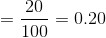
Now we can multiply the percent by the total amount.

 is the most reasonable estimate of the recommended tip.
The tab can be rounded to
Now we can multiply the percent by the total amount.
Estimate the product  by rounding each factor to the nearest unit, then multiplying.
Estimate the product
Tap to see back →
8.39 rounded to the nearest unit is 8 because 0.39 is less than 0.5.
7.34 rounded to the nearest unit is 7 because 0.34 is less than 0.5.
3.52 rounded to the nearest unit is 4 because 0.52 is greater than 0.5.
Multiply the three whole numbers to get the desired estimate:

8.39 rounded to the nearest unit is 8 because 0.39 is less than 0.5.
7.34 rounded to the nearest unit is 7 because 0.34 is less than 0.5.
3.52 rounded to the nearest unit is 4 because 0.52 is greater than 0.5.
Multiply the three whole numbers to get the desired estimate:
If the number  is rounded to the nearest hundredth, which of the following expressions would be equal to that value?
If the number
Tap to see back →
If  is rounded to the nearest hundredth, the result will be
  .
.
Given that  , the correct answer is
If
Given that
Estimate the product  by rounding each factor to the nearest hundred, then multiplying.
Estimate the product
Tap to see back →
437 rounded to the nearest hundred is 400.
877 rounded to the nearest hundred is 900.
551 rounded to the nearest hundred is 600.
Multiply the three whole multiples of 100 to get the desired estimate:

437 rounded to the nearest hundred is 400.
877 rounded to the nearest hundred is 900.
551 rounded to the nearest hundred is 600.
Multiply the three whole multiples of 100 to get the desired estimate:
Estimate the product 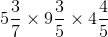 by rounding each factor to the nearest unit, then multiplying.
Estimate the product
Tap to see back →
 , so
, so  rounded to the nearest unit is 5.
 , so
, so  rounded to the nearest unit is 10.
 , so
, so  rounded to the nearest unit is 5.
Multiply the three whole numbers to get the desired estimate:

Multiply the three whole numbers to get the desired estimate:
Melissa is trying to come up with a reasonable estimate of the amount she spent on groceries over the last six months. She notices that the six checks she wrote out to the local grocery store are in the following amounts: $187.54, $218.89, $174.74, $104.76, $189.75, and $228.64. By estimating each of the amounts of the checks to the nearest ten dollars, come up with a reasonable estimate for Melissa's total expenditure for groceries.
Melissa is trying to come up with a reasonable estimate of the amount she spent on groceries over the last six months. She notices that the six checks she wrote out to the local grocery store are in the following amounts: $187.54, $218.89, $174.74, $104.76, $189.75, and $228.64. By estimating each of the amounts of the checks to the nearest ten dollars, come up with a reasonable estimate for Melissa's total expenditure for groceries.
Tap to see back →
Round each of the amounts to the nearest ten dollars as follows:
$187.54 rounds to $190.
$218.89 rounds to $220.
$174.74 rounds to $170.
$104.76 rounds to $100.
$189.75 rounds to $190.
$228.64 rounds to $230.
Add the rounded figures:

Round each of the amounts to the nearest ten dollars as follows:
$187.54 rounds to $190.
$218.89 rounds to $220.
$174.74 rounds to $170.
$104.76 rounds to $100.
$189.75 rounds to $190.
$228.64 rounds to $230.
Add the rounded figures:
Estimate the result 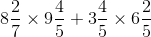 by first rounding each number to the nearest unit.
Estimate the result
Tap to see back →
 , so
, so  rounded to the nearest unit is 8.
 , so
, so  rounded to the nearest unit is 10.
 , so
, so  rounded to the nearest unit is 4.
 , so
, so  rounded to the nearest unit is 6.
The desired estimate can be found as follows:
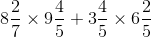



The desired estimate can be found as follows:
Estimate the result  by first rounding each number to the nearest unit.
Estimate the result
Tap to see back →
8.19 rounded to the nearest unit is 8.
4.87 rounded to the nearest unit is 5
3.27 rounded to the nearest unit is 3.
7.42 rounded to the nearest unit is 7.
The desired estimate can be found as follows:




8.19 rounded to the nearest unit is 8.
4.87 rounded to the nearest unit is 5
3.27 rounded to the nearest unit is 3.
7.42 rounded to the nearest unit is 7.
The desired estimate can be found as follows:
Evan wants to tip approximately on a restaurant tab. Which of the following comes closest to what he should leave?
Evan wants to tip approximately
Tap to see back →
The tab can be rounded to . is equal to .
Now we can multiply the percent by the total amount.
is the most reasonable estimate of the recommended tip.
The tab can be rounded to
Now we can multiply the percent by the total amount.
Estimate the product by rounding each factor to the nearest unit, then multiplying.
Estimate the product
Tap to see back →
8.39 rounded to the nearest unit is 8 because 0.39 is less than 0.5.
7.34 rounded to the nearest unit is 7 because 0.34 is less than 0.5.
3.52 rounded to the nearest unit is 4 because 0.52 is greater than 0.5.
Multiply the three whole numbers to get the desired estimate:
8.39 rounded to the nearest unit is 8 because 0.39 is less than 0.5.
7.34 rounded to the nearest unit is 7 because 0.34 is less than 0.5.
3.52 rounded to the nearest unit is 4 because 0.52 is greater than 0.5.
Multiply the three whole numbers to get the desired estimate:
If the number is rounded to the nearest hundredth, which of the following expressions would be equal to that value?
If the number
Tap to see back →
If is rounded to the nearest hundredth, the result will be .
Given that , the correct answer is
If
Given that
Estimate the product by rounding each factor to the nearest hundred, then multiplying.
Estimate the product
Tap to see back →
437 rounded to the nearest hundred is 400.
877 rounded to the nearest hundred is 900.
551 rounded to the nearest hundred is 600.
Multiply the three whole multiples of 100 to get the desired estimate:
437 rounded to the nearest hundred is 400.
877 rounded to the nearest hundred is 900.
551 rounded to the nearest hundred is 600.
Multiply the three whole multiples of 100 to get the desired estimate:
Estimate the product by rounding each factor to the nearest unit, then multiplying.
Estimate the product
Tap to see back →
, so rounded to the nearest unit is 5.
, so rounded to the nearest unit is 10.
, so rounded to the nearest unit is 5.
Multiply the three whole numbers to get the desired estimate:
Multiply the three whole numbers to get the desired estimate:
Melissa is trying to come up with a reasonable estimate of the amount she spent on groceries over the last six months. She notices that the six checks she wrote out to the local grocery store are in the following amounts: $187.54, $218.89, $174.74, $104.76, $189.75, and $228.64. By estimating each of the amounts of the checks to the nearest ten dollars, come up with a reasonable estimate for Melissa's total expenditure for groceries.
Melissa is trying to come up with a reasonable estimate of the amount she spent on groceries over the last six months. She notices that the six checks she wrote out to the local grocery store are in the following amounts: $187.54, $218.89, $174.74, $104.76, $189.75, and $228.64. By estimating each of the amounts of the checks to the nearest ten dollars, come up with a reasonable estimate for Melissa's total expenditure for groceries.
Tap to see back →
Round each of the amounts to the nearest ten dollars as follows:
$187.54 rounds to $190.
$218.89 rounds to $220.
$174.74 rounds to $170.
$104.76 rounds to $100.
$189.75 rounds to $190.
$228.64 rounds to $230.
Add the rounded figures:
Round each of the amounts to the nearest ten dollars as follows:
$187.54 rounds to $190.
$218.89 rounds to $220.
$174.74 rounds to $170.
$104.76 rounds to $100.
$189.75 rounds to $190.
$228.64 rounds to $230.
Add the rounded figures:
Estimate the result by first rounding each number to the nearest unit.
Estimate the result
Tap to see back →
, so rounded to the nearest unit is 8.
, so rounded to the nearest unit is 10.
, so rounded to the nearest unit is 4.
, so rounded to the nearest unit is 6.
The desired estimate can be found as follows:
The desired estimate can be found as follows:
Estimate the result by first rounding each number to the nearest unit.
Estimate the result
Tap to see back →
8.19 rounded to the nearest unit is 8.
4.87 rounded to the nearest unit is 5
3.27 rounded to the nearest unit is 3.
7.42 rounded to the nearest unit is 7.
The desired estimate can be found as follows:
8.19 rounded to the nearest unit is 8.
4.87 rounded to the nearest unit is 5
3.27 rounded to the nearest unit is 3.
7.42 rounded to the nearest unit is 7.
The desired estimate can be found as follows:
Estimate the result by first rounding each number to the nearest unit.
Estimate the result
Tap to see back →
, so rounded to the nearest unit is 8.
, so rounded to the nearest unit is 10.
, so rounded to the nearest unit is 4.
, so rounded to the nearest unit is 6.
The desired estimate can be found as follows:
The desired estimate can be found as follows:
Evan wants to tip approximately on a restaurant tab. Which of the following comes closest to what he should leave?
Evan wants to tip approximately
Tap to see back →
The tab can be rounded to . is equal to .
Now we can multiply the percent by the total amount.
is the most reasonable estimate of the recommended tip.
The tab can be rounded to
Now we can multiply the percent by the total amount.
If the number is rounded to the nearest hundredth, which of the following expressions would be equal to that value?
If the number
Tap to see back →
If is rounded to the nearest hundredth, the result will be .
Given that , the correct answer is
If
Given that
Estimate the product by rounding each factor to the nearest hundred, then multiplying.
Estimate the product
Tap to see back →
437 rounded to the nearest hundred is 400.
877 rounded to the nearest hundred is 900.
551 rounded to the nearest hundred is 600.
Multiply the three whole multiples of 100 to get the desired estimate:
437 rounded to the nearest hundred is 400.
877 rounded to the nearest hundred is 900.
551 rounded to the nearest hundred is 600.
Multiply the three whole multiples of 100 to get the desired estimate: