How to find the perimeter of a rectangle - SSAT Upper Level Quantitative
Card 0 of 28
The length and width of a rectangle are  and
and  . Give its perimeter in terms of
  .
.
The length and width of a rectangle are
Tap to see back →
A rectangle has perimeter  ,
,  the length and
  the width. Substitute
  and
and  in the perimeter formula, and simplify.





A rectangle has perimeter
A rectangle has length 30 inches and width 25 inches. Which of the following is true about its perimeter?
A rectangle has length 30 inches and width 25 inches. Which of the following is true about its perimeter?
Tap to see back →
In inches, the perimeter of the rectangle can be calculated by substituting  in the following formula:


The perimeter is 110 inches.
Now divide by 12 to convert to feet:

This makes the perimeter 9 feet 2 inches, which is between 9 feet and 10 feet.
In inches, the perimeter of the rectangle can be calculated by substituting
The perimeter is 110 inches.
Now divide by 12 to convert to feet:
This makes the perimeter 9 feet 2 inches, which is between 9 feet and 10 feet.
The length and width of a rectangle are  and
and  , respectively. Give its perimeter in terms of
  .
.
The length and width of a rectangle are
Tap to see back →
The perimeter of a rectangle is  , where
  is the length and
  is the width of the rectangle. In order to find the perimeter we can substitute the
  and
and  in the perimeter formula:




The perimeter of a rectangle is
The length of a rectangle is  and the width of this rectangle is
  meters shorter than its length. Give its perimeter in terms of
  .
.
The length of a rectangle is
Tap to see back →
The length of the rectangle is known, so we can find the width in terms of  :
:

The perimeter of a rectangle is  , where
  is the length and
  is the width of the rectangle.
In order to find the perimeter we can substitute the  and
and  in the perimeter formula:




The length of the rectangle is known, so we can find the width in terms of
The perimeter of a rectangle is
In order to find the perimeter we can substitute the
A rectangle has a length of  inches and a width of
  inches. Which of the following is true about the rectangle perimeter if
  ?
?
A rectangle has a length of
Tap to see back →
Substitute  to get
  and
and  :
:


The perimeter of a rectangle is  , where
  is the length and
  is the width of the rectangle. So we have:
 inches
Now we should divide the perimeter by 12 in order to convert to feet:
 feet
feet
So the perimeter is 7 feet and 6 inches, which is between 7 and 8 feet.
Substitute
The perimeter of a rectangle is
Now we should divide the perimeter by 12 in order to convert to feet:
So the perimeter is 7 feet and 6 inches, which is between 7 and 8 feet.
Perimeter of a rectangle is 36 inches. If the width of the rectangle is 3 inches less than its length, give the length and width of the rectangle.
Perimeter of a rectangle is 36 inches. If the width of the rectangle is 3 inches less than its length, give the length and width of the rectangle.
Tap to see back →
Let:

The perimeter of a rectangle is  , where
  is the length and
  is the width of the rectangle. The perimeter is known so we can set up an equation in terms of
  and solve it:





So we can get:
 inches
 inches
Let:
The perimeter of a rectangle is
So we can get:
Which of these polygons has the same perimeter as a rectangle with length 55 inches and width 15 inches?
Which of these polygons has the same perimeter as a rectangle with length 55 inches and width 15 inches?
Tap to see back →
The perimeter of a rectangle is twice the sum of its length and its width; a rectangle with dimensions 55 inches and 15 inches has perimeter
 inches.
All of the polygons in the choices are regular - that is, all have congruent sides - and all have sidelength two feet, or 24 inches, so we divide 140 by 24 to determine how many sides such a polygon would need to have a perimeter equal to the rectangle. However,
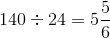 ,
,
so there cannot be a regular polygon with these characteristics. All of the choices fail, so the correct response is that none are correct.
The perimeter of a rectangle is twice the sum of its length and its width; a rectangle with dimensions 55 inches and 15 inches has perimeter
All of the polygons in the choices are regular - that is, all have congruent sides - and all have sidelength two feet, or 24 inches, so we divide 140 by 24 to determine how many sides such a polygon would need to have a perimeter equal to the rectangle. However,
so there cannot be a regular polygon with these characteristics. All of the choices fail, so the correct response is that none are correct.
The length and width of a rectangle are and . Give its perimeter in terms of .
The length and width of a rectangle are
Tap to see back →
A rectangle has perimeter , the length and the width. Substitute and in the perimeter formula, and simplify.
A rectangle has perimeter
A rectangle has length 30 inches and width 25 inches. Which of the following is true about its perimeter?
A rectangle has length 30 inches and width 25 inches. Which of the following is true about its perimeter?
Tap to see back →
In inches, the perimeter of the rectangle can be calculated by substituting in the following formula:
The perimeter is 110 inches.
Now divide by 12 to convert to feet:
This makes the perimeter 9 feet 2 inches, which is between 9 feet and 10 feet.
In inches, the perimeter of the rectangle can be calculated by substituting
The perimeter is 110 inches.
Now divide by 12 to convert to feet:
This makes the perimeter 9 feet 2 inches, which is between 9 feet and 10 feet.
The length and width of a rectangle are and , respectively. Give its perimeter in terms of .
The length and width of a rectangle are
Tap to see back →
The perimeter of a rectangle is , where is the length and is the width of the rectangle. In order to find the perimeter we can substitute the and in the perimeter formula:
The perimeter of a rectangle is
The length of a rectangle is and the width of this rectangle is meters shorter than its length. Give its perimeter in terms of .
The length of a rectangle is
Tap to see back →
The length of the rectangle is known, so we can find the width in terms of :
The perimeter of a rectangle is , where is the length and is the width of the rectangle.
In order to find the perimeter we can substitute the and in the perimeter formula:
The length of the rectangle is known, so we can find the width in terms of
The perimeter of a rectangle is
In order to find the perimeter we can substitute the
A rectangle has a length of inches and a width of inches. Which of the following is true about the rectangle perimeter if ?
A rectangle has a length of
Tap to see back →
Substitute to get and :
The perimeter of a rectangle is , where is the length and is the width of the rectangle. So we have:
inches
Now we should divide the perimeter by 12 in order to convert to feet:
feet
So the perimeter is 7 feet and 6 inches, which is between 7 and 8 feet.
Substitute
The perimeter of a rectangle is
Now we should divide the perimeter by 12 in order to convert to feet:
So the perimeter is 7 feet and 6 inches, which is between 7 and 8 feet.
Perimeter of a rectangle is 36 inches. If the width of the rectangle is 3 inches less than its length, give the length and width of the rectangle.
Perimeter of a rectangle is 36 inches. If the width of the rectangle is 3 inches less than its length, give the length and width of the rectangle.
Tap to see back →
Let:
The perimeter of a rectangle is , where is the length and is the width of the rectangle. The perimeter is known so we can set up an equation in terms of and solve it:
So we can get:
inches
inches
Let:
The perimeter of a rectangle is
So we can get:
Which of these polygons has the same perimeter as a rectangle with length 55 inches and width 15 inches?
Which of these polygons has the same perimeter as a rectangle with length 55 inches and width 15 inches?
Tap to see back →
The perimeter of a rectangle is twice the sum of its length and its width; a rectangle with dimensions 55 inches and 15 inches has perimeter
inches.
All of the polygons in the choices are regular - that is, all have congruent sides - and all have sidelength two feet, or 24 inches, so we divide 140 by 24 to determine how many sides such a polygon would need to have a perimeter equal to the rectangle. However,
,
so there cannot be a regular polygon with these characteristics. All of the choices fail, so the correct response is that none are correct.
The perimeter of a rectangle is twice the sum of its length and its width; a rectangle with dimensions 55 inches and 15 inches has perimeter
All of the polygons in the choices are regular - that is, all have congruent sides - and all have sidelength two feet, or 24 inches, so we divide 140 by 24 to determine how many sides such a polygon would need to have a perimeter equal to the rectangle. However,
so there cannot be a regular polygon with these characteristics. All of the choices fail, so the correct response is that none are correct.
The length and width of a rectangle are and . Give its perimeter in terms of .
The length and width of a rectangle are
Tap to see back →
A rectangle has perimeter , the length and the width. Substitute and in the perimeter formula, and simplify.
A rectangle has perimeter
A rectangle has length 30 inches and width 25 inches. Which of the following is true about its perimeter?
A rectangle has length 30 inches and width 25 inches. Which of the following is true about its perimeter?
Tap to see back →
In inches, the perimeter of the rectangle can be calculated by substituting in the following formula:
The perimeter is 110 inches.
Now divide by 12 to convert to feet:
This makes the perimeter 9 feet 2 inches, which is between 9 feet and 10 feet.
In inches, the perimeter of the rectangle can be calculated by substituting
The perimeter is 110 inches.
Now divide by 12 to convert to feet:
This makes the perimeter 9 feet 2 inches, which is between 9 feet and 10 feet.
The length and width of a rectangle are and , respectively. Give its perimeter in terms of .
The length and width of a rectangle are
Tap to see back →
The perimeter of a rectangle is , where is the length and is the width of the rectangle. In order to find the perimeter we can substitute the and in the perimeter formula:
The perimeter of a rectangle is
The length of a rectangle is and the width of this rectangle is meters shorter than its length. Give its perimeter in terms of .
The length of a rectangle is
Tap to see back →
The length of the rectangle is known, so we can find the width in terms of :
The perimeter of a rectangle is , where is the length and is the width of the rectangle.
In order to find the perimeter we can substitute the and in the perimeter formula:
The length of the rectangle is known, so we can find the width in terms of
The perimeter of a rectangle is
In order to find the perimeter we can substitute the
A rectangle has a length of inches and a width of inches. Which of the following is true about the rectangle perimeter if ?
A rectangle has a length of
Tap to see back →
Substitute to get and :
The perimeter of a rectangle is , where is the length and is the width of the rectangle. So we have:
inches
Now we should divide the perimeter by 12 in order to convert to feet:
feet
So the perimeter is 7 feet and 6 inches, which is between 7 and 8 feet.
Substitute
The perimeter of a rectangle is
Now we should divide the perimeter by 12 in order to convert to feet:
So the perimeter is 7 feet and 6 inches, which is between 7 and 8 feet.
Perimeter of a rectangle is 36 inches. If the width of the rectangle is 3 inches less than its length, give the length and width of the rectangle.
Perimeter of a rectangle is 36 inches. If the width of the rectangle is 3 inches less than its length, give the length and width of the rectangle.
Tap to see back →
Let:
The perimeter of a rectangle is , where is the length and is the width of the rectangle. The perimeter is known so we can set up an equation in terms of and solve it:
So we can get:
inches
inches
Let:
The perimeter of a rectangle is
So we can get: