Reactions Types - Organic Chemistry
Card 1 of 276
Which side (left or right) of the following reaction is favored and why?
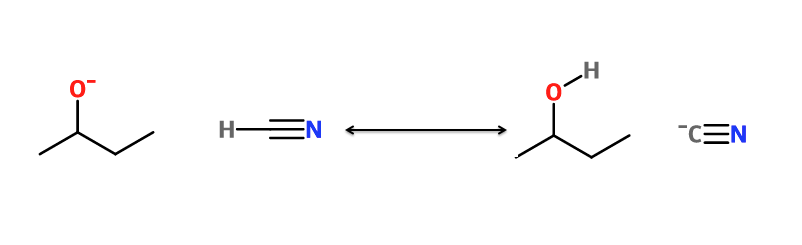
Which side (left or right) of the following reaction is favored and why?
Tap to reveal answer
The side of the reaction that is favored will have the acid with the higher  , because the reaction goes (strong acid + strong base
  weak acid + weak base).
The side of the reaction that is favored will have the acid with the higher
← Didn't Know|Knew It →
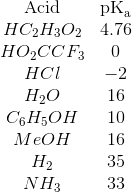
For which of the following acid-base reactions will the equilibrium lie on the left side?
For which of the following acid-base reactions will the equilibrium lie on the left side?
Tap to reveal answer
The pKa value indicates how strong an acid is, and acid strength increases as pKa decreases. The side of a reaction with a lower pKa is going to dissociate more, pushing the equilibrium over to the other side. The equilibrium will thus lie on the side with the HIGHER pKa.

Since the pKa of acetic acid (4.76) is higher than the pKa of trifluoroacetic acid (0), the reaction will shift to the left to reach equilibrium.
The pKa value indicates how strong an acid is, and acid strength increases as pKa decreases. The side of a reaction with a lower pKa is going to dissociate more, pushing the equilibrium over to the other side. The equilibrium will thus lie on the side with the HIGHER pKa.
Since the pKa of acetic acid (4.76) is higher than the pKa of trifluoroacetic acid (0), the reaction will shift to the left to reach equilibrium.
← Didn't Know|Knew It →
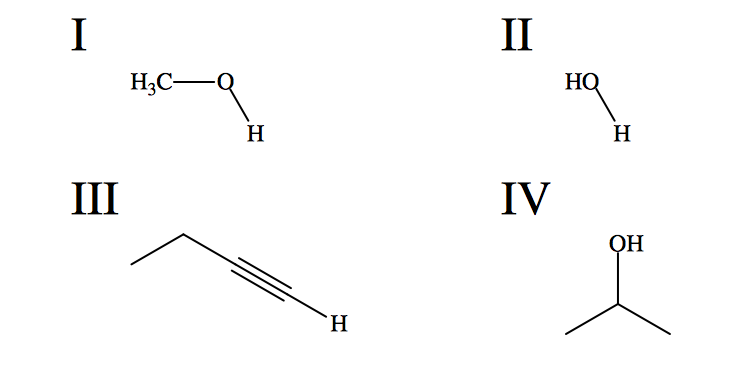
Rank these weak acids by decreasing  (of the expressed hydrogens).
Rank these weak acids by decreasing
Tap to reveal answer
The governing principle regarding the prediction of  values (relative to other compounds) is to assess the stability of the product formed by the release of a proton. The release of the alkyne hydrogen in compound III results in a carbanion, a highly unstable species, so it is expected that this compound is the least acidic and has the highest
  . Intuition serves well in this instance and we see that hydrogens bound to a triple bond have a
  value of around 25. The relative stabilities of the remaining compounds may be assessed in the same manner. Compound IV is the second weakest acid
  because the three methyl groups donate electron density such that if the oxygen is deprotonated, the resulting negative charge is destabilized. Methanol and water have a unique, non-intuitive relationship regarding their relative acidities. One would assume that water should be a stronger acid than other acids bound to alkyl groups (by the reasoning expressed for compound IV). This is the case for all alcohols except methanol, in which the delocalization of charge allowed by the increased molecular size outweighs the destabilization caused by electron donation. Thus methanol is a slightly stronger acid than water. This is evidenced in their
  values: 15.7 for water and 15.5 for methanol. The correct ordering of the given compounds is: III, IV, II, I.
The governing principle regarding the prediction of
← Didn't Know|Knew It →
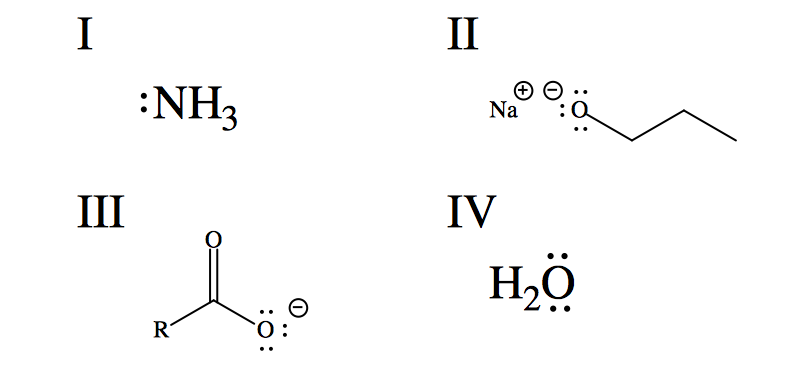
List the given compounds in order of decreasing basicity.
List the given compounds in order of decreasing basicity.
Tap to reveal answer
An easy way to consider relative base strengths is to consider the strength of the compounds' conjugate acids.The stronger the conjugate acid, the weaker the base. Water (compound IV) is the least basic of the compounds because its conjugate acid,  is the strongest of the given compounds' conjugate acids
  . Carboxylate ions (compound III) are highly stabilized by resonance and predominate at neutral pH. The conjugate carboxylic acids readily donate protons (acetic acid:
  ). Ammonia (compound I) has considerable basicity; binding a fourth hydrogen produces ammonium ion
  , which predominates at neutral pH
  Sodium propoxide (compound II) is a strong base, bearing a full negative charge on its oxygen. Its conjugate acid, 1-propanol, is a rather weak acid
  . Since its conjugate acid is the weakest (highest
  ), sodium propoxide is the strongest base. Based on the previous observations the correct ordering of the compounds is: II, I, III, IV.
An easy way to consider relative base strengths is to consider the strength of the compounds' conjugate acids.The stronger the conjugate acid, the weaker the base. Water (compound IV) is the least basic of the compounds because its conjugate acid,
← Didn't Know|Knew It →
A carboxylic acid has a pKa of 5. At a pH of 8, what is the ratio of salt to acid?
A carboxylic acid has a pKa of 5. At a pH of 8, what is the ratio of salt to acid?
Tap to reveal answer
Use the Henderson Hasselbalch equation:
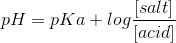
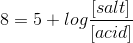


Use the Henderson Hasselbalch equation:
← Didn't Know|Knew It →
A.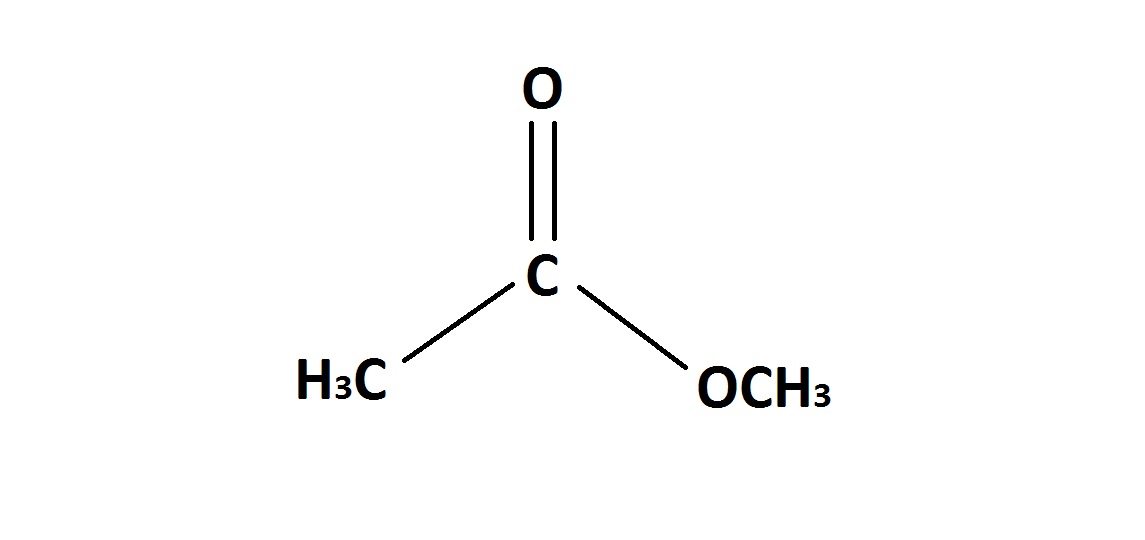
B.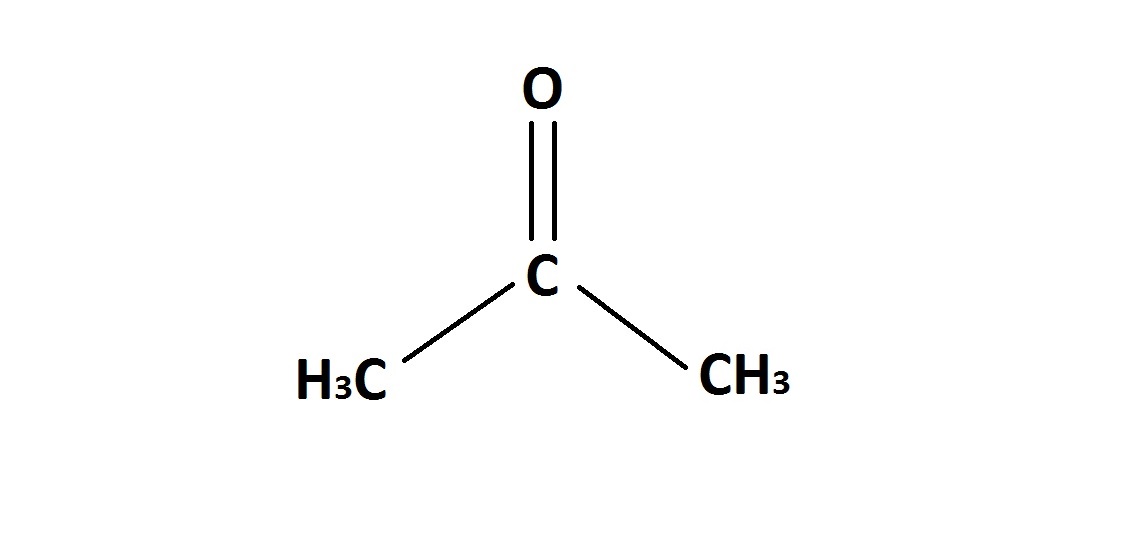
Which of the above molecules is expected to have a more acidic alpha-carbon, and why?
A.
B.
Which of the above molecules is expected to have a more acidic alpha-carbon, and why?
Tap to reveal answer
Molecule B will have a more acidic alpha-carbon because once the alpha proton becomes dissociated, the conjugate base will have relatively more stability than the conjugate base of molecule A.
When the alpha-carbon on molecule A loses it's proton, the conjugate base is not as stable. The reason for this is because the oxygen that is involved in the ester bond can contribute its electrons towards a resonance structure. Therefore, after the alpha-proton is lost, the alpha-carbon will have a negative charge that will be destabilized by the delocalized negative charge of the resonance structures.
Molecule B will have a more acidic alpha-carbon because once the alpha proton becomes dissociated, the conjugate base will have relatively more stability than the conjugate base of molecule A.
When the alpha-carbon on molecule A loses it's proton, the conjugate base is not as stable. The reason for this is because the oxygen that is involved in the ester bond can contribute its electrons towards a resonance structure. Therefore, after the alpha-proton is lost, the alpha-carbon will have a negative charge that will be destabilized by the delocalized negative charge of the resonance structures.
← Didn't Know|Knew It →
Which of the following is the strongest acid?
Which of the following is the strongest acid?
Tap to reveal answer
From the start, we know we can eliminate answer choice  because it is the only answer choice that is not a strong acid. Now we have three strong acids, but we have to determine which is strongest. To do so, we take the conjugate base of each strong acid to see which conjugate base is the weakest acid. Remember: weaker conjugate base means a stronger acid.
  is the largest ion of the bunch. Its large size allows it to better stabilize the negative charge and so it is the weakest (most stable) conjugate base. Because the weakest conjugate base leads to the strongest acid,
  is our correct answer.
From the start, we know we can eliminate answer choice
← Didn't Know|Knew It →
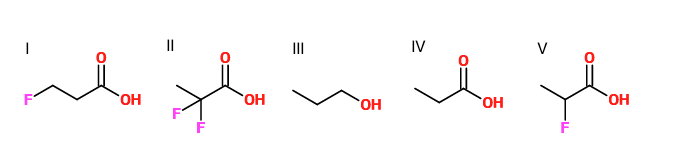
Rank the given molecules in order of increasing pKa.
Rank the given molecules in order of increasing pKa.
Tap to reveal answer
Recall that the stronger an acid, the lower the pKa.
II (two fluorine atoms really close to  has largest inductive effect, so bond is most weakened, and pKa is lowest)
V (one fluorine really close to  has strong inductive effect)
I (one fluorine a little further away from  has weaker inductive effect)
IV (no inductive effect)
III (alcohols are much less acidic than carboxylic acids, and it has the highest pKa of all)
Recall that the stronger an acid, the lower the pKa.
II (two fluorine atoms really close to
V (one fluorine really close to
I (one fluorine a little further away from
IV (no inductive effect)
III (alcohols are much less acidic than carboxylic acids, and it has the highest pKa of all)
← Didn't Know|Knew It →
Which of the following sets of bases are listed from most basic to least basic?
Which of the following sets of bases are listed from most basic to least basic?
Tap to reveal answer
The correct ranking from most basic to least basic is:

The best bases are negatively charged, and the worst bases are positively charged (acidic). The stronger the base, the weaker (more stable) it's conjugate acid. An alkane is a very stable conjugate acid, which tells us that  is the most basic of the set.
We know based on charge alone, that  is more basic than
  but less basic than
  or
or  .
.
We know that  is more basic
  because the electronegativity of
  is less than that of
  . This means the lone pair of electrons on
  are held less tightly and more likely to pick up a proton.
The correct ranking from most basic to least basic is:
The best bases are negatively charged, and the worst bases are positively charged (acidic). The stronger the base, the weaker (more stable) it's conjugate acid. An alkane is a very stable conjugate acid, which tells us that
We know based on charge alone, that
We know that
← Didn't Know|Knew It →
Which of the following sets of acids are correctly listed from most to least acidic?
Which of the following sets of acids are correctly listed from most to least acidic?
Tap to reveal answer
Remember that the strongest acids have the weakest conjugate bases.  is more acidic than
  because iodine has a larger atomic radius than bromine.
  ,
,  , and
, and  are strong acids and should be at the beginning of the list. Alkanes are not acidic. Acetic acid is a weak acid (pKa =4-5).
Remember that the strongest acids have the weakest conjugate bases.
← Didn't Know|Knew It →
Which of the following characteristics does not reflect an E1 reaction mechanism?
Which of the following characteristics does not reflect an E1 reaction mechanism?
Tap to reveal answer
E1 reactions occur in two steps, forming a carbocation intermediate, which is most stable if there is a protic solvent present. Furthermore, the use of a weak base favors E1.
E1 reactions occur in two steps, forming a carbocation intermediate, which is most stable if there is a protic solvent present. Furthermore, the use of a weak base favors E1.
← Didn't Know|Knew It →
Which of the following characteristics does not reflect an E2 reaction mechanism?
Which of the following characteristics does not reflect an E2 reaction mechanism?
Tap to reveal answer
E2 reactions occur in one step; thus no carbocation intermediate is formed, and an aprotic solvent is favored. E2 reactions are favored by strong bases and higher temperatures.
E2 reactions occur in one step; thus no carbocation intermediate is formed, and an aprotic solvent is favored. E2 reactions are favored by strong bases and higher temperatures.
← Didn't Know|Knew It →

Classify the type of reaction given.
Classify the type of reaction given.
Tap to reveal answer
An elimination reaction occurs when there is a release of atoms in a given compound to produce two or more products. In the reaction given a hydrogen and chloride atom are eliminated from the original compound to form one 2-butene, potassium chloride and water molecule.
An elimination reaction occurs when there is a release of atoms in a given compound to produce two or more products. In the reaction given a hydrogen and chloride atom are eliminated from the original compound to form one 2-butene, potassium chloride and water molecule.
← Didn't Know|Knew It →

Classify the type of reaction given.
Classify the type of reaction given.
Tap to reveal answer
Heterolytic bond breaking occurs in polar compounds to form to products of opposite charges. In these types of reaction two electrons from the original bond stays with one fragment upon cleavage. In the reaction given, the bond between the hydrogen and chlorine atom is broken with the two electrons from the original bond staying with the chlorine atom. The resulting products are hydrogen ion and chloride ion.
Heterolytic bond breaking occurs in polar compounds to form to products of opposite charges. In these types of reaction two electrons from the original bond stays with one fragment upon cleavage. In the reaction given, the bond between the hydrogen and chlorine atom is broken with the two electrons from the original bond staying with the chlorine atom. The resulting products are hydrogen ion and chloride ion.
← Didn't Know|Knew It →
Which of the following reaction conditions favors an E1 reaction mechanism?
Which of the following reaction conditions favors an E1 reaction mechanism?
Tap to reveal answer
E1 reactions occur in two steps. First, the leaving group is removed, yielding a carbocation. Second, a weak base removes a proton from the carbon adjacent to the carbocation carbon. Thus, to favor E1, a protic solvent is desired in order to stabilize the carbocation. Weak bases favor an E1 mechanism.
E1 reactions occur in two steps. First, the leaving group is removed, yielding a carbocation. Second, a weak base removes a proton from the carbon adjacent to the carbocation carbon. Thus, to favor E1, a protic solvent is desired in order to stabilize the carbocation. Weak bases favor an E1 mechanism.
← Didn't Know|Knew It →
Which of the following conditions favors an E2 mechanism?
Which of the following conditions favors an E2 mechanism?
Tap to reveal answer
E2 reaction occur in only one step. The strong base removes the beta-hydrogen, while the leaving group simultaneously leaves. The double bond forms simultaneously.
E2 reaction occur in only one step. The strong base removes the beta-hydrogen, while the leaving group simultaneously leaves. The double bond forms simultaneously.
← Didn't Know|Knew It →
In an elimination reaction .
In an elimination reaction .
Tap to reveal answer
Elimination reactions involve the use of bases, which remove hydrogen atoms. The leaving group, which is bound via a sigma bond is removed, along with a hydrogen (thus two sigma bonds are broken). The result is a double bond, which consists of one sigma bond and one pi bond.
Elimination reactions involve the use of bases, which remove hydrogen atoms. The leaving group, which is bound via a sigma bond is removed, along with a hydrogen (thus two sigma bonds are broken). The result is a double bond, which consists of one sigma bond and one pi bond.
← Didn't Know|Knew It →

The molecule shown reacts with  . Which type of reaction will ensue?
The molecule shown reacts with
Tap to reveal answer
These conditions are perfect for an  reaction. We see a secondary halide so first instinct might be to say that an
  reaction would ensue. However, anytime we have a secondary halide reacting with a strong, bulky base, the laws of sterics dictates that an
  reaction will ensue.
These conditions are perfect for an
← Didn't Know|Knew It →
Chloropropane reacts with  to form propene.
Through which mechanism did this reaction occur?
Chloropropane reacts with
Through which mechanism did this reaction occur?
Tap to reveal answer
The given conditions are perfect for an  reaction. Here we have a primary haloalkane reacting with a big, bulky base. Big, bulky bases such as
  , and alkene products are classic indicators that the reaction was an
  reaction.
The given conditions are perfect for an
← Didn't Know|Knew It →
Which of the following hydrogens are removed upon treatment of the pictured molecule with potassium tert-butoxide?

Which of the following hydrogens are removed upon treatment of the pictured molecule with potassium tert-butoxide?
Tap to reveal answer
Treatment with strong base indicates E2 mechanism. The halide has two beta-carbons (II and III), and potassium tert-butoxide is a bulky base. The favored product is the Hofmann product (less substituted alkene). Therefore III is the hydrogen that's removed.
Treatment with strong base indicates E2 mechanism. The halide has two beta-carbons (II and III), and potassium tert-butoxide is a bulky base. The favored product is the Hofmann product (less substituted alkene). Therefore III is the hydrogen that's removed.
← Didn't Know|Knew It →