Parallelograms - Math
Card 1 of 507
Find the area of the box in square inches:
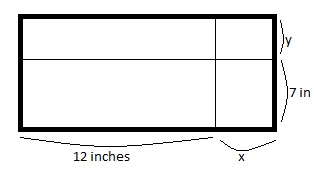
Find the area of the box in square inches:
Tap to reveal answer
The answer is  . You can find the area of this box by multiplying the length by its width:
Foil 
If you chose  , you added the sides to get the perimeter.
Just remember, the width is 12 added to  . Not 12 times the side of
  .
.
The answer is
Foil
If you chose
Just remember, the width is 12 added to
← Didn't Know|Knew It →
The perimeter of a square is  . If the sides of the square are reduced by a factor of two, what is the area of the new square?
The perimeter of a square is
Tap to reveal answer
The perimeter of a square is geven by  and the area of a square is given by
  .
.
Thus 
so  .
.
The original side is reduced by a factor of  which results in a new side of
  . The area of the new square is geven by

The perimeter of a square is geven by
Thus
so
The original side is reduced by a factor of
← Didn't Know|Knew It →
If all angles are right angles in the figure below, what is the total area of the figure?

If all angles are right angles in the figure below, what is the total area of the figure?
Tap to reveal answer
The answer is  .
.
To get the area, you would need to find the missing sides. Since the horizontal top is  inches total, the bottom must be
  inches total. Thus you would subtract
  to get
  for the missing bottom horizontal side.
The vertical right side is  inches total. Then you would subtract
  to get
  for the missing vertical side.
Then you would have to split the figure into 3 different boxes and find the area of each one. Then you would add the area of each box

The answer is
To get the area, you would need to find the missing sides. Since the horizontal top is
The vertical right side is
Then you would have to split the figure into 3 different boxes and find the area of each one. Then you would add the area of each box
← Didn't Know|Knew It →
Find the area of the parallelogram.

Note that the figure is not drawn to scale.
Find the area of the parallelogram.
Note that the figure is not drawn to scale.
Tap to reveal answer
The area of a parallelogram can be found using the following equation:

In this problem, the height is 6 (not 8). Substitute the known variables and solve.


The area of a parallelogram can be found using the following equation:
In this problem, the height is 6 (not 8). Substitute the known variables and solve.


← Didn't Know|Knew It →
What is the area of a parallelogram if the base is  , and the height is
  ?
?
What is the area of a parallelogram if the base is
Tap to reveal answer
The formula for the area of a parallelogram is:

So, we are given all of the information that we need to solve this problem. Substitute the provided values into the equation and simplify:

The formula for the area of a parallelogram is:
So, we are given all of the information that we need to solve this problem. Substitute the provided values into the equation and simplify:
← Didn't Know|Knew It →
What is the area of a parallelogram if the base is  and the height is
  ?
?
What is the area of a parallelogram if the base is
Tap to reveal answer
The formula for the area of a parallelogram is:

Substitute in the provided values and simplify to calculate the correct answer:

The formula for the area of a parallelogram is:
Substitute in the provided values and simplify to calculate the correct answer:
← Didn't Know|Knew It →
Find the area of a parallelogram if the base is  and the height is
  .
.
Find the area of a parallelogram if the base is
Tap to reveal answer
The formula for the area of a parallelogram is:

Substitute the values provided in the question:

Use the FOIL method to simplify:


The formula for the area of a parallelogram is:
Substitute the values provided in the question:
Use the FOIL method to simplify:
← Didn't Know|Knew It →
What is the area of a parallelogram if the base is  and the height is
  ?
?
What is the area of a parallelogram if the base is
Tap to reveal answer
The formula for the area of a parallelogram is:

Substitute the values provided in the problem and solve to calculate the correct answer:

The formula for the area of a parallelogram is:
Substitute the values provided in the problem and solve to calculate the correct answer:
← Didn't Know|Knew It →
If the height of the parallelogram is half of the length of the rectangle, then find the area of the shaded region in the figure.
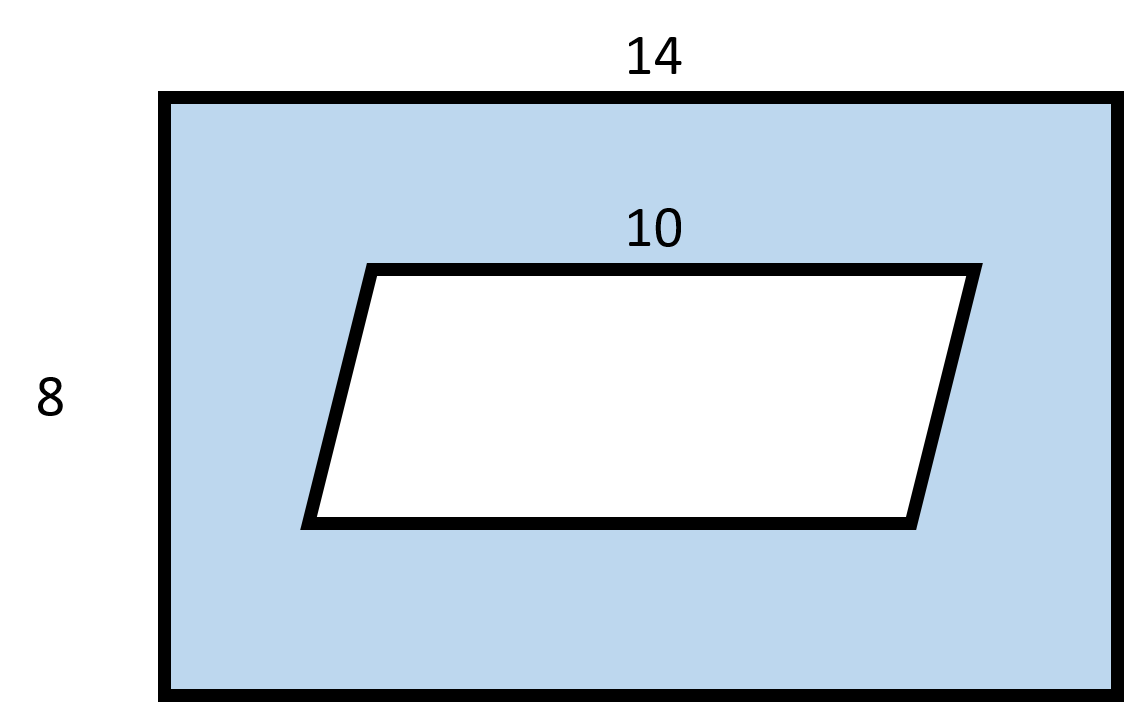
If the height of the parallelogram is half of the length of the rectangle, then find the area of the shaded region in the figure.
Tap to reveal answer
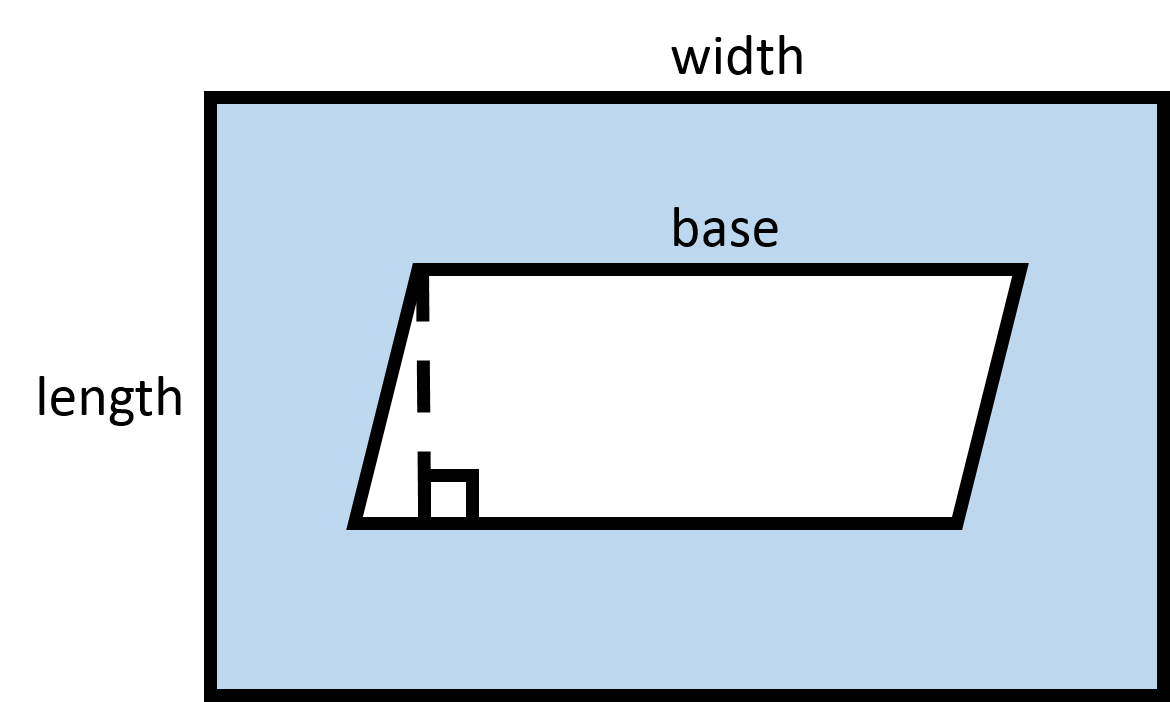
In order to find the area of the shaded region, we must first find the areas of the rectangle and parallelogram.
Recall how to find the area of a rectangle:

Substitute in the given length and height to find the area of the rectangle.


Next, find the area of the parallelogram.
Recall how to find the area of a parallelogram:

We need to find the height of the parallelogram. From the question, we know the following relationship:
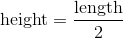
Substitute in the length of the rectangle to find the height of the parallelogram.


Now, substitute in the height and the given length of the base to find the area of the parallelogram.


Now, we are ready to find the area of the shaded region by subtracting the area of the parallelogram from the area of the rectangle.



In order to find the area of the shaded region, we must first find the areas of the rectangle and parallelogram.
Recall how to find the area of a rectangle:
Substitute in the given length and height to find the area of the rectangle.
Next, find the area of the parallelogram.
Recall how to find the area of a parallelogram:
We need to find the height of the parallelogram. From the question, we know the following relationship:
Substitute in the length of the rectangle to find the height of the parallelogram.
Now, substitute in the height and the given length of the base to find the area of the parallelogram.
Now, we are ready to find the area of the shaded region by subtracting the area of the parallelogram from the area of the rectangle.

← Didn't Know|Knew It →
If the height of the parallelogram is half of the length of the rectangle, then find the area of the shaded region in the figure.

If the height of the parallelogram is half of the length of the rectangle, then find the area of the shaded region in the figure.
Tap to reveal answer
In order to find the area of the shaded region, we must first find the areas of the rectangle and parallelogram.
Recall how to find the area of a rectangle:

Substitute in the given length and height to find the area of the rectangle.


Next, find the area of the parallelogram.
Recall how to find the area of a parallelogram:

We need to find the height of the parallelogram. From the question, we know the following relationship:

Substitute in the length of the rectangle to find the height of the parallelogram.


Now, substitute in the height and the given length of the base to find the area of the parallelogram.


Now, we are ready to find the area of the shaded region by subtracting the area of the parallelogram from the area of the rectangle.


Solve.

In order to find the area of the shaded region, we must first find the areas of the rectangle and parallelogram.
Recall how to find the area of a rectangle:
Substitute in the given length and height to find the area of the rectangle.
Next, find the area of the parallelogram.
Recall how to find the area of a parallelogram:
We need to find the height of the parallelogram. From the question, we know the following relationship:
Substitute in the length of the rectangle to find the height of the parallelogram.
Now, substitute in the height and the given length of the base to find the area of the parallelogram.
Now, we are ready to find the area of the shaded region by subtracting the area of the parallelogram from the area of the rectangle.
Solve.
← Didn't Know|Knew It →
If the height of the parallelogram is half of the length of the rectangle, then find the area of the shaded region in the figure.

If the height of the parallelogram is half of the length of the rectangle, then find the area of the shaded region in the figure.
Tap to reveal answer
In order to find the area of the shaded region, we must first find the areas of the rectangle and parallelogram.
Recall how to find the area of a rectangle:

Substitute in the given length and height to find the area of the rectangle.


Next, find the area of the parallelogram.
Recall how to find the area of a parallelogram:

We need to find the height of the parallelogram. From the question, we know the following relationship:

Substitute in the length of the rectangle to find the height of the parallelogram.


Now, substitute in the height and the given length of the base to find the area of the parallelogram.


Now, we are ready to find the area of the shaded region by subtracting the area of the parallelogram from the area of the rectangle.


Solve.

In order to find the area of the shaded region, we must first find the areas of the rectangle and parallelogram.
Recall how to find the area of a rectangle:
Substitute in the given length and height to find the area of the rectangle.
Next, find the area of the parallelogram.
Recall how to find the area of a parallelogram:
We need to find the height of the parallelogram. From the question, we know the following relationship:
Substitute in the length of the rectangle to find the height of the parallelogram.
Now, substitute in the height and the given length of the base to find the area of the parallelogram.
Now, we are ready to find the area of the shaded region by subtracting the area of the parallelogram from the area of the rectangle.
Solve.
← Didn't Know|Knew It →
If the height of the parallelogram is half of the length of the rectangle, then find the area of the shaded region in the figure.

If the height of the parallelogram is half of the length of the rectangle, then find the area of the shaded region in the figure.
Tap to reveal answer
In order to find the area of the shaded region, we must first find the areas of the rectangle and parallelogram.
Recall how to find the area of a rectangle:

Substitute in the given length and height to find the area of the rectangle.


Next, find the area of the parallelogram.
Recall how to find the area of a parallelogram:

We need to find the height of the parallelogram. From the question, we know the following relationship:

Substitute in the length of the rectangle to find the height of the parallelogram.


Now, substitute in the height and the given length of the base to find the area of the parallelogram.


Now, we are ready to find the area of the shaded region by subtracting the area of the parallelogram from the area of the rectangle.


Solve.

In order to find the area of the shaded region, we must first find the areas of the rectangle and parallelogram.
Recall how to find the area of a rectangle:
Substitute in the given length and height to find the area of the rectangle.
Next, find the area of the parallelogram.
Recall how to find the area of a parallelogram:
We need to find the height of the parallelogram. From the question, we know the following relationship:
Substitute in the length of the rectangle to find the height of the parallelogram.
Now, substitute in the height and the given length of the base to find the area of the parallelogram.
Now, we are ready to find the area of the shaded region by subtracting the area of the parallelogram from the area of the rectangle.
Solve.
← Didn't Know|Knew It →
If the height of the parallelogram is half of the length of the rectangle, then find the area of the shaded region in the figure.

If the height of the parallelogram is half of the length of the rectangle, then find the area of the shaded region in the figure.
Tap to reveal answer
In order to find the area of the shaded region, we must first find the areas of the rectangle and parallelogram.
Recall how to find the area of a rectangle:

Substitute in the given length and height to find the area of the rectangle.


Next, find the area of the parallelogram.
Recall how to find the area of a parallelogram:

We need to find the height of the parallelogram. From the question, we know the following relationship:

Substitute in the length of the rectangle to find the height of the parallelogram.


Now, substitute in the height and the given length of the base to find the area of the parallelogram.


Now, we are ready to find the area of the shaded region by subtracting the area of the parallelogram from the area of the rectangle.


Solve.

In order to find the area of the shaded region, we must first find the areas of the rectangle and parallelogram.
Recall how to find the area of a rectangle:
Substitute in the given length and height to find the area of the rectangle.
Next, find the area of the parallelogram.
Recall how to find the area of a parallelogram:
We need to find the height of the parallelogram. From the question, we know the following relationship:
Substitute in the length of the rectangle to find the height of the parallelogram.
Now, substitute in the height and the given length of the base to find the area of the parallelogram.
Now, we are ready to find the area of the shaded region by subtracting the area of the parallelogram from the area of the rectangle.
Solve.
← Didn't Know|Knew It →
If the height of the parallelogram is half of the length of the rectangle, then find the area of the shaded region in the figure.

If the height of the parallelogram is half of the length of the rectangle, then find the area of the shaded region in the figure.
Tap to reveal answer
In order to find the area of the shaded region, we must first find the areas of the rectangle and parallelogram.
Recall how to find the area of a rectangle:

Substitute in the given length and height to find the area of the rectangle.


Next, find the area of the parallelogram.
Recall how to find the area of a parallelogram:

We need to find the height of the parallelogram. From the question, we know the following relationship:

Substitute in the length of the rectangle to find the height of the parallelogram.


Now, substitute in the height and the given length of the base to find the area of the parallelogram.


Now, we are ready to find the area of the shaded region by subtracting the area of the parallelogram from the area of the rectangle.


Solve.

In order to find the area of the shaded region, we must first find the areas of the rectangle and parallelogram.
Recall how to find the area of a rectangle:
Substitute in the given length and height to find the area of the rectangle.
Next, find the area of the parallelogram.
Recall how to find the area of a parallelogram:
We need to find the height of the parallelogram. From the question, we know the following relationship:
Substitute in the length of the rectangle to find the height of the parallelogram.
Now, substitute in the height and the given length of the base to find the area of the parallelogram.
Now, we are ready to find the area of the shaded region by subtracting the area of the parallelogram from the area of the rectangle.
Solve.
← Didn't Know|Knew It →
If the height of the parallelogram is half of the length of the rectangle, then find the area of the shaded region in the figure.

If the height of the parallelogram is half of the length of the rectangle, then find the area of the shaded region in the figure.
Tap to reveal answer
In order to find the area of the shaded region, we must first find the areas of the rectangle and parallelogram.
Recall how to find the area of a rectangle:

Substitute in the given length and height to find the area of the rectangle.


Next, find the area of the parallelogram.
Recall how to find the area of a parallelogram:

We need to find the height of the parallelogram. From the question, we know the following relationship:

Substitute in the length of the rectangle to find the height of the parallelogram.


Now, substitute in the height and the given length of the base to find the area of the parallelogram.


Now, we are ready to find the area of the shaded region by subtracting the area of the parallelogram from the area of the rectangle.


Solve.

In order to find the area of the shaded region, we must first find the areas of the rectangle and parallelogram.
Recall how to find the area of a rectangle:
Substitute in the given length and height to find the area of the rectangle.
Next, find the area of the parallelogram.
Recall how to find the area of a parallelogram:
We need to find the height of the parallelogram. From the question, we know the following relationship:
Substitute in the length of the rectangle to find the height of the parallelogram.
Now, substitute in the height and the given length of the base to find the area of the parallelogram.
Now, we are ready to find the area of the shaded region by subtracting the area of the parallelogram from the area of the rectangle.
Solve.
← Didn't Know|Knew It →
If the height of the parallelogram is half of the length of the rectangle, then find the area of the shaded region in the figure.

If the height of the parallelogram is half of the length of the rectangle, then find the area of the shaded region in the figure.
Tap to reveal answer
In order to find the area of the shaded region, we must first find the areas of the rectangle and parallelogram.
Recall how to find the area of a rectangle:

Substitute in the given length and height to find the area of the rectangle.


Next, find the area of the parallelogram.
Recall how to find the area of a parallelogram:

We need to find the height of the parallelogram. From the question, we know the following relationship:

Substitute in the length of the rectangle to find the height of the parallelogram.


Now, substitute in the height and the given length of the base to find the area of the parallelogram.


Now, we are ready to find the area of the shaded region by subtracting the area of the parallelogram from the area of the rectangle.


Solve.

In order to find the area of the shaded region, we must first find the areas of the rectangle and parallelogram.
Recall how to find the area of a rectangle:
Substitute in the given length and height to find the area of the rectangle.
Next, find the area of the parallelogram.
Recall how to find the area of a parallelogram:
We need to find the height of the parallelogram. From the question, we know the following relationship:
Substitute in the length of the rectangle to find the height of the parallelogram.
Now, substitute in the height and the given length of the base to find the area of the parallelogram.
Now, we are ready to find the area of the shaded region by subtracting the area of the parallelogram from the area of the rectangle.
Solve.
← Didn't Know|Knew It →
If the height of the parallelogram is half of the length of the rectangle, then find the area of the shaded region in the figure.

If the height of the parallelogram is half of the length of the rectangle, then find the area of the shaded region in the figure.
Tap to reveal answer
In order to find the area of the shaded region, we must first find the areas of the rectangle and parallelogram.
Recall how to find the area of a rectangle:

Substitute in the given length and height to find the area of the rectangle.


Next, find the area of the parallelogram.
Recall how to find the area of a parallelogram:

We need to find the height of the parallelogram. From the question, we know the following relationship:

Substitute in the length of the rectangle to find the height of the parallelogram.


Now, substitute in the height and the given length of the base to find the area of the parallelogram.


Now, we are ready to find the area of the shaded region by subtracting the area of the parallelogram from the area of the rectangle.


Solve.

In order to find the area of the shaded region, we must first find the areas of the rectangle and parallelogram.
Recall how to find the area of a rectangle:
Substitute in the given length and height to find the area of the rectangle.
Next, find the area of the parallelogram.
Recall how to find the area of a parallelogram:
We need to find the height of the parallelogram. From the question, we know the following relationship:
Substitute in the length of the rectangle to find the height of the parallelogram.
Now, substitute in the height and the given length of the base to find the area of the parallelogram.
Now, we are ready to find the area of the shaded region by subtracting the area of the parallelogram from the area of the rectangle.
Solve.
← Didn't Know|Knew It →
If the height of the parallelogram is half of the length of the rectangle, then find the area of the shaded region in the figure.

If the height of the parallelogram is half of the length of the rectangle, then find the area of the shaded region in the figure.
Tap to reveal answer
In order to find the area of the shaded region, we must first find the areas of the rectangle and parallelogram.
Recall how to find the area of a rectangle:

Substitute in the given length and height to find the area of the rectangle.


Next, find the area of the parallelogram.
Recall how to find the area of a parallelogram:

We need to find the height of the parallelogram. From the question, we know the following relationship:

Substitute in the length of the rectangle to find the height of the parallelogram.


Now, substitute in the height and the given length of the base to find the area of the parallelogram.


Now, we are ready to find the area of the shaded region by subtracting the area of the parallelogram from the area of the rectangle.


Solve.

In order to find the area of the shaded region, we must first find the areas of the rectangle and parallelogram.
Recall how to find the area of a rectangle:
Substitute in the given length and height to find the area of the rectangle.
Next, find the area of the parallelogram.
Recall how to find the area of a parallelogram:
We need to find the height of the parallelogram. From the question, we know the following relationship:
Substitute in the length of the rectangle to find the height of the parallelogram.
Now, substitute in the height and the given length of the base to find the area of the parallelogram.
Now, we are ready to find the area of the shaded region by subtracting the area of the parallelogram from the area of the rectangle.
Solve.
← Didn't Know|Knew It →
If the height of the parallelogram is half of the length of the rectangle, then find the area of the shaded region in the figure.

If the height of the parallelogram is half of the length of the rectangle, then find the area of the shaded region in the figure.
Tap to reveal answer
In order to find the area of the shaded region, we must first find the areas of the rectangle and parallelogram.
Recall how to find the area of a rectangle:

Substitute in the given length and height to find the area of the rectangle.


Next, find the area of the parallelogram.
Recall how to find the area of a parallelogram:

We need to find the height of the parallelogram. From the question, we know the following relationship:

Substitute in the length of the rectangle to find the height of the parallelogram.


Now, substitute in the height and the given length of the base to find the area of the parallelogram.


Now, we are ready to find the area of the shaded region by subtracting the area of the parallelogram from the area of the rectangle.


Solve.

In order to find the area of the shaded region, we must first find the areas of the rectangle and parallelogram.
Recall how to find the area of a rectangle:
Substitute in the given length and height to find the area of the rectangle.
Next, find the area of the parallelogram.
Recall how to find the area of a parallelogram:
We need to find the height of the parallelogram. From the question, we know the following relationship:
Substitute in the length of the rectangle to find the height of the parallelogram.
Now, substitute in the height and the given length of the base to find the area of the parallelogram.
Now, we are ready to find the area of the shaded region by subtracting the area of the parallelogram from the area of the rectangle.
Solve.
← Didn't Know|Knew It →
If the height of the parallelogram is half of the length of the rectangle, then find the area of the shaded region in the figure.

If the height of the parallelogram is half of the length of the rectangle, then find the area of the shaded region in the figure.
Tap to reveal answer
In order to find the area of the shaded region, we must first find the areas of the rectangle and parallelogram.
Recall how to find the area of a rectangle:

Substitute in the given length and height to find the area of the rectangle.


Next, find the area of the parallelogram.
Recall how to find the area of a parallelogram:

We need to find the height of the parallelogram. From the question, we know the following relationship:

Substitute in the length of the rectangle to find the height of the parallelogram.


Now, substitute in the height and the given length of the base to find the area of the parallelogram.


Now, we are ready to find the area of the shaded region by subtracting the area of the parallelogram from the area of the rectangle.


Solve.

In order to find the area of the shaded region, we must first find the areas of the rectangle and parallelogram.
Recall how to find the area of a rectangle:
Substitute in the given length and height to find the area of the rectangle.
Next, find the area of the parallelogram.
Recall how to find the area of a parallelogram:
We need to find the height of the parallelogram. From the question, we know the following relationship:
Substitute in the length of the rectangle to find the height of the parallelogram.
Now, substitute in the height and the given length of the base to find the area of the parallelogram.
Now, we are ready to find the area of the shaded region by subtracting the area of the parallelogram from the area of the rectangle.
Solve.
← Didn't Know|Knew It →