Limits - Math
Card 1 of 16
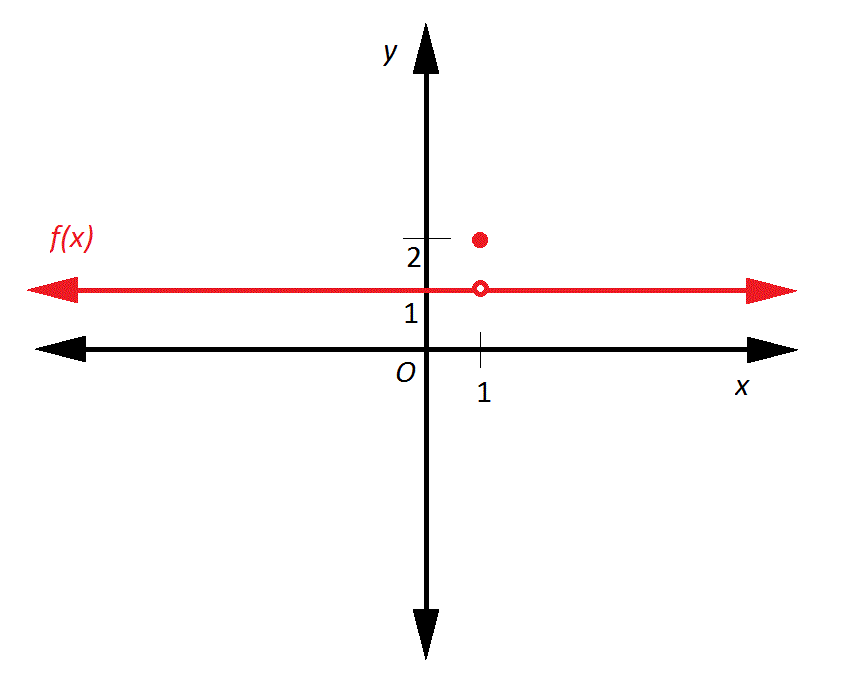
The above graph depicts a function  . Does
  exist, and why or why not?
The above graph depicts a function
Tap to reveal answer
 exists if and only if
  ;
;
the actual value of  "f(1)") is irrelevant, as is whether
is irrelevant, as is whether  is continuous there.
As can be seen,
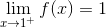 and
and 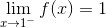 ;
;
therefore,  ,
,
and  exists.
the actual value of
As can be seen,
therefore,
and
← Didn't Know|Knew It →
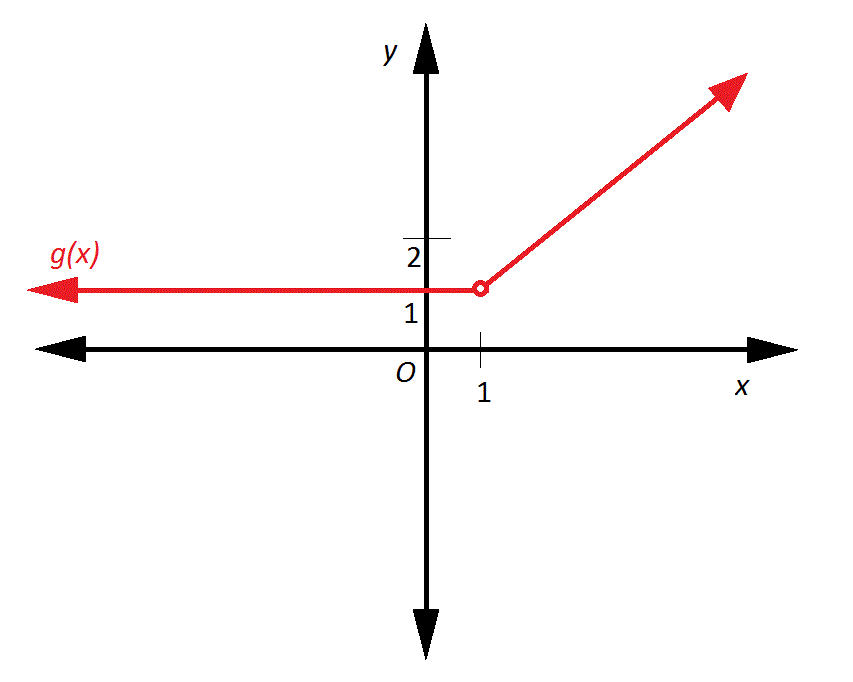
The graph depicts a function  . Does
  exist?
The graph depicts a function
Tap to reveal answer
 exists if and only if
  ; the actual value of
  is irrelevant.
As can be seen, 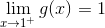 and
and 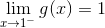 ; therefore,
  , and
, and  exists.
As can be seen,
← Didn't Know|Knew It →
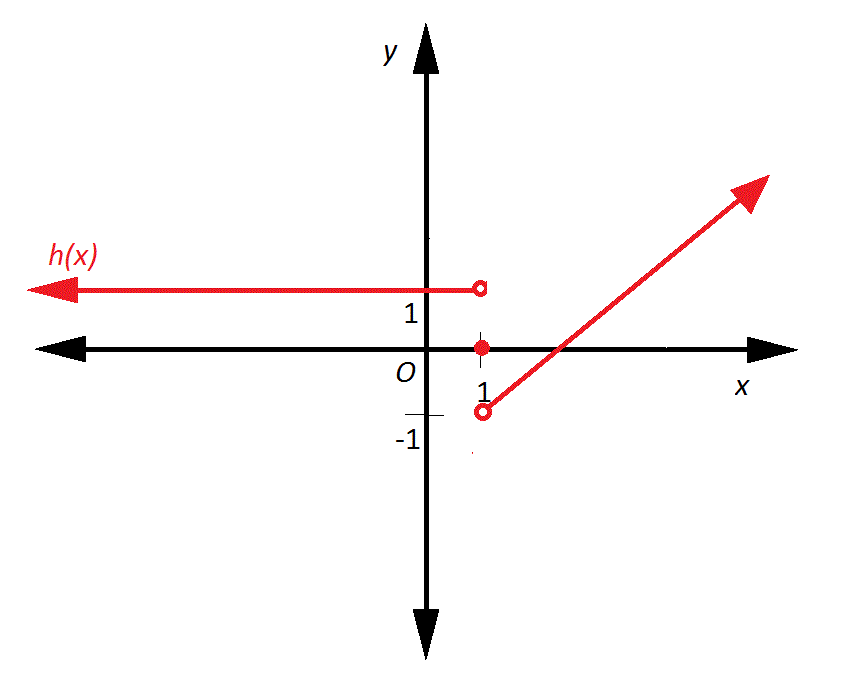
The above graph depicts a function  . Does
  exist, and why or why not?
The above graph depicts a function
Tap to reveal answer
 exists if and only if
  . As can be seen from the diagram,
 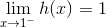 , but
, but 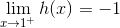 . Since
  ,
,  does not exist.
← Didn't Know|Knew It →
A function is defined by the following piecewise equation:
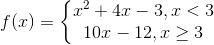
At  , the function is:
A function is defined by the following piecewise equation:
At
Tap to reveal answer
The first step to determine continuity at a point is to determine if the function is defined at that point. When we substitute in 3 for  , we get 18 as our
  -value.
  is thus defined for this function.
The next step is determine if the limit of the function is defined at that point. This means that the left-hand limit must be equal to the right-hand limit at  . Substitution reveals the following:


Both sides of the function, therefore, approach a  -value of 18.
Finally, we must ensure that the curve is smooth by checking the limit of the derivative of both sides.

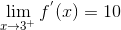
Since the function passes all three tests, it is continuous.
The first step to determine continuity at a point is to determine if the function is defined at that point. When we substitute in 3 for
The next step is determine if the limit of the function is defined at that point. This means that the left-hand limit must be equal to the right-hand limit at
Both sides of the function, therefore, approach a
Finally, we must ensure that the curve is smooth by checking the limit of the derivative of both sides.
Since the function passes all three tests, it is continuous.
← Didn't Know|Knew It →
The above graph depicts a function . Does exist, and why or why not?
The above graph depicts a function
Tap to reveal answer
exists if and only if ;
the actual value of is irrelevant, as is whether is continuous there.
As can be seen,
and ;
therefore, ,
and exists.
the actual value of
As can be seen,
therefore,
and
← Didn't Know|Knew It →
The graph depicts a function . Does exist?
The graph depicts a function
Tap to reveal answer
exists if and only if ; the actual value of is irrelevant.
As can be seen, and ; therefore, , and exists.
As can be seen,
← Didn't Know|Knew It →
The above graph depicts a function . Does exist, and why or why not?
The above graph depicts a function
Tap to reveal answer
exists if and only if . As can be seen from the diagram, , but . Since , does not exist.
← Didn't Know|Knew It →
A function is defined by the following piecewise equation:
At , the function is:
A function is defined by the following piecewise equation:
At
Tap to reveal answer
The first step to determine continuity at a point is to determine if the function is defined at that point. When we substitute in 3 for , we get 18 as our -value. is thus defined for this function.
The next step is determine if the limit of the function is defined at that point. This means that the left-hand limit must be equal to the right-hand limit at . Substitution reveals the following:
Both sides of the function, therefore, approach a -value of 18.
Finally, we must ensure that the curve is smooth by checking the limit of the derivative of both sides.
Since the function passes all three tests, it is continuous.
The first step to determine continuity at a point is to determine if the function is defined at that point. When we substitute in 3 for
The next step is determine if the limit of the function is defined at that point. This means that the left-hand limit must be equal to the right-hand limit at
Both sides of the function, therefore, approach a
Finally, we must ensure that the curve is smooth by checking the limit of the derivative of both sides.
Since the function passes all three tests, it is continuous.
← Didn't Know|Knew It →
The above graph depicts a function . Does exist, and why or why not?
The above graph depicts a function
Tap to reveal answer
exists if and only if ;
the actual value of is irrelevant, as is whether is continuous there.
As can be seen,
and ;
therefore, ,
and exists.
the actual value of
As can be seen,
therefore,
and
← Didn't Know|Knew It →
The graph depicts a function . Does exist?
The graph depicts a function
Tap to reveal answer
exists if and only if ; the actual value of is irrelevant.
As can be seen, and ; therefore, , and exists.
As can be seen,
← Didn't Know|Knew It →
The above graph depicts a function . Does exist, and why or why not?
The above graph depicts a function
Tap to reveal answer
exists if and only if . As can be seen from the diagram, , but . Since , does not exist.
← Didn't Know|Knew It →
A function is defined by the following piecewise equation:
At , the function is:
A function is defined by the following piecewise equation:
At
Tap to reveal answer
The first step to determine continuity at a point is to determine if the function is defined at that point. When we substitute in 3 for , we get 18 as our -value. is thus defined for this function.
The next step is determine if the limit of the function is defined at that point. This means that the left-hand limit must be equal to the right-hand limit at . Substitution reveals the following:
Both sides of the function, therefore, approach a -value of 18.
Finally, we must ensure that the curve is smooth by checking the limit of the derivative of both sides.
Since the function passes all three tests, it is continuous.
The first step to determine continuity at a point is to determine if the function is defined at that point. When we substitute in 3 for
The next step is determine if the limit of the function is defined at that point. This means that the left-hand limit must be equal to the right-hand limit at
Both sides of the function, therefore, approach a
Finally, we must ensure that the curve is smooth by checking the limit of the derivative of both sides.
Since the function passes all three tests, it is continuous.
← Didn't Know|Knew It →
The above graph depicts a function . Does exist, and why or why not?
The above graph depicts a function
Tap to reveal answer
exists if and only if ;
the actual value of is irrelevant, as is whether is continuous there.
As can be seen,
and ;
therefore, ,
and exists.
the actual value of
As can be seen,
therefore,
and
← Didn't Know|Knew It →
The graph depicts a function . Does exist?
The graph depicts a function
Tap to reveal answer
exists if and only if ; the actual value of is irrelevant.
As can be seen, and ; therefore, , and exists.
As can be seen,
← Didn't Know|Knew It →
The above graph depicts a function . Does exist, and why or why not?
The above graph depicts a function
Tap to reveal answer
exists if and only if . As can be seen from the diagram, , but . Since , does not exist.
← Didn't Know|Knew It →
A function is defined by the following piecewise equation:
At , the function is:
A function is defined by the following piecewise equation:
At
Tap to reveal answer
The first step to determine continuity at a point is to determine if the function is defined at that point. When we substitute in 3 for , we get 18 as our -value. is thus defined for this function.
The next step is determine if the limit of the function is defined at that point. This means that the left-hand limit must be equal to the right-hand limit at . Substitution reveals the following:
Both sides of the function, therefore, approach a -value of 18.
Finally, we must ensure that the curve is smooth by checking the limit of the derivative of both sides.
Since the function passes all three tests, it is continuous.
The first step to determine continuity at a point is to determine if the function is defined at that point. When we substitute in 3 for
The next step is determine if the limit of the function is defined at that point. This means that the left-hand limit must be equal to the right-hand limit at
Both sides of the function, therefore, approach a
Finally, we must ensure that the curve is smooth by checking the limit of the derivative of both sides.
Since the function passes all three tests, it is continuous.
← Didn't Know|Knew It →