Calculating the length of the diagonal of a square - GMAT Quantitative
Card 1 of 56
A square has a side length of 3, how long is the diagonal of the square?
A square has a side length of 3, how long is the diagonal of the square?
Tap to reveal answer
The diagonal divides the square into two 45-45-90 triangles, which have side lengths in the ratio of  . Therefore, the diagonal is the side length
  .
.
The diagonal divides the square into two 45-45-90 triangles, which have side lengths in the ratio of
← Didn't Know|Knew It →
Given square FGHI below, solve for the following:
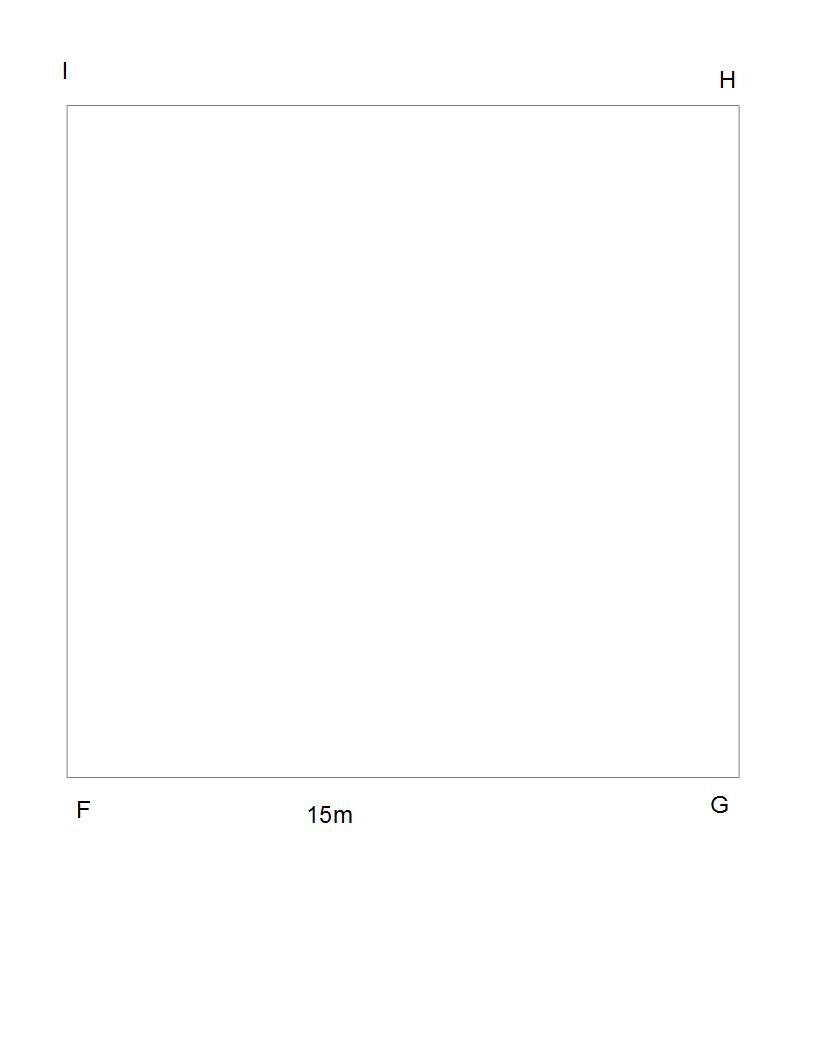
If square  represents a grassy area in the middle of your college campus, what is the shortest distance from point
  to point
  ?
?
Given square FGHI below, solve for the following:
If square
Tap to reveal answer
There are two pretty easy ways to solve this problem, both of which require you to see that this is actually a triangle question.
The first method is the fastest. If you can recognize that the diagonal of a square makes a  triangle, you can then recall that
  triangles have side lengths with ratios of
  . Therefore:

The second way to solve this problem is to use Pythagorean Theorem:

where  and
and  are leg lengths of a triangle and
  the length of the hypotenuse. In this case, we want to solve for the diagonal, which is the hypotenuse of the triangle it forms, so we are solving for
  :
:

So again, we get  .
.
There are two pretty easy ways to solve this problem, both of which require you to see that this is actually a triangle question.
The first method is the fastest. If you can recognize that the diagonal of a square makes a
The second way to solve this problem is to use Pythagorean Theorem:
where
So again, we get
← Didn't Know|Knew It →
One side of a square has a length of  . What is the length of the diagonal of the square?
One side of a square has a length of
Tap to reveal answer
By definition, all four sides of a square are the same length. So if one side has a length of  , the length and width of the square are both
  . The diagonal of the square is just the hypotenuse of a right triangle with the length and width as the other two sides, so we can use the Pythagorean Theorem to calculate the length of the diagonal:



By definition, all four sides of a square are the same length. So if one side has a length of
← Didn't Know|Knew It →
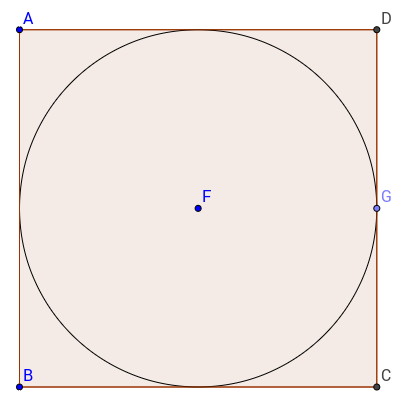
A circle is inscribed in a square. The diagonal of the square is  , what is the area of the circle?
A circle is inscribed in a square. The diagonal of the square is
Tap to reveal answer
From what we are told, we can figure out the side of the square with this simple formula:  , where
  is the diagonal of the square and
  is the length of the side. So the length of the side of our square will be 2. Therefore the radius of the circle will be half that, or 1. Now that we now the radius, we can calculate the area of the circle
  , where
  is the radius of the circle.

From what we are told, we can figure out the side of the square with this simple formula:
← Didn't Know|Knew It →
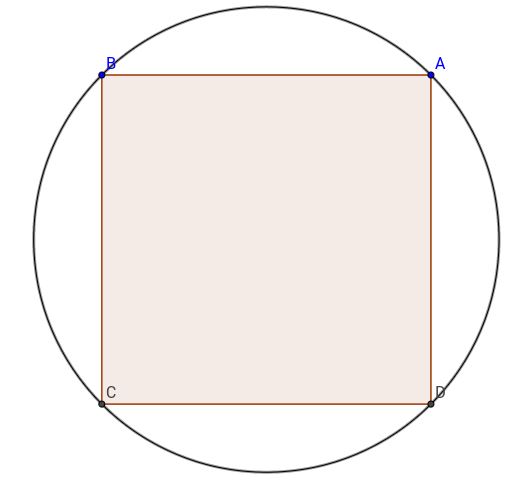
A square is inscribed in a circle. The circle has an area of  , what is the ratio of the area of the square to the area of the circle?
A square is inscribed in a circle. The circle has an area of
Tap to reveal answer
To get the area of the square we need to figure out, the length of the side. Which is possible by calculating the diameter of the circle, which is in fact the diagonal of the square. We can do as follows:
 therefore
  the radius is 2 and the diameter is 4. We now know that the diagonal of the square is 4 as well, with the formula
  , where
  is the length of the diagonal and
  is the length of the side of the square, we can figure out the length of the side, which is
  . Therefore, the area is the square of the side or 8. The final ratio that we are looking for is
  or
or  .
.
To get the area of the square we need to figure out, the length of the side. Which is possible by calculating the diameter of the circle, which is in fact the diagonal of the square. We can do as follows:
← Didn't Know|Knew It →
A square is inscribed in a circle. The area of the square is  . What is the circumference of the semicircle
  ?
?
A square is inscribed in a circle. The area of the square is
Tap to reveal answer
From the given area of the square we can figure out the length of the side of this square, which is the square root of the area, or 7. Using the formula for the diagonal of the square,  , where
  is the length of the diagonal, and
  the length of the side. Therefore, the length of the diagonal is
  . In this case since the square is inscribed in the circle, the diameter of the circle is equal to the diagonal of the square. Therefore, we can find the circumference of the circle
  , or
, or  . We just need to divide the result by 2 since we only want the circumference of the semicircle and also add the length of the diagonal, which "closes" the semicircle. The final answer is
 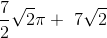 .
.
From the given area of the square we can figure out the length of the side of this square, which is the square root of the area, or 7. Using the formula for the diagonal of the square,
← Didn't Know|Knew It →
Find the length of the diagonal of a square whose side length is  .
.
Find the length of the diagonal of a square whose side length is
Tap to reveal answer
To find the length of the diagonal, you can either use the pythagorean theorem or realize that the diagonal of a square is really the hypotenuse of a right isosceles triangle. Therefore, using the short cut, you know that the diagonal is the side length times  . Thus, the answer is:
To find the length of the diagonal, you can either use the pythagorean theorem or realize that the diagonal of a square is really the hypotenuse of a right isosceles triangle. Therefore, using the short cut, you know that the diagonal is the side length times
← Didn't Know|Knew It →
A square has a side length of 3, how long is the diagonal of the square?
A square has a side length of 3, how long is the diagonal of the square?
Tap to reveal answer
The diagonal divides the square into two 45-45-90 triangles, which have side lengths in the ratio of . Therefore, the diagonal is the side length .
The diagonal divides the square into two 45-45-90 triangles, which have side lengths in the ratio of
← Didn't Know|Knew It →
Given square FGHI below, solve for the following:
If square represents a grassy area in the middle of your college campus, what is the shortest distance from point to point ?
Given square FGHI below, solve for the following:
If square
Tap to reveal answer
There are two pretty easy ways to solve this problem, both of which require you to see that this is actually a triangle question.
The first method is the fastest. If you can recognize that the diagonal of a square makes a triangle, you can then recall that triangles have side lengths with ratios of . Therefore:
The second way to solve this problem is to use Pythagorean Theorem:
where and are leg lengths of a triangle and the length of the hypotenuse. In this case, we want to solve for the diagonal, which is the hypotenuse of the triangle it forms, so we are solving for :
So again, we get .
There are two pretty easy ways to solve this problem, both of which require you to see that this is actually a triangle question.
The first method is the fastest. If you can recognize that the diagonal of a square makes a
The second way to solve this problem is to use Pythagorean Theorem:
where
So again, we get
← Didn't Know|Knew It →
One side of a square has a length of . What is the length of the diagonal of the square?
One side of a square has a length of
Tap to reveal answer
By definition, all four sides of a square are the same length. So if one side has a length of , the length and width of the square are both . The diagonal of the square is just the hypotenuse of a right triangle with the length and width as the other two sides, so we can use the Pythagorean Theorem to calculate the length of the diagonal:
By definition, all four sides of a square are the same length. So if one side has a length of
← Didn't Know|Knew It →
A circle is inscribed in a square. The diagonal of the square is , what is the area of the circle?
A circle is inscribed in a square. The diagonal of the square is
Tap to reveal answer
From what we are told, we can figure out the side of the square with this simple formula: , where is the diagonal of the square and is the length of the side. So the length of the side of our square will be 2. Therefore the radius of the circle will be half that, or 1. Now that we now the radius, we can calculate the area of the circle , where is the radius of the circle.
From what we are told, we can figure out the side of the square with this simple formula:
← Didn't Know|Knew It →
A square is inscribed in a circle. The circle has an area of , what is the ratio of the area of the square to the area of the circle?
A square is inscribed in a circle. The circle has an area of
Tap to reveal answer
To get the area of the square we need to figure out, the length of the side. Which is possible by calculating the diameter of the circle, which is in fact the diagonal of the square. We can do as follows:
therefore the radius is 2 and the diameter is 4. We now know that the diagonal of the square is 4 as well, with the formula , where is the length of the diagonal and is the length of the side of the square, we can figure out the length of the side, which is . Therefore, the area is the square of the side or 8. The final ratio that we are looking for is or .
To get the area of the square we need to figure out, the length of the side. Which is possible by calculating the diameter of the circle, which is in fact the diagonal of the square. We can do as follows:
← Didn't Know|Knew It →
A square is inscribed in a circle. The area of the square is . What is the circumference of the semicircle ?
A square is inscribed in a circle. The area of the square is
Tap to reveal answer
From the given area of the square we can figure out the length of the side of this square, which is the square root of the area, or 7. Using the formula for the diagonal of the square, , where is the length of the diagonal, and the length of the side. Therefore, the length of the diagonal is . In this case since the square is inscribed in the circle, the diameter of the circle is equal to the diagonal of the square. Therefore, we can find the circumference of the circle , or . We just need to divide the result by 2 since we only want the circumference of the semicircle and also add the length of the diagonal, which "closes" the semicircle. The final answer is .
From the given area of the square we can figure out the length of the side of this square, which is the square root of the area, or 7. Using the formula for the diagonal of the square,
← Didn't Know|Knew It →
Find the length of the diagonal of a square whose side length is .
Find the length of the diagonal of a square whose side length is
Tap to reveal answer
To find the length of the diagonal, you can either use the pythagorean theorem or realize that the diagonal of a square is really the hypotenuse of a right isosceles triangle. Therefore, using the short cut, you know that the diagonal is the side length times . Thus, the answer is:
To find the length of the diagonal, you can either use the pythagorean theorem or realize that the diagonal of a square is really the hypotenuse of a right isosceles triangle. Therefore, using the short cut, you know that the diagonal is the side length times
← Didn't Know|Knew It →
A square has a side length of 3, how long is the diagonal of the square?
A square has a side length of 3, how long is the diagonal of the square?
Tap to reveal answer
The diagonal divides the square into two 45-45-90 triangles, which have side lengths in the ratio of . Therefore, the diagonal is the side length .
The diagonal divides the square into two 45-45-90 triangles, which have side lengths in the ratio of
← Didn't Know|Knew It →
Given square FGHI below, solve for the following:
If square represents a grassy area in the middle of your college campus, what is the shortest distance from point to point ?
Given square FGHI below, solve for the following:
If square
Tap to reveal answer
There are two pretty easy ways to solve this problem, both of which require you to see that this is actually a triangle question.
The first method is the fastest. If you can recognize that the diagonal of a square makes a triangle, you can then recall that triangles have side lengths with ratios of . Therefore:
The second way to solve this problem is to use Pythagorean Theorem:
where and are leg lengths of a triangle and the length of the hypotenuse. In this case, we want to solve for the diagonal, which is the hypotenuse of the triangle it forms, so we are solving for :
So again, we get .
There are two pretty easy ways to solve this problem, both of which require you to see that this is actually a triangle question.
The first method is the fastest. If you can recognize that the diagonal of a square makes a
The second way to solve this problem is to use Pythagorean Theorem:
where
So again, we get
← Didn't Know|Knew It →
One side of a square has a length of . What is the length of the diagonal of the square?
One side of a square has a length of
Tap to reveal answer
By definition, all four sides of a square are the same length. So if one side has a length of , the length and width of the square are both . The diagonal of the square is just the hypotenuse of a right triangle with the length and width as the other two sides, so we can use the Pythagorean Theorem to calculate the length of the diagonal:
By definition, all four sides of a square are the same length. So if one side has a length of
← Didn't Know|Knew It →
A circle is inscribed in a square. The diagonal of the square is , what is the area of the circle?
A circle is inscribed in a square. The diagonal of the square is
Tap to reveal answer
From what we are told, we can figure out the side of the square with this simple formula: , where is the diagonal of the square and is the length of the side. So the length of the side of our square will be 2. Therefore the radius of the circle will be half that, or 1. Now that we now the radius, we can calculate the area of the circle , where is the radius of the circle.
From what we are told, we can figure out the side of the square with this simple formula:
← Didn't Know|Knew It →
A square is inscribed in a circle. The circle has an area of , what is the ratio of the area of the square to the area of the circle?
A square is inscribed in a circle. The circle has an area of
Tap to reveal answer
To get the area of the square we need to figure out, the length of the side. Which is possible by calculating the diameter of the circle, which is in fact the diagonal of the square. We can do as follows:
therefore the radius is 2 and the diameter is 4. We now know that the diagonal of the square is 4 as well, with the formula , where is the length of the diagonal and is the length of the side of the square, we can figure out the length of the side, which is . Therefore, the area is the square of the side or 8. The final ratio that we are looking for is or .
To get the area of the square we need to figure out, the length of the side. Which is possible by calculating the diameter of the circle, which is in fact the diagonal of the square. We can do as follows:
← Didn't Know|Knew It →
A square is inscribed in a circle. The area of the square is . What is the circumference of the semicircle ?
A square is inscribed in a circle. The area of the square is
Tap to reveal answer
From the given area of the square we can figure out the length of the side of this square, which is the square root of the area, or 7. Using the formula for the diagonal of the square, , where is the length of the diagonal, and the length of the side. Therefore, the length of the diagonal is . In this case since the square is inscribed in the circle, the diameter of the circle is equal to the diagonal of the square. Therefore, we can find the circumference of the circle , or . We just need to divide the result by 2 since we only want the circumference of the semicircle and also add the length of the diagonal, which "closes" the semicircle. The final answer is .
From the given area of the square we can figure out the length of the side of this square, which is the square root of the area, or 7. Using the formula for the diagonal of the square,
← Didn't Know|Knew It →