Operations - 5th Grade Math
Card 0 of 16
Solve:

Solve:
Tap to see back →
When we multiply fractions, we multiply the numerator by the numerator and the denominator by the denominator.
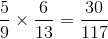
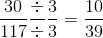
 can be reduced to
  by dividing both sides by
  .
.
When we multiply fractions, we multiply the numerator by the numerator and the denominator by the denominator.
Solve:

Solve:
Tap to see back →

When solving this problem, remember order of operations PEMDAS. The parentheses come first, followed by the multiplication, and then the division.


When solving this problem, remember order of operations PEMDAS. The parentheses come first, followed by the multiplication, and then the division.
Heather collected  of a bag of leaves. Matt collected
  times as many bags as Heather. How many bags did Matt collect?
Heather collected
Tap to see back →
When we multiply a fraction by a whole number, we first want to make the whole number into a fraction. We do that by putting the whole number over  Then we multiply like normal.

 Because
  can go into
  only
only  time and
  is left over.
Matt collected  bags of leaves.
When we multiply a fraction by a whole number, we first want to make the whole number into a fraction. We do that by putting the whole number over
Matt collected
Solve:

Solve:
Tap to see back →

When solving this problem, remember order of operations PEMDAS. The parentheses come first followed by the multiplication, and then the addition.


When solving this problem, remember order of operations PEMDAS. The parentheses come first followed by the multiplication, and then the addition.
Solve:
Solve:
Tap to see back →
When we multiply fractions, we multiply the numerator by the numerator and the denominator by the denominator.
can be reduced to by dividing both sides by .
When we multiply fractions, we multiply the numerator by the numerator and the denominator by the denominator.
Solve:
Solve:
Tap to see back →
When solving this problem, remember order of operations PEMDAS. The parentheses come first, followed by the multiplication, and then the division.
When solving this problem, remember order of operations PEMDAS. The parentheses come first, followed by the multiplication, and then the division.
Heather collected of a bag of leaves. Matt collected times as many bags as Heather. How many bags did Matt collect?
Heather collected
Tap to see back →
When we multiply a fraction by a whole number, we first want to make the whole number into a fraction. We do that by putting the whole number over Then we multiply like normal.
Because can go into only time and is left over.
Matt collected bags of leaves.
When we multiply a fraction by a whole number, we first want to make the whole number into a fraction. We do that by putting the whole number over
Matt collected
Solve:
Solve:
Tap to see back →
When solving this problem, remember order of operations PEMDAS. The parentheses come first followed by the multiplication, and then the addition.
When solving this problem, remember order of operations PEMDAS. The parentheses come first followed by the multiplication, and then the addition.
Solve:
Solve:
Tap to see back →
When we multiply fractions, we multiply the numerator by the numerator and the denominator by the denominator.
can be reduced to by dividing both sides by .
When we multiply fractions, we multiply the numerator by the numerator and the denominator by the denominator.
Solve:
Solve:
Tap to see back →
When solving this problem, remember order of operations PEMDAS. The parentheses come first, followed by the multiplication, and then the division.
When solving this problem, remember order of operations PEMDAS. The parentheses come first, followed by the multiplication, and then the division.
Heather collected of a bag of leaves. Matt collected times as many bags as Heather. How many bags did Matt collect?
Heather collected
Tap to see back →
When we multiply a fraction by a whole number, we first want to make the whole number into a fraction. We do that by putting the whole number over Then we multiply like normal.
Because can go into only time and is left over.
Matt collected bags of leaves.
When we multiply a fraction by a whole number, we first want to make the whole number into a fraction. We do that by putting the whole number over
Matt collected
Solve:
Solve:
Tap to see back →
When solving this problem, remember order of operations PEMDAS. The parentheses come first followed by the multiplication, and then the addition.
When solving this problem, remember order of operations PEMDAS. The parentheses come first followed by the multiplication, and then the addition.
Solve:
Solve:
Tap to see back →
When we multiply fractions, we multiply the numerator by the numerator and the denominator by the denominator.
can be reduced to by dividing both sides by .
When we multiply fractions, we multiply the numerator by the numerator and the denominator by the denominator.
Solve:
Solve:
Tap to see back →
When solving this problem, remember order of operations PEMDAS. The parentheses come first, followed by the multiplication, and then the division.
When solving this problem, remember order of operations PEMDAS. The parentheses come first, followed by the multiplication, and then the division.
Heather collected of a bag of leaves. Matt collected times as many bags as Heather. How many bags did Matt collect?
Heather collected
Tap to see back →
When we multiply a fraction by a whole number, we first want to make the whole number into a fraction. We do that by putting the whole number over Then we multiply like normal.
Because can go into only time and is left over.
Matt collected bags of leaves.
When we multiply a fraction by a whole number, we first want to make the whole number into a fraction. We do that by putting the whole number over
Matt collected
Solve:
Solve:
Tap to see back →
When solving this problem, remember order of operations PEMDAS. The parentheses come first followed by the multiplication, and then the addition.
When solving this problem, remember order of operations PEMDAS. The parentheses come first followed by the multiplication, and then the addition.