Award-Winning College Chemistry Tutors
serving San Antonio, TX
College Chemistry
Tutors in San Antonio
Private 1-on-1 tutoring, weekly live classes for academic support, test prep & enrichment, practice tests and diagnostics, and more to elevate grades and test scores.
Based on 3.4M Learner Ratings
UniversitiesSchools & Universities
DeliveredHours Delivered
ProficiencyGrowth in Proficiency
Who needs tutoring?
No obligation. Takes ~1 minute.

Equilibrium, thermodynamics, and acid-base chemistry stop being abstract once a student sees how they govern real reactions. Thomas approaches college chemistry through the lens of someone who applied these principles daily in medical and public health training, connecting lecture material to tangible scenarios. He's especially effective at untangling the math-heavy sections — rate laws, buffer calculations, electrochemistry — that trip up most students.
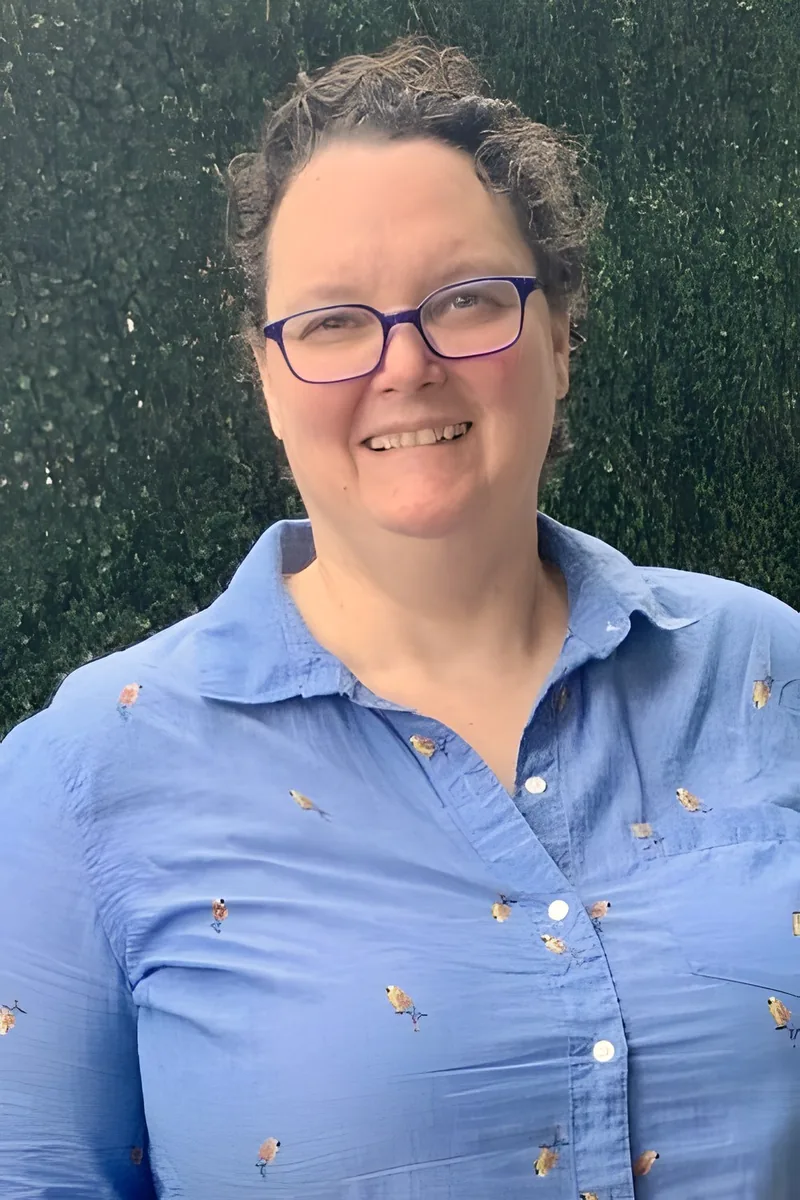
My favorite part of tutoring is what I call the light bulb moments. These are the moments when a topic makes sense to a student, and if we were in a cartoon, a light bulb would appear over their head. And this is usually the moment when students believe that I don't have more talent in the subject that them; I simply have more practice. I graduated with my Master of Science in Analytical Chemistry from Texas Tech University in 2011, and have tutored students in chemistry and math since 2002. In addition to tutoring, I have taught both as a TA and as an adjunct professor, at the University of Washington, Texas Tech, and the University of the Incarnate Word. I have taught chemistry labs (general, analytical, and nursing chemistry), general chemistry I and II, and first semester nursing chemistry. In my free time, I enjoy reading, crafting, and walking. I am currently working on making my first bed size quilt and have completed the San Antonio Rock n Roll half marathon twice.
Second-year med student at Baylor College of Medicine, Michelle still remembers exactly which gen chem concepts — electron orbitals, buffer systems, reaction thermodynamics — became non-negotiable once biochemistry and physiology started building on them. Her Rice biochemistry degree means she learned college chemistry at a place where the coursework was rigorous enough to expose every shortcut that doesn't hold up, and she teaches accordingly: precise on the fundamentals so nothing collapses later.
Organic reaction mechanisms, thermodynamic versus kinetic control, and multi-step synthesis problems demand more than memorization — they require a framework for thinking through electron movement and molecular behavior. Maggie studied Molecular, Cellular, and Developmental Biology as an undergraduate and now applies that foundation daily in her Stanford medical program. She unpacks each mechanism by tracing exactly why electrons move where they do, making complex transformations feel logical.
Having taken the full gen chem sequence at Cornell alongside organic chemistry and upper-level biology coursework, Jonathan knows exactly where college chemistry concepts like electron configuration, VSEPR theory, and solution stoichiometry start causing problems — usually when the course shifts from memorizable rules to applied reasoning. His human biology background means he naturally ties chemical principles back to biological systems, which tends to click for the pre-med and life science students who make up most of his college chemistry sessions. Rated 4.9 by students.
Cognitive Studies at Vanderbilt gave Vy an unusual angle on college chemistry — she understands how students actually learn and retain dense, concept-heavy material like electron configurations, equilibrium shifts, and thermodynamic laws, not just the content itself. She uses that awareness to structure explanations around how the brain organizes new information, which makes a real difference when a student is drowning in a fast-paced gen chem course. Holds a 5.0 rating.
General chemistry at the college level demands more than memorizing solubility rules — it requires connecting thermodynamic principles to kinetics, understanding orbital theory, and applying equilibrium concepts quantitatively. Kinjal completed rigorous chemistry sequences as part of her biology program at Texas A&M and tackles each topic by tying abstract theory to concrete calculations. She holds a 5.0 rating from students.
Having scored 1580 on the SAT and completed AP Chemistry coursework, Kendall brings sharp quantitative instincts to the trickiest parts of gen chem — the unit conversions buried inside equilibrium problems, the logarithmic reasoning behind pH calculations, the algebra hiding inside rate law expressions. She also knows that college chemistry often overwhelms students not because the concepts are impossibly hard, but because the pace is relentless, so she zeroes in on the specific spots where understanding broke down rather than re-teaching entire chapters. Rated 4.9 by students.
Decades of work as a PhD chemical engineer mean Steven has used gen chem concepts like reaction thermodynamics, equilibrium, and stoichiometry as professional tools — not exam topics he learned once and moved on from. He tackles tough problems by explaining the idea one way, then reframing it from a different angle, and grounding it with a practical example so the concept sticks from multiple directions. Rated 4.9 by students.
Working in a research lab at UTHealth, Emily applies gen chem principles like reaction kinetics, buffer systems, and molecular interactions at the bench every day — which means she can show students what these concepts look like beyond the textbook problem set. Her biochemistry and cell biology degree built the content depth, and active research keeps it sharp, especially for topics like solution chemistry and thermodynamics where real-world context makes the logic easier to hold onto.
Thermodynamics, equilibrium constants, electrochemistry — college chemistry demands that students juggle quantitative problem-solving with conceptual reasoning at the same time. Raj tackles both sides, drawing on his biochemistry training at Rice to show how general chemistry principles connect to larger molecular behavior. His 5.0 rating speaks to how well that approach lands.
Between her molecular biology undergraduate coursework and her environmental science graduate program, Kelsey has spent years in chemistry labs running titrations, analyzing spectral data, and solving equilibrium problems under pressure. She taught college-level science students who were simultaneously navigating gen chem, so she understands how to break down thermodynamics, bonding theory, and reaction kinetics for students juggling a full course load.
Thermodynamics, equilibrium constants, and reaction kinetics can feel abstract until someone maps out the logic behind each equation. Malcolm's biochemistry program at Rice demanded two years of college-level chemistry — general through organic — so he unpacks these concepts with the specificity that college coursework requires.
Bioengineering training forced Casey to apply gen chem concepts — reaction thermodynamics, solution chemistry, molecular bonding — inside biological systems where getting the chemistry wrong means the engineering doesn't work. That application-heavy background means she teaches topics like equilibrium and acid-base reactions by anchoring them to tangible physical scenarios, making the abstract formulas easier to internalize. Her additional coursework in organic chemistry and physiology gives her a clear picture of where each gen chem concept resurfaces later in a STEM curriculum.
Chemical engineering required Jonathan to master chemistry at a level most students never reach — reaction kinetics, equilibrium, electrochemistry, and solution thermodynamics were daily tools, not just exam topics. He breaks down college chemistry problems by linking molecular behavior to the math behind it, so concepts like Gibbs free energy or Le Chatelier's principle feel intuitive rather than abstract.
Having earned two master's degrees — one in biotechnology from Johns Hopkins — Pauline has tackled college chemistry from the research side, where concepts like reaction kinetics, buffer systems, and molecular interactions aren't exam topics but daily lab realities. As a PhD student at UT Southwestern, she bridges the gap between gen chem fundamentals and the advanced biochemistry they feed into, making it clear to students why mastering something like equilibrium now prevents a cascade of confusion later.
Thermodynamics and chemical kinetics demand comfort with calculus and data interpretation that many college chemistry students haven't fully developed yet. Michael studies statistics at Rice, so he approaches rate laws, equilibrium constants, and enthalpy calculations with the same rigor he applies to quantitative modeling — making the math feel like a tool rather than an obstacle.
Having earned a biology degree and taught science at the high school and college level, Anna knows the exact moments in gen chem where students start losing the thread — usually when stoichiometry transitions into solution chemistry or when equilibrium concepts demand comfort with logarithms and ICE tables. She tackles those pivots by slowing down at the conceptual shift rather than re-explaining the math, which keeps students from mistaking a chemistry gap for a calculation problem.
When college chemistry shifts into thermodynamics, electrochemistry, or reaction kinetics, the problems start demanding real mathematical fluency alongside chemical intuition. Daniel's mechanical engineering degree means he already thinks in terms of energy balances, rate equations, and equilibrium — concepts that map directly onto general and physical chemistry coursework. He walks through derivations carefully so students understand where each formula comes from rather than just applying it blindly.
Completing premed coursework at NYU while majoring in finance gave Hanna an unusual double lens on college chemistry — she understands both the quantitative rigor of stoichiometry and thermodynamics and the biological applications that show up in organic and biochem sequences. She breaks down reaction mechanisms and equilibrium problems by connecting them to the bigger picture of why each concept matters for upper-level science courses.
Having earned a PhD in Inorganic Chemistry, Andrew brings a researcher's depth to college chemistry — particularly on topics like coordination compounds, crystal field theory, and transition metal behavior that most gen chem instructors only skim. He teaches the trickier conceptual territory (molecular orbital diagrams, periodic trends in d-block elements, ligand field splitting) by grounding abstract models in the actual structures and reactions they describe. That level of content mastery means he can pinpoint exactly where a student's mental model breaks and rebuild it on the spot.
General chemistry at the college level ramps up fast — suddenly you're deriving rate laws, calculating entropy changes, and navigating molecular orbital theory in the same semester. Asad studied these topics deeply as a chemistry major at Rice and sharpens his explanations around the specific sticking points he's seen trip up fellow undergrads, from quantum numbers to electrochemistry.
I am a graduate of UC San Diego with a Bachelors in Neuroscience through the Psychology department. After graduating, I went to Michigan Technological University and did some graduate work, before moving to Texas to be closer to my parents. I did my alternative certification program through Texas Teachers and am highly qualified to teach Science for grades 7-12. I have been a teacher in public and charter schools for the last four years, and have tutoring experience extending over ten years behind me as well.
Organic reaction mechanisms, thermodynamic favorability, and molecular orbital theory all demand a level of spatial and conceptual reasoning that textbooks rarely teach explicitly. Nathaniel earned his biochemistry degree working through exactly these problems and approaches college chemistry by showing students how to reason through unfamiliar reactions using a handful of core principles.
I am currently a medical student at the University of Texas Southwestern. I completed a major in Biology with a triple minor focus in Chemistry, Sociology, and Medicine and Society. During my undergraduate career, I tutored hundreds of students through my work with the American Chemical Society, LAUNCH, and Scholars Enrichment Program. While I tutor a broad range of subjects, I am most passionate about Chemistry and Organic Chemistry. I have recently taken my MCAT and I would love to help you prepare for that especially if you need help with Chemistry based questions. In my experience helping struggling students prepare for Standardized Tests such as the ACT and the MCAT, I always find new ways to engage my students and make testing strategies more accessible to them. I believe the best way to learn is to teach. Therefore, my main teaching strategy will be filling any knowledge gaps and allowing you the opportunity to re-explain material in order to ensure you will remember it.
Natalie tackles college chemistry with the rigor her own Rice biochemistry coursework demands — thermodynamics, organic reaction mechanisms, and acid-base equilibria are part of her daily academic life. She approaches problem sets by teaching students to identify what type of question they're facing before diving into math, a habit that builds real fluency with the material.
Felipe has been embedded in college chemistry from both sides of the table — as a biomedical engineering major tackling rigorous coursework at UT Austin and as an employed tutor for the university's Engineering Student Services. He digs into the concepts that trip up most college students, from thermodynamic state functions and Hess's law to quantum mechanical models of bonding, and explains them with the clarity of someone who recently mastered them himself.
Five years teaching general and organic chemistry at the college level — across institutions in California, Massachusetts, New York, and Texas — means Toshiki has seen every version of the mid-semester collapse, whether it starts with shaky mole concepts, misunderstood electron configurations, or thermodynamics notation that students never properly decoded. His MIT PhD in inorganic chemistry gives him unusual depth on topics like coordination compounds and crystal field theory that most gen chem tutors skim past. Rated 4.9 by students.
Between her human development undergrad and biomedical sciences master's, Phoebe has taken college chemistry from both the life-sciences and clinical-sciences angle — giving her a clear read on where gen chem topics like solution chemistry, acid-base reactions, and thermodynamics actually resurface later. She tackles problems by slowing down at the exact step where notation or math starts obscuring the chemistry, then rebuilding clarity before moving forward. Rated 5.0 by students.
I am currently a senior at Emory University studying chemistry and applied math with a focus on inorganic chemistry. I will be available to tutor algebra, trigonometry, algebra 2, biology, chemistry, calculus, geometry, pre- calculus, and ACT prep. I started tutoring in high school and continued tutoring at Emory where I tutored general chemistry, introductory biology, and calculus for two years. Apart from academic tutoring, I am also involved in Project SHINE which teaches English to recent Atlanta immigrants. I believe that education (no matter what kind) is crucial in life, but I also strive to emphasize why something is important. In my experience, most students struggle with something because they don't understand exactly why it is important or simply do not care. I am heavily involved in academic research at Emory so I am able to help a student understand exactly why a specific subject area is important and how it is continuously applied both in the lab and in the real world to improve our lives. It's always easier to see the physical and practical applications of a subject than try to visualize its importance on paper. In my spare time I enjoy chemistry, ancient Roman history, jam bands, running, cycling, and scuba diving.
An electrical and computer engineering major at Rice, Omar has ground through the same gen chem sequence that trips up so many STEM students — stoichiometry, thermochemistry, equilibrium — and came out the other side with an engineer's instinct for unit tracking and dimensional analysis. He teaches calculation-heavy problems by making the physical reasoning visible before touching the math, so formulas like the ideal gas law or Hess's law stop feeling like arbitrary recipes. Rated 5.0 by students.
Biochemistry and cell biology coursework means Murtuza has been through college chemistry twice over — once in gen chem and again when concepts like reaction thermodynamics, buffer systems, and molecular interactions resurfaced at a higher level in upper-division bio courses. That double exposure gives him a sharp sense of which gen chem ideas students need to truly internalize versus which ones they can afford to treat more lightly, and he teaches accordingly. His 35 ACT reflects the same disciplined, analytical approach he brings to breaking down multi-step chemistry problems.
Bioinformatics training means Hamza has applied gen chem principles — molecular interactions, thermodynamics, reaction energetics — in computational contexts where imprecise understanding isn't an option. He tackles topics like equilibrium and acid-base chemistry by grounding the math in the physical behavior it describes, which keeps students from treating formulas as black boxes. Rated 4.6 by students.
Working at the National Institutes of Health and studying cognitive science gave Snipta an unusual angle on college chemistry — she understands the molecular and biochemical underpinnings of biological systems, not just as textbook problems but as tools she's actually used in research contexts. She tackles topics like electron configuration, bonding theory, and intermolecular forces by connecting the abstract rules to the physical behavior they predict, which makes the jump from Lewis structures to thermodynamics feel less like a leap. Rated 5.0 by students.
Between tutoring at Austin Community College and teaching DAT prep for Kaplan, Roozbeh has walked dozens of STEM students through the gen chem gauntlet — the mole concept, solution stoichiometry, gas laws, and the thermodynamics problems that pile up mid-semester. He treats each topic like a puzzle with a logical entry point, breaking multi-step problems into smaller pieces until the chemistry reasoning clicks before the calculator comes out. Rated 5.0 by students.
Having earned her bachelor's in chemistry, Naushaba has worked through every corner of the gen chem curriculum — but it's her epidemiology master's that gives her a distinct angle on topics like solution concentration, reaction rates, and chemical equilibria, since those concepts underpin the quantitative methods she uses in public health research. She breaks down calculation-heavy problems by clarifying the chemical logic driving each step, so the math serves the science instead of obscuring it.
Thermodynamics, equilibrium constants, and reaction kinetics all rely on the same mathematical reasoning Tyler sharpened through his physics degree and research in theoretical materials science at UT Arlington. He treats college chemistry as a problem-solving discipline, walking through derivations and dimensional analysis until the logic behind each formula becomes second nature.
A biochemistry degree means Don has sat through the exact sequence of gen chem and organic chem courses that college students are navigating now — from acid-base equilibria and buffer systems to reaction mechanisms and spectroscopy. He breaks down multi-step problems by anchoring each calculation to the molecular behavior driving it, turning abstract formulas into something students can reason through. Rated 5.0 by students.
Having an applied math degree means Rakhi can cut through the quantitative side of gen chem — gas law algebra, equilibrium expressions, stoichiometric conversions — with a fluency that lets her zero in on whether a student's mistake is conceptual or computational. She also brings direct experience with AP Chemistry and honors chemistry, so she understands how college-level material escalates from the high school foundation and where the gaps tend to hide. Rated 4.8 by students.
Environmental science at Rice required Alex to grind through the quantitative chemistry that underpins water quality analysis, atmospheric reactions, and soil contamination modeling — so topics like equilibrium, solution chemistry, and thermodynamics aren't abstract textbook chapters but tools he's actually applied to real-world data. His statistics-heavy master's work also means he's unusually comfortable with the mathematical side of gen chem, walking students through the algebra behind rate laws or calorimetry without losing sight of what the numbers physically mean.
Testimonials
Because the right College Chemistry tutor makes all the difference.
Average Session Rating – Based on 3.4M Learner Ratings
Nearby College Chemistry Tutors
Other San Antonio Tutors
Related Science Tutors in San Antonio
Frequently Asked Questions
College Chemistry builds on foundational concepts but introduces abstract thinking that many students find challenging—balancing equations, understanding molecular structure, and connecting theory to real-world applications. Many students struggle with unit conversions, stoichiometry, and visualizing how atoms and molecules behave at scales we can't see. Personalized 1-on-1 instruction helps break down these abstract concepts into concrete explanations and practice problems tailored to your learning style.
Beyond lecture content, College Chemistry requires understanding the scientific method, experimental design, and how to analyze lab results. Tutors can help you understand the theory behind experiments, prepare for lab practicals, interpret data, and write effective lab reports. This bridges the gap between classroom learning and hands-on application, strengthening both your conceptual understanding and your ability to think like a scientist.
Balancing equations requires understanding both the rules of chemistry and developing pattern recognition—it's not just memorization. Many students struggle because they're trying to memorize rather than understand the underlying principle: conservation of mass. Working with a tutor, you'll learn systematic approaches to balancing equations, practice with increasingly complex examples, and develop the intuition to tackle unfamiliar reactions with confidence.
Your first session is about understanding where you are and where you want to go. The tutor will assess your current grasp of key concepts, identify specific areas of struggle (whether it's equilibrium, thermodynamics, or acid-base chemistry), and learn your learning style. From there, you'll develop a personalized plan focused on your most pressing needs—whether that's exam prep, concept mastery, or lab report support.
While there are formulas and constants to know, College Chemistry is fundamentally about understanding how and why reactions occur. Memorizing without understanding leads to confusion when you encounter new problems. Personalized tutoring emphasizes conceptual understanding—why electrons behave certain ways, how energy drives reactions, and how to apply principles to novel situations. This approach builds both stronger grades and genuine chemistry knowledge.
Unit conversions and stoichiometry problems require both procedural skill and conceptual clarity about what you're actually calculating. Many students rush through these problems without understanding the logic. Tutors break down the dimensional analysis method, help you visualize what's happening at the molecular level, and provide targeted practice until the process becomes automatic. Mastering these foundational skills unlocks success in thermochemistry, gas laws, and equilibrium.
Look for tutors with strong chemistry backgrounds—ideally with a degree in chemistry, biochemistry, or a related field, and experience teaching or tutoring at the college level. They should be able to explain concepts clearly, connect theory to real applications, and help you develop problem-solving strategies rather than just providing answers. Varsity Tutors connects you with expert tutors who understand both the content and how to teach it effectively to college students.
Ideally, starting 3-4 weeks before an exam gives you time to identify weak areas, build understanding, and practice problem-solving under timed conditions. However, even starting 1-2 weeks before an exam can significantly improve your performance if you focus on your most challenging topics. For cumulative final exams, starting earlier in the semester allows for spaced practice and deeper retention—research shows this approach leads to better long-term learning than cramming.
Let’s find your perfect tutor
Answer a few quick questions. We’ll recommend the right plan and match you with a top 5% tutor.