Award-Winning MCAT Psychological, Social, and Biological Foundations of Behavior Tutors
serving Staten Island, NY
Who needs tutoring?
FEATURED BY


TUTORS FROM
- YaleUniversity
- PrincetonUniversity
- StanfordUniversity
- CornellUniversity
Award-Winning MCAT Psychological, Social, and Biological Foundations of Behavior Tutors serving Staten Island, NY

Certified Tutor
6+ years
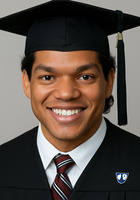
Rhea
The Psych/Soc section of the MCAT is deceptively content-heavy — from operant conditioning and social identity theory to the biological underpinnings of perception and memory. Rhea tackles this section by linking psychological and sociological terminology to concrete examples, making hundreds of voc...
University of Chicago
Bachelor of Science, Biology, General
Certified Tutor
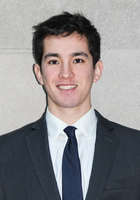
Tony
Many science-minded students underestimate the Psych/Soc section, but it covers a huge content domain — from neurotransmitter pathways to sociological theories of deviance. Tony's interest in psychiatry and neurology, combined with his biology training at Yale, gives him a natural grip on the biolog...
Yale University
Bachelor of Science in Biology
Certified Tutor
10+ years
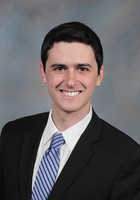
Zachary
Psych/Soc is the section many science-heavy students underestimate, but it covers a sprawling range of material from social psychology to neurobiology to research methodology. Zachary approaches it by building a framework around the highest-yield terms and theories — operant conditioning, symbolic i...
Yale University
Bachelors, Biochemistry and Biophysics
Certified Tutor
6+ years
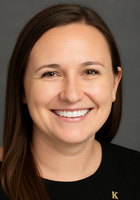
David
Spanning sociology, psychology, and biology in a single section, Psych/Soc rewards students who can think across disciplines — exactly what David's neuroscience and bioethics background trained him to do. He tackles high-yield frameworks like social identity theory, the stress-diathesis model, and s...
Yale University
Bachelor of Science in Neuroscience
Harvard University
Current Grad Student, Bioethics and Medical Ethics
Certified Tutor
Laura
Most pre-med students underestimate the Psych/Soc section because it seems "softer" than the science-heavy ones, but it requires precise recall of terminology from psychology, sociology, and neuroscience. Laura tackles this by connecting abstract concepts — operant conditioning, social stratificatio...
Massachusetts Institute of Technology
Bachelors, Economics

Certified Tutor
9+ years
Benjamin
The Psych/Soc section of the MCAT sits right at the intersection of Benjamin's expertise — his neuroscience training covered the biological underpinnings of behavior, from neurotransmitter systems to brain region function, while his broad liberal arts education at Vanderbilt exposed him to sociologi...
Vanderbilt University
Bachelor's degree in neuroscience and Russian
Certified Tutor
6+ years
Sanjay's medical school training gives him firsthand familiarity with the psychology and sociology concepts the MCAT Psych/Soc section tests — from Erikson's developmental stages to social determinants of health and the neurobiological basis of behavior. He breaks down passage-based questions by tea...
Rice University
Bachelor in Arts

Certified Tutor
15+ years
Matthew
The MCAT's Psych/Soc section catches a lot of science-heavy applicants off guard because it rewards conceptual fluency with theories — Piaget's stages, the elaboration likelihood model, social stratification frameworks — rather than raw memorization. Matthew's interdisciplinary range, spanning biolo...
Stanford University
Master of Science, Mechanical Engineering
The University of Texas at Austin
Bachelor of Science, Mechanical Engineering
Certified Tutor
8+ years
Amanda
The Psych/Soc section of the MCAT trips up many pre-meds because it blends sociology, psychology, and biology into passage-based questions that reward conceptual thinking over rote recall. Amanda tackled this section during her own MCAT prep and now, as a medical student finishing her MD and MPH, sh...
The University of Alabama
Bachelor of Science, Biology, General
Baylor College of Medicine
Doctor of Medicine, Public Health

Certified Tutor
Connie
Having gone through medical school at Boston University and into residency, Connie tackled the MCAT's Psych/Soc section when it was still relatively new to the exam — and scored a 34 ACT composite, reflecting the kind of disciplined test-taking she brings to standardized prep. She unpacks the sectio...
Northwestern University
Bachelor's degree in Biology
Northwestern State University of Louisiana
Bachelor in Arts, Biology, General
Nearby MCAT Psychological, Social, and Biological Foundations of Behavior Tutors
Other Staten Island Tutors
Related Graduate Test Prep Tutors in Staten Island
Frequently Asked Questions
This section tests your understanding of psychological principles, social dynamics, and biological systems that influence human behavior. You'll encounter content on sensation and perception, learning and memory, motivation and emotion, personality theories, social influence, cultural factors, and the biological basis of behavior including neurotransmitters and brain structures. The section emphasizes how these concepts apply to real-world scenarios, so tutoring often focuses on connecting theory to clinical and social applications you'll see on test day.
Score improvement depends on your starting point and study consistency, but students typically see 2-4 point gains over 8-12 weeks of focused preparation. If you're struggling with specific content areas like neurobiology or social psychology, targeted tutoring can help you identify knowledge gaps and build conceptual understanding rather than relying on memorization. The key is combining tutoring with regular practice tests and active review between sessions.
Many students find the breadth of content overwhelming—you need solid fundamentals in psychology, sociology, anthropology, and biology all at once. Others struggle with passage-heavy questions that require you to apply concepts to unfamiliar scenarios rather than just recall facts. Pacing is another common issue; students often spend too much time on dense passages and run out of time for easier questions. Tutors can help you develop efficient reading strategies and practice applying concepts quickly under timed conditions.
Practice tests are essential—they're your best tool for identifying weak content areas, building timing skills, and getting comfortable with the question format. Most students benefit from taking full-length practice tests every 1-2 weeks, then reviewing missed questions with a tutor to understand why they chose wrong answers. This combination of practice and targeted review helps you move beyond surface-level knowledge to the deeper understanding the MCAT requires.
Varsity Tutors connects you with expert tutors who have strong backgrounds in psychology, biology, and MCAT test strategy. When you get matched with a tutor, you can discuss your specific weak areas—whether that's neurotransmitter systems, cultural psychology, or passage comprehension—and they'll tailor sessions to address those gaps. Many tutors have personal MCAT experience and can share test-taking strategies that worked for them.
Your first session typically starts with an assessment of your current knowledge and any practice test scores you have. Your tutor will ask about your target score, timeline, and which topics feel most challenging. From there, you'll likely work through a few practice questions together to see your problem-solving approach and identify where misconceptions might be hiding. This helps your tutor create a personalized study plan for your remaining sessions.
Familiarity breeds confidence—the more you practice with real MCAT-style questions and time pressure, the less anxiety you'll feel on test day. Tutors help by breaking down difficult concepts into manageable pieces, celebrating progress on practice tests, and teaching you stress-management strategies for pacing yourself during the actual exam. Knowing you've thoroughly prepared and practiced under realistic conditions is one of the best anxiety reducers available.
Most students benefit from 8-12 weeks of preparation, meeting with a tutor 1-2 times per week depending on their starting point and target score. If you're starting from a weaker foundation, more frequent sessions help you build content knowledge faster; if you're already solid on basics, weekly sessions focused on strategy and practice questions may be enough. Your tutor can recommend a schedule based on your goals and current performance.
Connect with MCAT Psychological, Social, and Biological Foundations of Behavior Tutors in Staten Island
Get matched with local expert tutors