Award-Winning AP Biology Tutors
serving Detroit, MI
AP Biology
Tutors in Detroit
Private 1-on-1 tutoring, weekly live classes for academic support, test prep & enrichment, practice tests and diagnostics, and more to elevate grades and test scores.
Based on 3.4M Learner Ratings
UniversitiesSchools & Universities
DeliveredHours Delivered
ProficiencyGrowth in Proficiency
Who needs tutoring?
No obligation. Takes ~1 minute.
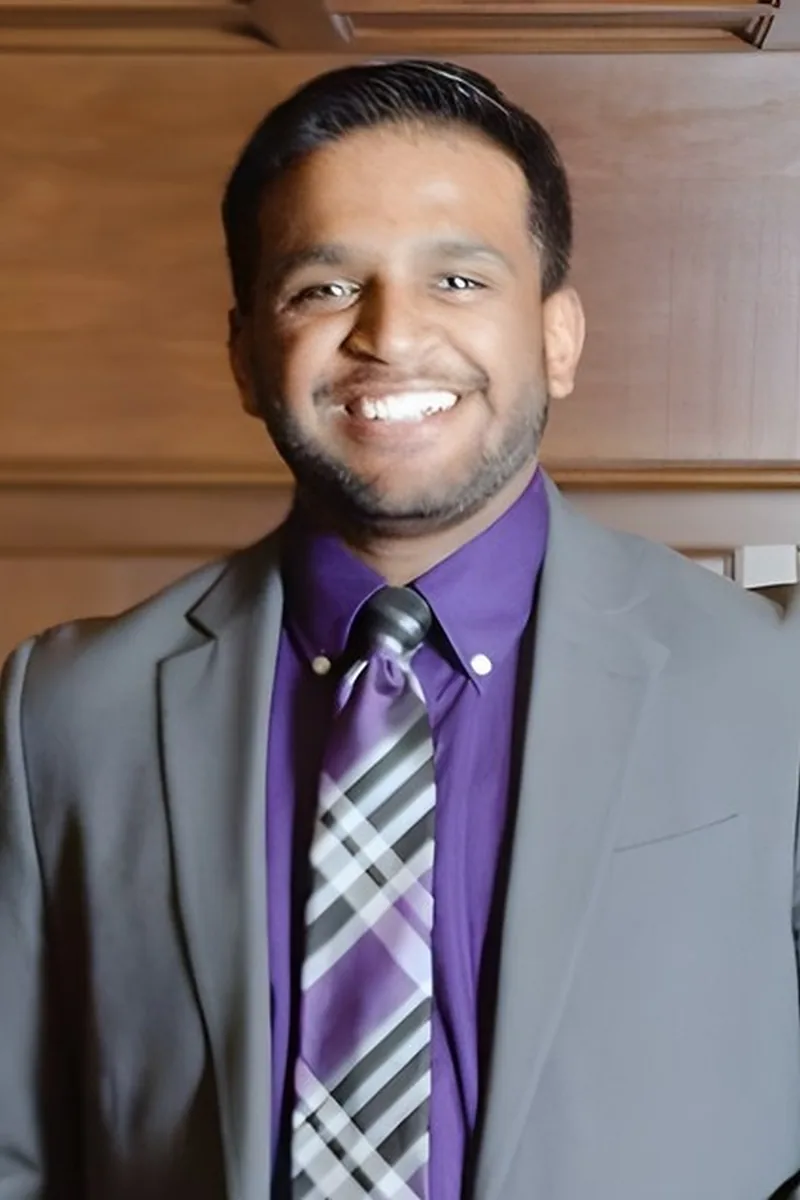
Second-year med student at Wayne State, Ishan is currently neck-deep in the physiology and cell biology that AP Bio's exam leans on hardest — but what sets him apart is years of tutoring experience stretching back to high school, which means he's practiced at spotting exactly where a student's understanding breaks down in topics like cellular respiration or protein synthesis. He also tutored organic chemistry in college, giving him a molecular-level fluency that pays off when AP Bio questions ask students to explain enzyme kinetics or trace energy transformations through metabolic pathways.
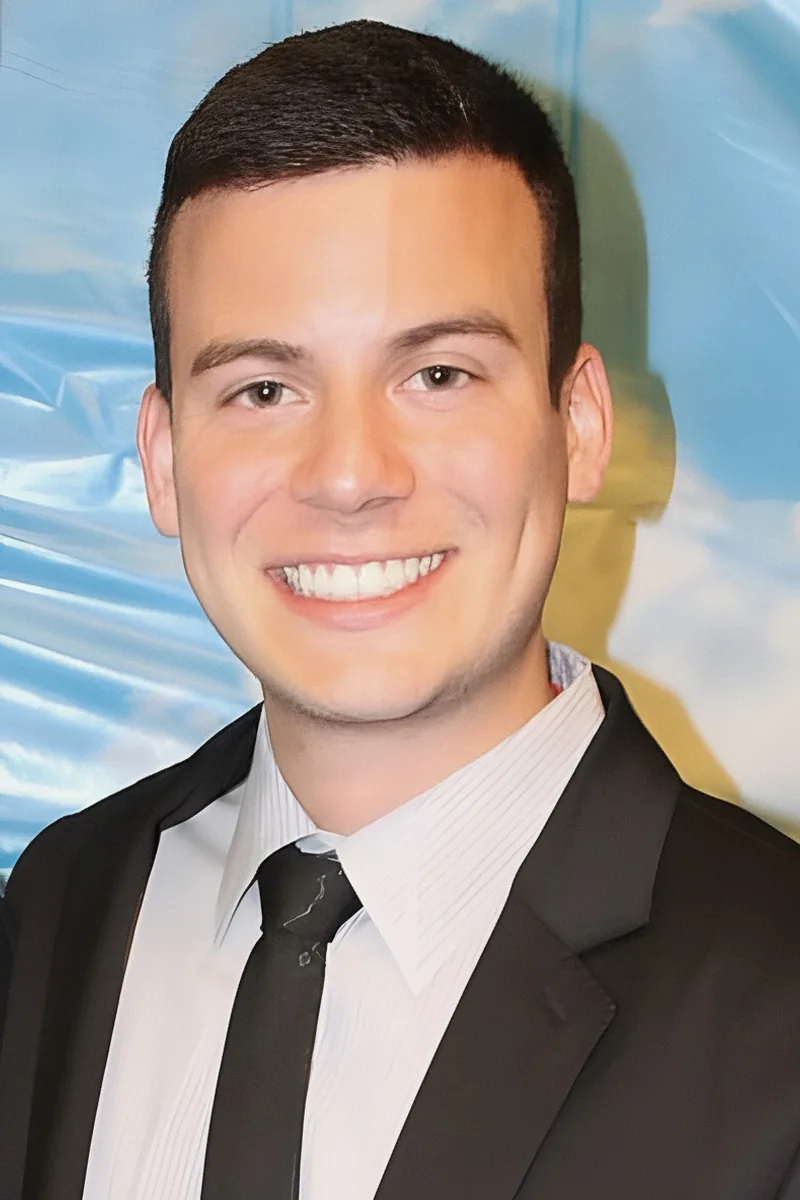
Working as a research assistant in Johns Hopkins' Department of Transplant Surgery means Jonathan encounters cell signaling, gene expression, and immune response in a clinical context every day. He brings that real-world lens to AP Biology, connecting dense topics like cellular respiration and heredity to the actual research happening in his lab. That bridge between textbook diagrams and living science makes the exam's application-heavy questions far less intimidating.
AP Biology's shift toward data analysis and experimental design means students need to do more than memorize cell processes — they need to interpret graphs, design controls, and justify claims with evidence. Pratik is a biology major at Cornell on the premed track, so he teaches concepts like gene regulation, cellular respiration, and ecology through the lens of how the exam actually tests them.
Jack's biomedical engineering master's from Michigan took him deep into the biology that underpins medical devices — cell signaling, tissue physiology, and developmental biology — which means he's tackled AP Bio's toughest content at a graduate level. He's currently applying to medical school and prepping for the MCAT, so concepts like photosynthesis, cellular respiration, and inheritance patterns are fresh and actively in rotation. Rated 4.9 by students.
Struggling through high school science before eventually excelling in a medical school program gives Macklin an unusual perspective on AP Bio — he knows exactly where students get stuck on topics like cellular respiration, enzyme kinetics, and signal transduction because he hit those same walls himself before mastering them at the graduate level. His exercise physiology degree and current medical training mean he can ground abstract concepts in how living systems actually function, connecting something like the electron transport chain to real physiological outcomes students can visualize. Rated 5.0 by students.
Pharmacy school at the University of Michigan means Syeda has spent years studying biochemistry, pharmacology, and human physiology — disciplines that overlap heavily with AP Bio's units on cellular processes, signal transduction, and homeostasis. She's especially effective at teaching how molecules interact at the cellular level, like enzyme-substrate specificity or receptor-mediated responses, because she applies those same concepts daily in her Doctor of Pharmacy coursework. Rated 5.0 by students.
Currently conducting biomedical research at the NIH between her third and fourth years of medical school, Uchenna lives the biology that AP students are tested on — from cellular respiration and signal transduction to genetics and evolution. She teaches the exam's notoriously tricky experimental-design questions by walking through real research scenarios, so students learn to analyze data the way scientists actually do.
Carly's industrial engineering background means she thinks in systems and processes — which turns out to be a surprisingly effective lens for AP Bio's units on energy flow, feedback loops, and how inputs move through metabolic pathways like cellular respiration and photosynthesis. She also served as a college teaching assistant, so she's practiced at spotting exactly where a student's understanding breaks down and rebuilding the logic from that point forward.
Studying biology at the University of Michigan, Krisha brings current coursework directly into her AP Bio tutoring — from cellular respiration and signal transduction to gene regulation and ecological dynamics. She breaks down the exam's data-analysis questions by teaching students to interpret experimental setups the way a working scientist would. Rated 5.0 by students.
Samantha is currently studying biology at the University of Michigan, which means the AP Bio curriculum — from cellular energetics to ecology — overlaps directly with her active coursework. What sets her apart for this exam is her ability to teach students how to read and interpret experimental data in the way the redesigned AP Bio format demands, where nearly every multiple-choice question includes a graph, table, or diagram. Her 35 ACT also signals the kind of analytical reading skill that translates well to coaching students through the exam's notoriously dense free-response prompts.
Pre-med coursework in movement science at Michigan means Ray has studied physiology and biochemistry from the angle of how living systems actually move and function — which gives him a practical hook for AP Bio's units on body systems, cellular energy, and signal transduction. His biochemistry background is especially useful when students need to connect molecular processes like enzyme kinetics or ATP production to the organism-level outcomes the free-response questions ask about. Rated 5.0 by students.
A neuroscience degree plus a master's in biotechnology means Rithi has spent serious time with the molecular and cellular content that trips up most AP Bio students — think signal transduction pathways, gene regulation, and how neurons actually fire. She's now in medical school at Robert Wood Johnson, so she's applying these concepts daily at a level well beyond what the exam demands, which makes her especially sharp at unpacking the mechanistic "explain how" questions the free-response section loves to ask.
AP Biology's free-response questions demand more than memorized facts — they want students to design experiments, interpret data, and argue from evidence about topics like gene regulation or ecosystem dynamics. Andrew's ongoing work in biochemical laboratories means he teaches these skills from firsthand experience, walking students through cellular respiration or signal transduction the way a researcher actually thinks about them.
AP Bio covers an enormous range — from molecular genetics to ecosystem dynamics — and the exam tests whether students can apply concepts to unfamiliar experimental scenarios. JF's mathematical and computational science training at Stanford sharpens the data-analysis and graph-interpretation skills that the redesigned AP Bio exam leans on heavily. That analytical lens turns intimidating free-response questions into structured problem-solving exercises.
A molecular biology degree means Andrew has worked through the central dogma, cell division, and metabolic pathways at the bench level — exactly the content AP Bio's exam leans on hardest. His PhD training in law and management might seem unrelated, but it sharpened the argumentative writing skills that translate directly to constructing the multi-part explanations free-response questions demand. Rated 4.8 by students.
Todd's undergraduate biology degree from UIUC gives him the content foundation for AP Bio, but it's his 33 ACT and analytical training through his University of Chicago graduate work that sharpen how he teaches the exam's trickiest skill: translating dense lab data into clear, structured free-response answers. He zeroes in on the units where students lose the most points — cellular energetics and heredity — and builds the kind of process-level reasoning that turns memorized pathways into usable knowledge on test day.
As a neuroscience major on the pre-med track at Vanderbilt, Eileen lives inside the material AP Biology tests: cell signaling, gene expression, metabolic pathways, and evolutionary mechanisms. She unpacks dense topics like the lac operon or oxidative phosphorylation by sketching out each step visually, turning overwhelming detail into a logical sequence students can actually reconstruct on exam day.
Brown's Health and Human Biology concentration has Nova deep in the cellular and molecular content that AP Bio tests hardest — but her real edge is on the SAT Subject Test in Biology E/M, which means she's drilled the kind of rapid concept application the AP exam's multiple-choice section demands. She scored a 1530 SAT and holds a 5.0 rating, and she approaches the evolution and ecology units by tying them back to the human biology lens that makes abstract population dynamics feel concrete.
Few tutors bring a neuroscience specialization to AP Biology, which means Jhonatan can unpack signal transduction, membrane potentials, and nervous system physiology with a depth most students never get in the classroom. He also tackles the broader curriculum — from cellular respiration energetics to Hardy-Weinberg equilibrium — by tying each unit back to the four Big Ideas the exam is built around.
Srini is studying molecular biophysics at Brown, which means AP Bio topics like cell signaling cascades, gene expression, and membrane transport aren't just exam material — they're his daily coursework. He unpacks the why behind each biological process, connecting molecular details to the big-picture themes the AP exam rewards. Rated 4.8 by students.
Three years running a cell biology lab section at Notre Dame gave Connor a front-row seat to exactly where students stumble on AP Bio material — signal transduction pathways, gene regulation, experimental design questions. His master's work in biomedical sciences deepened that knowledge, and he teaches the course with an eye toward the free-response questions that separate 4s from 5s.
Studying biological sciences at Cornell means Viraj is immersed in the same cellular processes, genetics pathways, and ecological principles that AP Biology tests at a college level. He teaches students to think in terms of energy flow and information transfer — the two conceptual threads the College Board uses to connect every unit on the exam. His 5.0 rating speaks to how well that framework translates to exam-day performance.
Between his neuroscience research at the Jungers Center and molecular biology work at the Oregon Stem Cell Center, Daniel has lived the content that shows up on the AP Biology exam — from cellular signaling pathways to gene expression and evolution. He teaches the free-response section by connecting big biological ideas to the experimental design skills the College Board actually tests for.
Testimonials
Because the right AP Biology tutor makes all the difference.
Average Session Rating – Based on 3.4M Learner Ratings
Practice AP Biology
Free practice tests, flashcards, and AI tutoring for AP Biology
Other Detroit Tutors
Related Science Tutors in Detroit
Frequently Asked Questions
Score improvement depends on your starting point and how consistently you engage with tutoring. Students often see meaningful gains by focusing on their weakest units—whether that's cellular respiration, genetics, or ecology—through targeted practice and conceptual review. Many students jump from a 2 or 3 to a 4 or 5 by the exam with dedicated preparation, but realistic expectations matter: if you're starting with foundational gaps, you may need 8-12 weeks of regular tutoring sessions to feel confident on test day.
The key is identifying which of the exam's major content areas need the most work early on, then building mastery through practice exams and focused review.
The AP Biology exam has two sections: a 90-minute multiple-choice section (60 questions) and a 90-minute free-response section (6 questions). Time management is critical—you'll have roughly 1.5 minutes per multiple-choice question, which requires knowing content deeply enough to avoid second-guessing yourself. For free-response questions, spend 2-3 minutes reading carefully and outlining your answer before writing, as many students lose points for incomplete explanations rather than incorrect biology.
Expert tutors can help you practice under timed conditions and develop strategies like tackling questions you're confident about first, then returning to harder ones. This reduces test anxiety and maximizes your score.
Students in Detroit and across the country typically struggle most with cellular respiration, photosynthesis, genetics (especially probability and pedigree analysis), and evolution. These units require both conceptual understanding and the ability to apply knowledge to new scenarios—exactly what the AP exam tests. Many students memorize pathways without understanding energy flow, or get lost in Mendelian genetics calculations without grasping why the math works.
Personalized tutoring can break these topics into smaller, manageable pieces and use practice problems to build real understanding rather than surface-level knowledge.
Ideally, take your first full-length practice test 6-8 weeks before the AP exam (or after you've completed most of the curriculum in your class). This gives you a baseline score and identifies your weakest units. Then, space practice tests 2-3 weeks apart so you have time to study your weak areas between attempts. Your final practice test should be 1-2 weeks before the actual exam.
Between full-length tests, use shorter practice problem sets focused on specific units. Tutors can help you analyze where you're losing points—careless errors, misunderstandings, or timing issues—and adjust your study strategy accordingly.
For students in Detroit preparing for AP Biology, 1-2 sessions per week works well for most learners. If you're starting 3+ months before the exam with gaps in foundational knowledge, twice weekly sessions help you build confidence faster. If you're already solid on content but need help with timing and test strategy, weekly sessions 4-6 weeks before the exam usually suffice.
The best frequency depends on your baseline understanding, how much time you can dedicate to independent study, and when the exam is. Connect with a tutor who can assess where you stand and recommend a personalized schedule.
Test anxiety often stems from feeling unprepared or unsure how to approach unfamiliar questions. The best antidote is practice under realistic conditions: take full-length timed practice tests, review your mistakes thoroughly, and identify patterns in what trips you up. This builds genuine confidence, not false confidence. Deep knowledge of the content also reduces anxiety—when you truly understand photosynthesis or evolution, you're less likely to panic on a tricky question about those topics.
Tutors can also teach you calming strategies like strategic guessing (eliminating obviously wrong answers and picking the most defensible option) and time management techniques that keep you from feeling rushed. Many students find that completing several practice exams before test day significantly reduces anxiety.
Varsity Tutors connects you with expert tutors who specialize in AP Biology and understand the content depth and exam format required for success. You can specify your needs—whether you need help with specific units, timed practice, or overall exam prep—and get matched with a tutor whose expertise aligns with your goals. Many tutors offer flexible scheduling to fit around your school's timeline and your other commitments.
When you connect with a tutor, ask about their experience with AP Biology students, how they approach weak areas, and whether they use official College Board materials and practice tests in their tutoring sessions.
Let’s find your perfect tutor
Answer a few quick questions. We’ll recommend the right plan and match you with a top 5% tutor.