
Introduction to Genetics
Ever wonder why you have your mom's eyes or why some diseases run in families?
Starts Tue, Dec 1
9:00 PM UTC · 1h
4 sessions
Tabitha
4.3
Outcomes, not lecture notes.
Decode the structure of DNA — nucleotides, base pairs, and the double helix — and explain how it functions as the body's blueprint
Apply Punnett squares to calculate the probability of offspring inheriting dominant and recessive traits through monohybrid crosses
Distinguish between different types of mutations and genetic variations, and evaluate their positive, negative, or neutral effects
Analyze real patient case studies to identify potential genetic disorders and differentiate them from non-genetic conditions
Interpret how selective breeding and genetic modification are used in agriculture to enhance crops and livestock
Explain how DNA fingerprinting and profiling are used in forensic investigations and criminal justice
Evaluate the role of ancient DNA analysis in tracing human migration and evolutionary history
Critically assess the ethical implications of genetic technologies in medicine, food science, and society
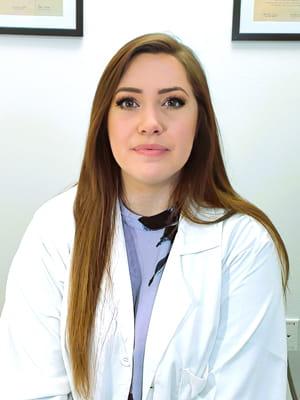
Meet Tabitha.
Tabitha
A dedicated medical educator and director of clinical content, Dr. Tabitha Michaud combines her clinical expertise with a passion for teaching. Her comprehensive experience—from pediatric rotations to multidisciplinary research—enables her to develop engaging, evidence-based educational materials across a variety of STEM topics. Dr. Michaud is the creator of Varsity Tutors' "Mini Med School" summer camp, and regularly teaches fun, interactive biology classes to help learners understand what happens when they get sick and how rewarding medical careers can be.
Ever wonder why you have your mom's eyes or why some diseases run in families? Introduction to Genetics pulls back the curtain on the molecule that makes you you — DNA. Students will master the structure of the double helix, use Punnett squares to predict inherited traits, and explore how mutations drive everything from genetic disorders to evolutionary adaptation. This course goes far beyond the textbook: you'll think like a doctor diagnosing patient cases, like a detective using DNA fingerprinting to crack crimes, and like a scientist analyzing ancient DNA to trace human history. Whether you're eyeing a future in medicine, biology, or just want to understand the science behind GMOs, ancestry kits, and CRISPR headlines, this course makes genetics click.
What Is Genetics — and Why Does It Matter? Genetics is the science behind why living things look, function, and behave the way they do. From eye color to inherited disease risk to the ingredients in your food, DNA shapes the world in ways most people never stop to consider. Introduction to Genetics is a fast-moving, application-first course designed to give high school students a genuine working knowledge of genetics — not just facts to memorize, but frameworks to think with. Students leave this course able to read a family pedigree, interpret a Punnett square, and hold their own in a conversation about CRISPR, GMOs, or forensic DNA evidence.
The Science of DNA: Structure, Function, and the Code of Life The course opens with a deep dive into DNA itself — deoxyribonucleic acid — the double-helix molecule packed inside nearly every cell in your body. Students learn how nucleotides and base pairs (adenine-thymine and cytosine-guanine) hold the two strands together, and how this elegant structure encodes the instructions for every protein, tissue, and trait in the body. Understanding how DNA is built sets the stage for understanding what goes wrong when it mutates — and what's possible when scientists learn to manipulate it.
Heredity, Punnett Squares, and How Traits Are Passed Down Next, students tackle the principles of heredity — the rules governing how traits travel from parents to offspring. Using Punnett squares, students practice predicting the probability of specific outcomes in monohybrid crosses, working with dominant and recessive alleles to analyze real family inheritance patterns. This section builds the quantitative reasoning skills that show up on AP Biology exams, in genetics coursework, and in any conversation about why certain conditions run in families.
Mutations, Variation, and the Big Picture of Diversity Not all mutations are disasters — some drive adaptation, fuel diversity, and even confer advantages. This section explores the full spectrum of genetic variation: where it comes from, what forms it takes, and what it means for individuals and populations. Students examine how mutations underlie genetic disorders, but also how variation is the raw material of evolution. The goal is nuance — understanding that the same mechanisms that cause disease also make life on Earth astonishingly diverse.
Real-World Applications: Medicine, Forensics, Agriculture, and More This is where the course gets especially exciting. Students step into the role of a doctor, analyzing patient case studies to diagnose potential genetic conditions and sharpen their clinical reasoning. They explore how DNA fingerprinting and profiling have transformed forensic science and criminal justice. They examine how ancient DNA research is rewriting our understanding of human migration and prehistory. In agriculture, they investigate how genetically modified crops and selective breeding feed the world — and the ethical debates those technologies spark. The course also connects genetics to pop culture, personalized medicine, and ancestry testing, making clear that this science is everywhere, all the time.
What You'll Walk Away With By the end of Introduction to Genetics, students will have a toolkit that stretches well beyond a single class. They'll be able to interpret genetic information, reason through inheritance problems, evaluate the science behind headlines, and think critically about the ethical dimensions of a rapidly advancing field. Whether this course is a stepping stone to AP Biology, pre-med ambitions, or simply a desire to understand the world at the molecular level, it delivers a foundation that is rigorous, relevant, and genuinely fascinating.
Live Q&A
Cameras / mics optional
Recordings
Available within 1 hour, kept 90 days
Materials
No special materials required
Similar classes


free with a Varsity Tutors membership
74
DAYS19
HRS33
MINTue, Dec 1 • 9:00pm UTC
4 classes, starts in 74 days
Introduction to Genetics